Shakespeare’s baptism at 450

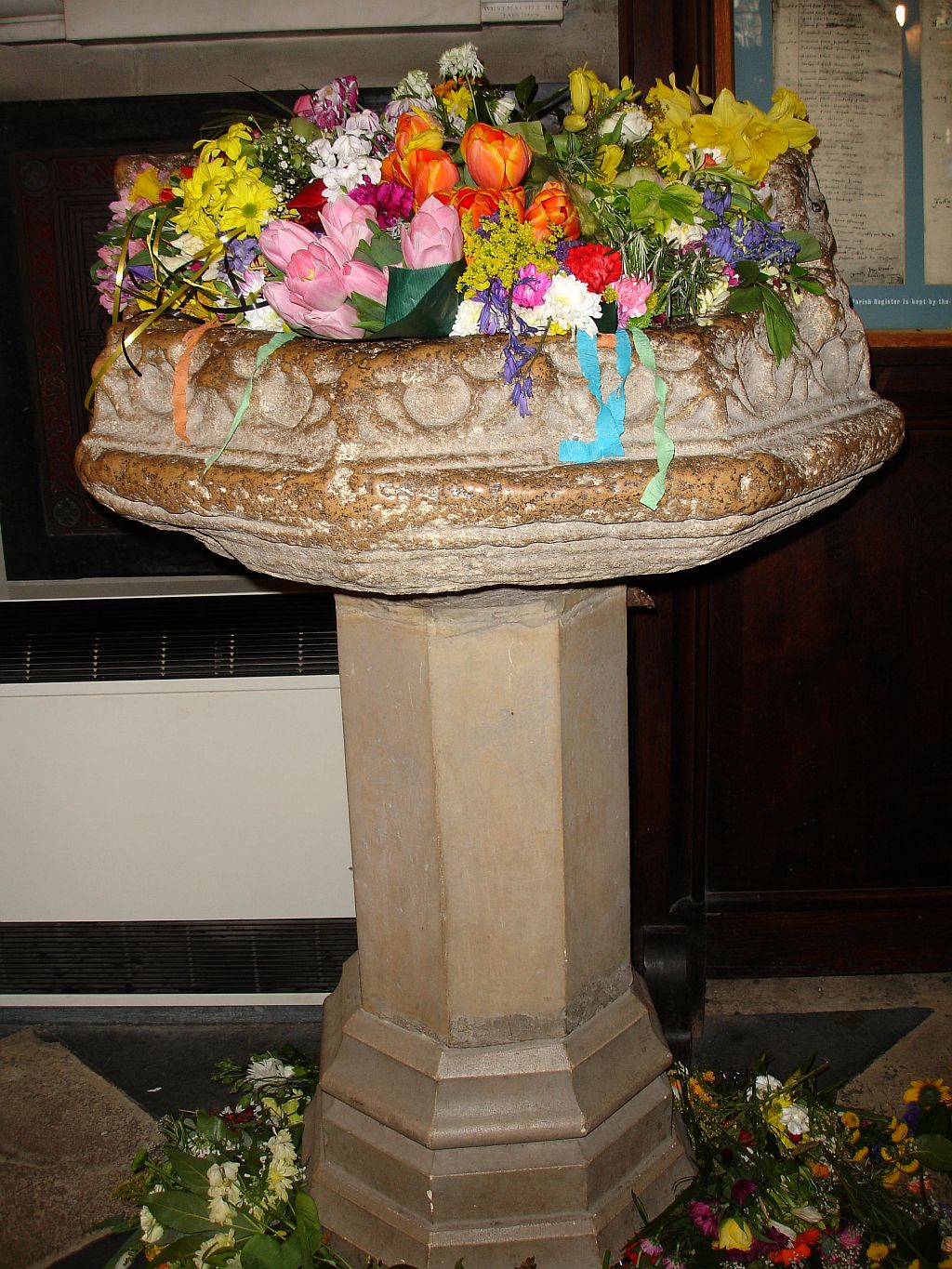
The medieval font in which Shakespeare was baptised in Holy Trinity Church

The medieval font in which Shakespeare was baptised in Holy Trinity Church

Saturday 26 April 2014 is the 450th Anniversary of the baptism of William Shakespeare in Holy Trinity Church, Stratford-upon-Avon. Doubts may be cast over his exact birthday, but there is no debate about the exact date on which he was brought by his parents and their friends to be baptised in the ancient font that can still be seen in the church.

By great good fortune, this year the 26th falls on a Saturday. It was decided many years ago that the formal Birthday Celebrations should be held on the nearest Saturday to the 23rd, so this morning thousands of people will bring their floral tributes to the spot where we know that Shakespeare’s birth was formally celebrated on 26 April 1564, 450 years to the day.

The baptism record in Latin, “Gulielmus filius Johannes Shakspere” still exists, though the record is a copy made around 1600 from the original.

gulielmus baptism

Regulations had been introduced in 1598 by which all parish registers recordings births, marriages and burials since the beginning of Queen Elizabeth’s reign in 1558 should be kept on durable parchment rather than paper. Once the records had been transcribed into the beautiful leather-bound volume which bears the date 1600 on its cover, the original records were then discarded. The fact that these records are still in such good condition confirms that the decision to have these records transcribed by copyists was the right one.

Share
Posted in Shakespeare's World, Stratford-upon-Avon | Tagged , , , | Comments Off on Shakespeare’s baptism at 450

Celebrating Shakespeare’s 450th in Stratford

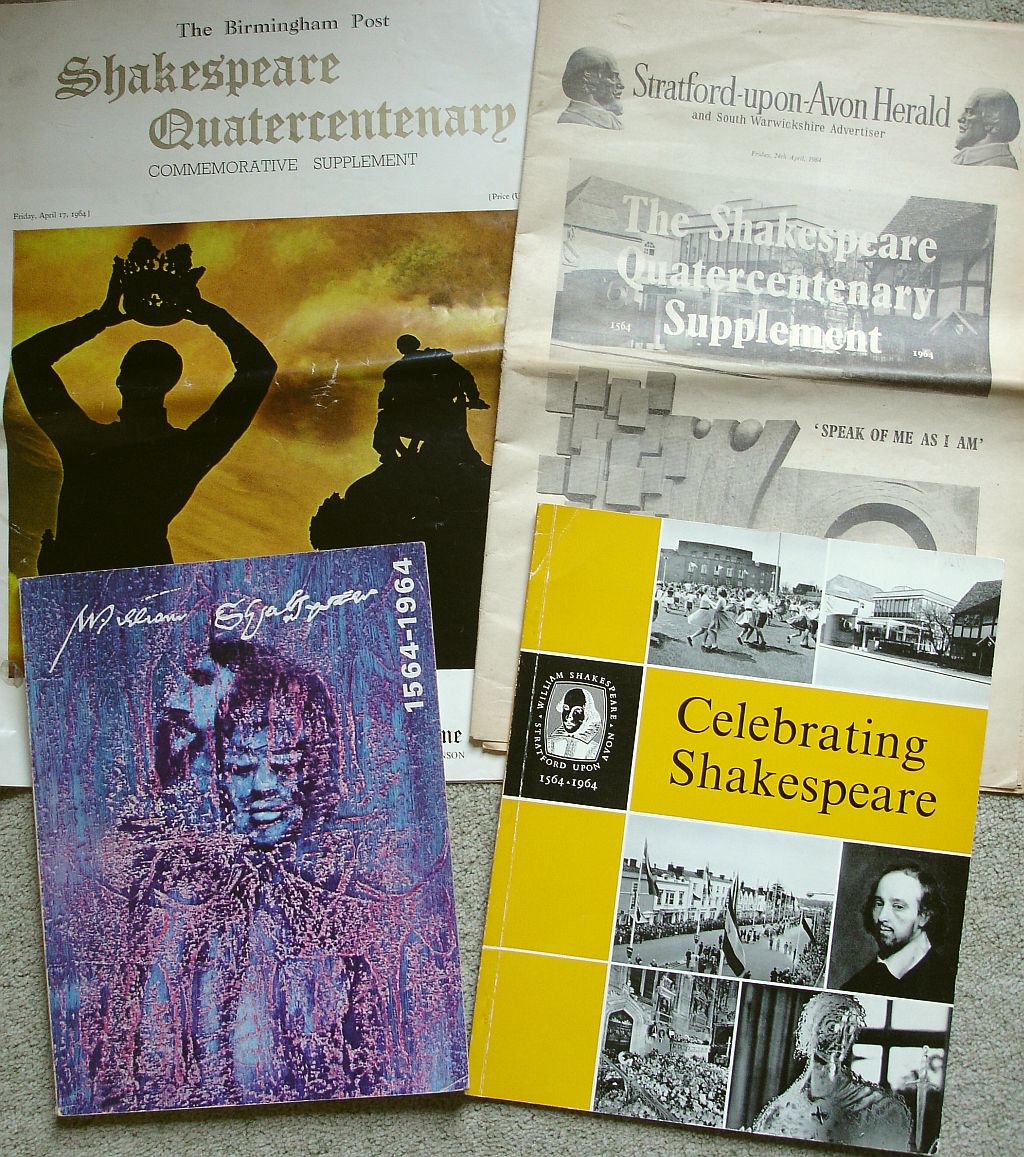
Some souvenirs of the 1964 celebrations

Some souvenirs of the 1964 celebrations

So how do you celebrate Shakespeare’s 450th birthday? The RSC are holding a fireworks display and on Saturday a day of events. The town is expecting bumper crowds on Saturday for its special parade, and for the first time in several years the traditional lunch for 500 people (all tickets were sold within days) is being held in a marquee on a lawn between the theatre and the church.

Back in 1964, for the Quatercentenary, celebrations were massive. Stratford was becoming ever more popular as more people had cars, and international travel was becoming the norm. The plays were screened on TV and in Stratford the RSC was drawing in younger audiences. In his book Celebrating Shakespeare Levi Fox listed the many elements that combined in this great celebration: “a major Shakespeare exhibition, outstanding musical contributions, poetry recitals, films, lectures, an international conference of scholars with folk dance and other local activities set against the background of the Royal Shakespeare Theatre’s productions of a cycle of history plays”.

In Stratford, at Shakespeare’s Birthplace, a new exhibition concentrating on the 1964 celebrations has just opened. Some of the events were described and illustrated in Fox’s book, including “countless festivals, productions and exhibitions, not to mention publications, postage stamps, medals and other commemorative souvenirs, publicized by the press, radio and television”.

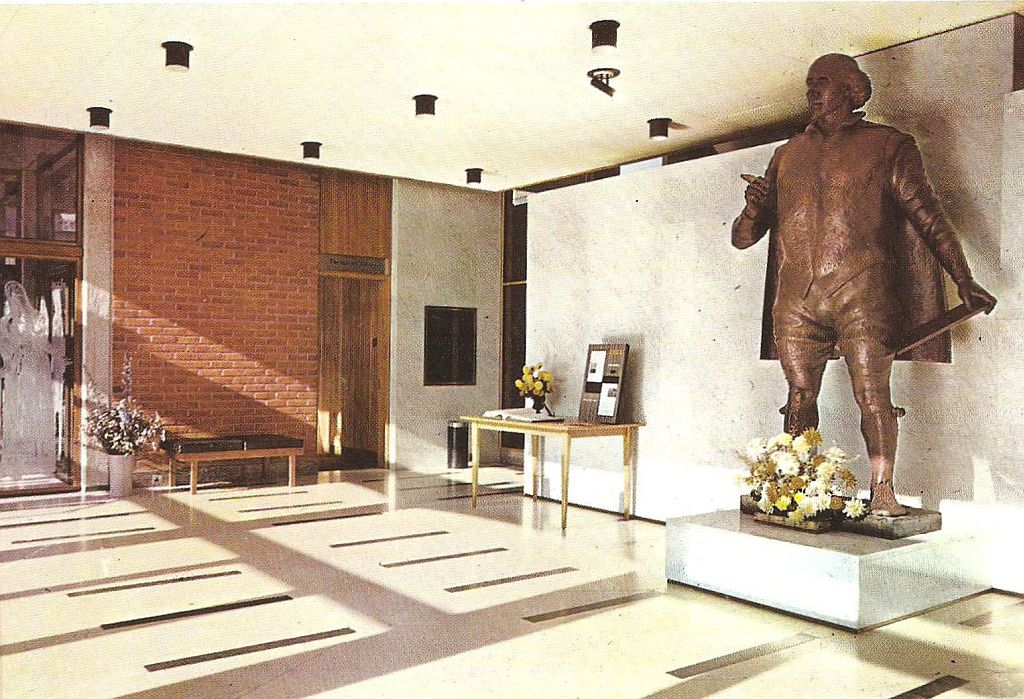
The entrance hall of the 1964 Shakespeare Centre

The entrance hall of the 1964 Shakespeare Centre

There was though a desire to make something permanent out of this special year, and the opening of the Shakespeare Centre was a key part of the 1964 celebrations. The building was, to quote Levi Fox, “originally conceived as a kind of international birthday present to the memory of William Shakespeare”. This idea can be traced back to not long after Fox’s appointment to run the Shakespeare Birthplace Trust in the 1940s. It was made possible by the gifts of Shakespeare-lovers from around the world, and included the work of international craftsmen such as the Hungarians Tibor Reich, a textile designer, and Paul Vincze, a medallist, and New Zealand glass engraver John Hutton.

The building symbolised what Levi Fox and the Trustees wanted the Shakespeare Birthplace Trust to become: it was a combination of modernity and tradition, showing respect for the past, a love of all things Shakespeare, and an awareness that he can only live through the work of the present. Education at all levels was at its heart.

John Hutton's glass panel of Bottom

John Hutton’s glass panel of Bottom

In his book on The Shakespeare Centre, Fox described the new building as “primarily a place for study and research based on the Trust’s library and archive collections” combining as they did the collections of the Birthplace and the Royal Shakespeare Theatre, a move he first suggested in 1946. Standing across the garden from the Birthplace the building’s uncompromising modernity did not please all, but from within its quality is apparent. Hutton’s gorgeous engraved glass panels featuring characters from Shakespeare’s plays can be admired both from within the building and from the garden, and soften the entrance hall in which Douglas Wain-Hobson’s  hollow-eyed statue of Shakespeare stares towards the Birthplace. Every detail was considered: Tibor Reich’s green mottled carpet was inspired by seeing a forest from an aeroplane. Warm cherry wood was used for most of the panelling that covered many walls, and the original furniture came from Gordon Russell’s renowned Cotswold workshops.


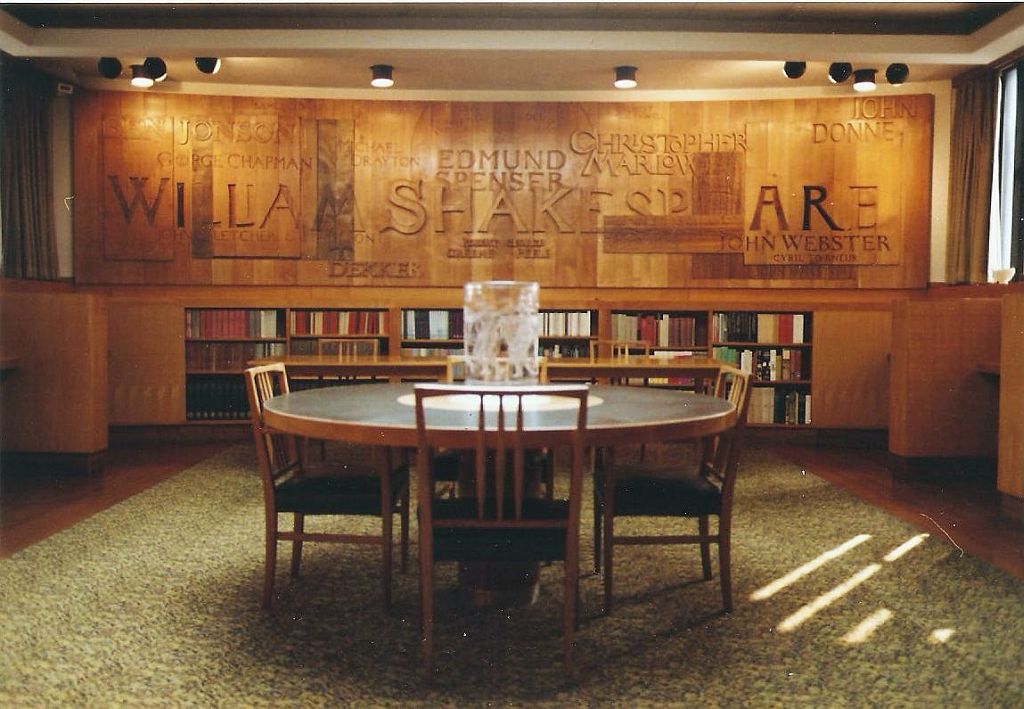
The 1964 Reading Room with carved panel and glass vase

The 1964 Reading Room with carved panel and glass vase

My favourite piece in the building is the carved wooden panel designed by Nicolete Gray, standing in what was the Reading Room of the Library where I worked for over twenty-five years. Ahead of its time, the lettering shows the name of Shakespeare not as a solitary genius, but as one among many contemporary writers. The panel is made in five different timbers and many styles of lettering. An impressive piece in its own right it was also totally appropriate for its location and did not overwhelm this compact room. On the central table was a large glass vase by John Hutton, based on the idea of a Greek vase, engraved with the dance of the reapers from The Tempest.

Fifty years on, will the 450th anniversary have a lasting legacy? In Stratford there is much uncertainty about the future of the traditional events, and questions are being asked about Shakespeare’s heritage in a world that has become increasingly complex.

The internet and social media are making huge differences to how people “meet” Shakespeare.  But these are turning out to be just new ways of doing the same thing, encouraging people to appreciate and enjoy Shakespeare. I’m currently loving the MOOC Shakespeare and his World that uses the internet to bring real, physical, historic resources from the SBT’s Collections to the fore to explain the background to Shakespeare’s plays. It’s about using what we already have in a new way, and allowing thousands of people at the same time to hear academic Jonathan Bate’s analysis, and to share their responses with each other, free of charge.

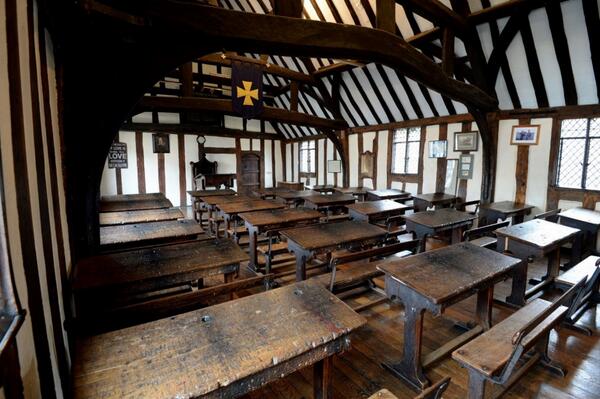
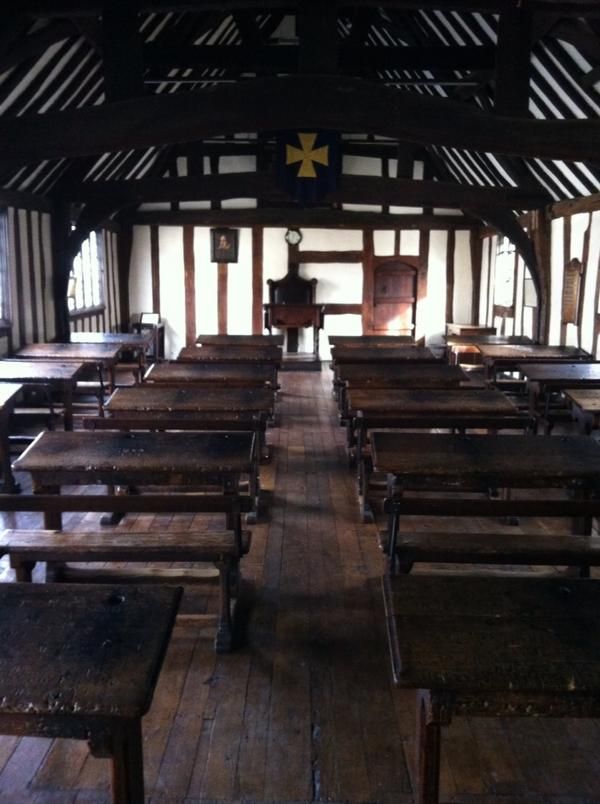
Shakespeare's schoolroom

Shakespeare’s schoolroom

Stratford isn’t short of Shakespeare-related buildings, memorials and collections that need support: just recently King Edward VI School has launched a project to open both Shakespeare’s schoolroom and Stratford’s medieval Guildhall to the public. The schoolroom stands above the Guildhall and both are in need of restoration. Part of this process will inevitably include interpreting the spaces to increase their potential for education and enjoyment. Anyone who’s visited these rooms will know how inspiring they are even now and it’s a fitting project for this anniversary year. It will take £1million project of which the school has to raise at least £200,000. Some details are here, and I’ll let TV historian Michael Wood give you the full story in his promotional film.


Share
Posted in Legacy, Stratford-upon-Avon | Tagged , , , , , | Comments Off on Celebrating Shakespeare’s 450th in Stratford

Fireworks for Shakespeare

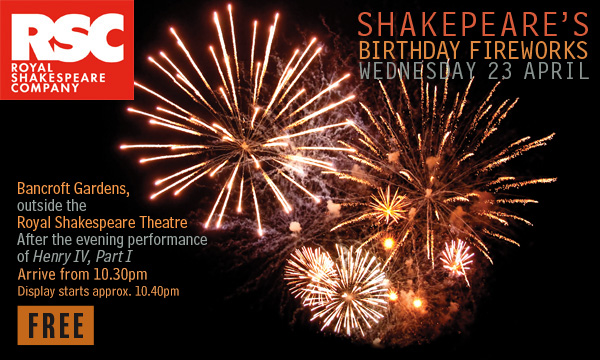
shakespeare_c1945436_14417_446Nothing is more likely to appeal to people regardless of age, language, or politics than a firework display, and the one that’s to be put on from the Royal Shakespeare Theatre on 23rd April will be an exciting start for the town’s celebrations of Shakespeare’s 450th birthday.

The earliest recorded display of fireworks in England took place on the wedding day of Henry VII in 1486, an event which ended the conflicts of the Wars of the Roses. Queen Elizabeth 1 enjoyed fireworks and the entertainments put on for her 1575 visit to Robert Dudley’s Kenilworth Castle included a magnificent firework display which the 11 year old William Shakespeare may have seen.

In Love’s Labour’s Lost the Spaniard Don Armado is asked to organise royal entertainments, including fireworks:
the king would have me
present the princess … with some
delightful ostentation, or show, or pageant, or
antique, or firework.

Fireworks could have been set off on stage in Shakespeare’s period, but gunpowder was always dangerous: it was a cannon, set off during the first performance of Henry VIII, that caused the burning down of the Globe Theatre in 1613. And everyone had cause to be wary after the 1605 Gunpowder Plot that very nearly blew up Parliament.

This history of fireworks  includes a description of the sort of thing Shakespeare might have seen:
From 1500-1700, the most popular type of firework was the “dragon”.  The massive device consisted of a wooden framework which was covered in painted paper-maché scales.  Inside, it was loaded with fountains, firecrackers, and rockets, some of which would shoot out of the mouth to make it “breathe fire”. 
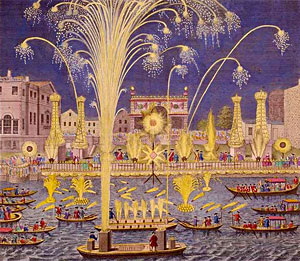
Fireworks on the Thames 1749

Fireworks on the Thames 1749

Fireworks were first used to commemorate Shakespeare during the 1769 Jubilee in Stratford-upon-Avon. They had by then become popular public displays.
The discovery of “quick match” – a fast-burning fuse made by putting regular fuse into a small, continuous paper tube – gave firemasters the ability to ignite many fireworks simultaneously, and enabled the construction of set pieces.  Set pieces are giant pictures/words made from hundreds of small burning torches, which were often created in the likeness of popular figures such as royalty.

In their book Amazing Monument, Brown and Fearon described how the Italian Signor Domenico Angelo ” arrived from London with two special wagon-loads of rockets, squibs and fairy lamps and busily toiled that Stratford might be “all lit up”.” With rain falling heavily, “through the dreary twilight the untiring Signor Angelo sped like Lucifer touching off his rockets, set-pieces, and revealing his “illuminated transparencies” at the Rotunda and the Birthplace. There was plenty of time to study the symbolic designs thus offered to the view” as the fireworks failed to go off.

Fireworks made another appearance in 1816 for the first major celebration of the birthday itself on 23 April, and again in 1827. In 1830 there were two displays as competing Shakespeare Clubs vied with each other to produce the most spectacular celebrations. One advertised “The grandest and most truly unequalled display of Fireworks ever witnessed, … under the direction of Mr Southby, artist of The Royal Gardens, Vauxhall, London”.  The high point was “the grand illuminated “Choragic Monument of Shakespeare, of the height of thirty feet… in the centre of which was introduced a most beautiful Transparent Portrait of the Immortal Bard”.

For the tercentenary on 23 April 1864 a “grand display of fireworks by Mr Darby, the celebrated Pyrotechnist” took place. The Illustrated Times of 30 April called it “a brilliant display of fireworks… in an open place adjoining the town” and the programme listed no fewer than sixty-three individual items with a “Grand concluding Piece, made expressly for the occasion: the Vision of Shakespeare, formed of many thousand Lights, and gigantic Transparent Effects, supported by Ornamental Pedestals in various coloured fires…forming a Bouquet of the most beautiful Fires known in the Pyrotechnic Arts.”

A modern firework display

A modern firework display

For the 1873 celebrations a “grand pyrotechnic display…by Mr J Follows of Stafford” took place at the Market Cross. The forty different items included a  “magnificent emblematic piece, … showing a medallion portrait of Shakespeare (after the Stratford bust), executed in brilliant lance work”, the grand finale “a representation of Shakespeare’s house in brilliant stars, backed and surrounded by waterfalls of Roman candles… exhibiting beautiful fountains of Chinese fire,  the most imposing tableau ever witnessed in the Pyrotechnic art”.

The town was also celebrating its new gas supply. At the Town Hall gas lights encircled the 1769 Shakespeare statue dedicated by Garrick, with “a circle of gas jets round the statue of Shakespeare, with a star at the summit and the initials WS at the foot.” With gas being provided free on the day around the town, over 500 gas lights were to be seen.
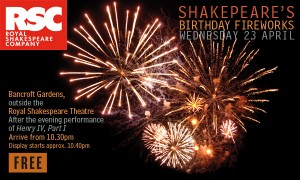
FINALFireworksemailbannerThe sad thing about all these displays is that although the detailed descriptions sound intriguing, we’ve really no idea what they were like. It’s one of the ephemeral delights of fireworks that like theatrical performances they “leave not a wrack behind”. The RSC’s follows in a long tradition of Shakespeare firework displays, but I’m hoping this one will be recorded so people around the world will be able to feel part of the celebrations.  In addition to traditional pyrotechnics, the special birthday display will feature an 8 metre high frame (note this is smaller than the 1830 one!) depicting Shakespeare’s face, which will light up in ‘stars’ made of fireworks.  It will be based on the Droeshout engraving of Shakespeare from the First Folio, and reminiscent of Juliet’s lines about Romeo.
Take him and cut him out in little stars,
And he will make the face of heaven so fine
That all the world will be in love with night
And pay no worship to the garish sun.

The display starts at 10.40 and can be seen from the Bancroft Gardens outside the RST. It should be one to remember.
Share
Posted in Legacy, Stratford-upon-Avon | Tagged , , , | Comments Off on Fireworks for Shakespeare

Much Ado About Shakespeare at Easter

The title page of the First Folio, 1623

The title page of the First Folio, 1623

For Easter, a round-up of some of the many current Shakespeare-related events.

First of all, on Easter Sunday BBC Radio 3 is celebrating Shakespeare’s imminent 450th birthday with two programmes.

At 6.45pm, in Shakespeare: For and Against, playwright Mark Ravenhill “challenges our adulation of the Bard and asks: Is Shakespeare’s genius beyond question? Casting a sceptical eye over centuries of bardolatry, Ravenhill calls for a new approach to the plays”.  This promises to be a really thought-provoking programme, with a host of interviewees including Royal Shakespeare Company Artistic Director Gregory Doran, theatre director Phyllida Lloyd, actors Simon Russell Beale and Fiona Shaw, playwrights Edward Bond and Howard Barker and scholars Ania Loomba, Professor Gary Taylor, Ewan Fernie, Dr Martin Wiggins, Michael Dobson and Dr Erin Sullivan of the University of Birmingham Shakespeare Institute.

Kenneth Branagh and Alex Kingston in Macbeth, 2013

Kenneth Branagh and Alex Kingston in Macbeth, 2013

It’s followed by a radio broadcast of Shakespeare’s play Antony and Cleopatra, with the established team of Kenneth Branagh and Alex Kingston (seen in 2013 as Macbeth and Lady Macbeth in the Manchester International Festival), taking the leading roles. The play is described as a “great tragedy of love and power” , and “Shakespeare’s late and epic tragedy of mature love and the catastrophic fall from grace and power that it brings about”. Here’s a link for more information. Kenneth Branagh was also on Radio 4’s Today programme talking about the radio production and about the importance of Shakespeare. Here’s the link if you’d like to listen again. The interview with him is 2 hrs 43 minutes in.

Branagh makes his support for Shakespeare clear, and this point of view is also echoed by Rory Kinnear in this piece from the Independent. Rory has just won the Olivier award for Best Actor for his portrayal of Iago in the National Theatre’s production of Othello.

Almost everybody who’s a Shakespeare fan will have their own favourite productions. Michael Billington, who has reviewed stage productions for the Guardian for over three decades, is clearly not fed up of Shakespeare and is celebrating the big anniversary by writing about his favourites. There’s also a chance for readers to make their own contributions.

The Guildhall in London is remembering that Shakespeare on stage wouldn’t exist without the publication in 1623 of the First Folio, the posthumous collection of his plays. On Thursday 24 April at 6pm there is to be a lecture by Dr Emma Smith entitled Reading Shakespeare when he was new: the earliest printed texts in which she will ask what it was like to read a newly published play by Shakespeare. The Guildhall Library’s copy of the First Folio will be on display.

Shakespeare in lego from Shakespeare versus Shatner

Shakespeare in lego from Shakespeare versus Shatner

If you’re wanting some ideas about how to celebrate the big birthday, here is a roundup of events coming up from the Guardian.

And here’s a link to a light-hearted short animation film Shakespeare versus Shatner. There’s also a film showing how it was made using only lego pieces and shot in 4700 frames by AMAA productions in Austin, Texas. It’s delightful and just the thing for a lazy holiday weekend!
Share
Posted in Legacy | Tagged , , , , , , , , , , | Comments Off on Much Ado About Shakespeare at Easter

“The sweet of the year”: spring in Shakespeare’s Stratford

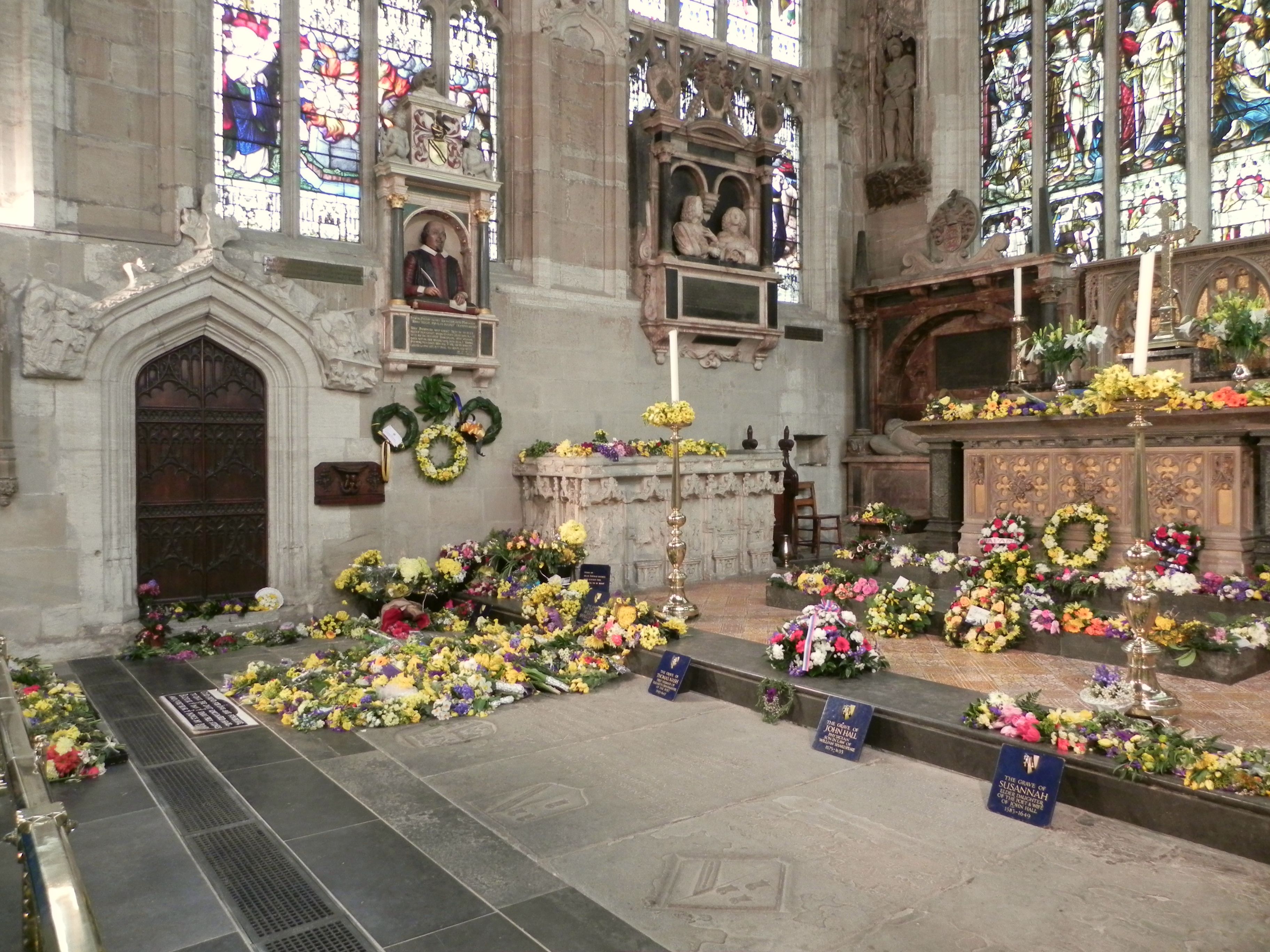
DSCN8736tomb flowersShakespeare is famous for his knowledge of plants of all kinds, but especially flowers, and he particularly loved springtime. It’s one of the reasons why spring flowers are brought to lay on his grave in Holy Trinity Church on his birthday on 23rd April each year.
Several songs by Shakespeare celebrate the spring and its flowers. Autolycus in The Winter’s Tale sings:
When daffodils begin to peer,
With heigh! the doxy over the dale,
Why, then comes in the sweet o’ the year;
For the red blood reigns in the winter’s pale.

And in As You Like It:
It was a lover and his lass,
With a hey, and a ho, and a hey nonino,
That o’er the green corn-field did pass
In the spring time, the only pretty ring time,
When birds do sing, hey ding a ding, ding.
Sweet lovers love the spring.

Shakespeare Gardens, in which the plants mentioned by Shakespeare are grown, and quotes from the plays are usually displayed, are becoming increasingly popular. In Stratford-upon-Avon there are several Shakespeare gardens of different kinds: the Birthplace Garden has included plants mentioned by Shakespeare for many years, and the tree garden at Anne Hathaway’s Cottage contains many of the trees named by him. The knot garden at New Place isn’t planted with authentic flowers, but is in a traditional shape bordered with box hedges, and he surely would have enjoyed its beauty. The town has built up a reputation for its floral arrangements, having has a long and successful tradition of taking part in the national Britain in Bloom competition and its own Stratford in Bloom contest every summer since the 1970s.

The Shakespeare Garden, Golden Gate Park San Francisco

The Shakespeare Garden, Golden Gate Park San Francisco

In case you feel like having a go, here’s a guide to growing your own Shakespeare garden. This topic is so popular that it has its own section on Wikipedia complete with a list of Shakespeare gardens, mostly in North America. Many have been inspired by Ernest Law’s 1922 book Shakespeare’s Garden, Stratford-upon-Avon.

Historic gardens are also celebrated for the medicinal qualities of the plants grown in them. Here are links to the Chelsea Physic Garden, the Poison Garden at Alnwick Castle in Northumberland, the Garden Museum in London and the Apothecaries’ Hall. And while on the subject of London, the City of London Guide Lecturers take garden walks and visit the Barber Surgeons garden where a garden is laid out with medicinal plants. Nearby is the garden of St Mary Aldermanbury where there is a memorial to the editors of Shakespeare’s First Folio.

DSCN6439wisteriaThe Royal Horticultural Society is celebrating National Gardening Week 2014 in the run up to Easter, 14-20 April, and by great good luck the weather this week has been beautiful. Visitors to Stratford-upon-Avon this weekend will have a treat with the town and the surrounding areas a delight to walk around. I’ve been out taking photographs myself and some are displayed below supplemented by a few taken earlier (the daffodils and magnolia are both over for this year). Although so many of the plants we grow now would not have been known to Shakespeare, he would have loved the magnolia, wisteria and cherry blossoms of springtime as much as we do.  Enjoy your Easter weekend wherever you are, and make sure you spend some time in a garden!


Share
Posted in Legacy, Stratford-upon-Avon | Tagged , , , , , , , , | Comments Off on “The sweet of the year”: spring in Shakespeare’s Stratford

Shakespeare, medicine and science, 450 years on

513gBYlxW2LA new book is just about to be published linking Shakespeare and science, a pairing that still doesn’t happen very often in the study of Shakespeare.  This is at least partly because scientific methods based on experimentation and logical enquiry were still not the norm. Dan Falk’s book, The Science of Shakespeare, reminds me in its approach of Bill Bryson’s A Short History of Nearly Everything, explaining some of the trickiest ideas through the stories of the people who made the discoveries. Whereas Bryson took Einstein and Hubble, Falk looks at Thomas Digges and the wonderfully-named Tycho Brahe, both of whom were people who devoted themselves to astronomy and whose work, it seems, Shakespeare knew.

Like Bryson’s book, Falk’s is informative about the science as well as finding points of connection with Shakespeare’s work and life. In an article that appeared in the Daily Telegraph Falk explains:
Scholars are examining Shakespeare’s interest in the scientific discoveries of his time – what he knew, when he knew it, and how that knowledge might be reflected in his work.
Take astronomy. The plays are full of references to the Sun, Moon, stars, comets, eclipses and heavenly spheres – but these are usually dismissed as strictly old-school, reflecting the (largely incorrect) ideas of ancient Greek thinkers such as Aristotle and Ptolemy. Although Copernicus had lifted the Earth into the heavens with his revolutionary book in 1543 – 21 years before Shakespeare’s birth – it supposedly took decades for the new cosmology to reach England; and anyway, the idea of a sun-centred universe only became intellectually respectable with the news of Galileo’s telescopic discoveries in 1610. By then, Shakespeare was ready for retirement in Warwickshire.
But we shouldn’t be so hasty. The Copernican theory attracted early adherents in Britain, beginning with a favourable mention in Robert Recorde’s The Castle of Knowledge in 1556. The first detailed account of the theory by an Englishman came from Thomas Digges, whose book included a diagram of the solar system in which the stars extend outward without limit – a vision of a possibly infinite cosmos.
Shakespeare had multiple connections to the Digges family. For a time they lived a few hundred yards apart in London, and Digges’s son, Leonard, was a fan of the playwright and contributed an introductory verse to the First Folio.

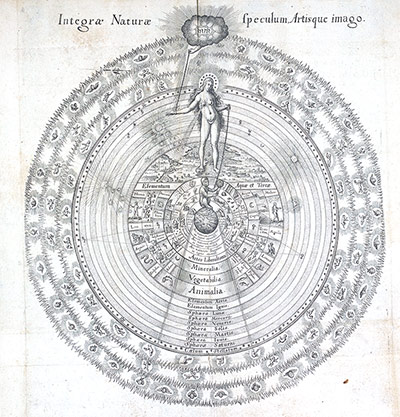
Great Chain of Being (Utriusque Cosmi Majoris Scilicet et Minoris ... by Robert Fludd; Frankfurt, 1617).

Great Chain of Being (Utriusque Cosmi Majoris Scilicet et Minoris … by Robert Fludd; Frankfurt, 1617).

Meanwhile, at the British Library there is what sounds to be an intriguing exhibition entitled Beautiful Science. Here’s a link to the Guardian’s review. This exhibition looks at the aesthetics of scientific analysis, visualisations that are intended to explain statistical and scientific discoveries, beautiful in their own right. The earliest image in the exhibition, dating from 1617, is the “Great Chain of Being”, an image that illustrates the ancient Greek concept of classifying life on earth. To quote the website,
Beautiful Science explores how our understanding of ourselves and our planet has evolved alongside our ability to represent, graph and map the mass data of the time.
From John Snow’s plotting of the 1854 London cholera infections on a map to colourful depictions of the tree of life, discover how picturing scientific data provides new insight into our lives.
This free exhibition, bringing together science and the arts, continues until 26 May.

Coming up soon, to help celebrate the 450th anniversary of the birth of Shakespeare, is a new exhibition at the Library of the Royal Society of Medicine. Entitled Most Wholesome Physic: Medicine in the Age of Shakespeare, 1564-1616, this exhibition will run from 6 May to 26 July from Monday to Saturday. Admission is free. Full details are now on the RSM website, and here is their description of the forthcoming exhibition:
Almost all of the books on display were published in Shakespeare’s lifetime, and show many of the medical preoccupations of the age, liberally juxtaposed with quotations from the plays and poems. This was a great period for books published in the vernacular and therefore more accessible to a lay public, so much emphasis is given in this exhibition to works written in English, or translated into English.

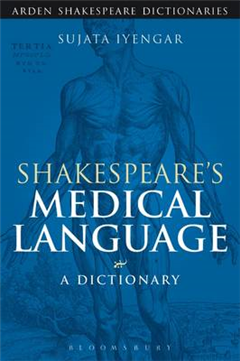
9781472520401Last but by no means least, I’m delighted to report that Sujata Iyengar’s book Shakespeare’s Medical Language is now available in paperback. This book has solved many queries for me about Shakespeare’s medical references and helped me understand more about medical knowledge of the time while remaining readable, and I can really recommend it. Here’s a quote about the book:
Physicians, readers and scholars have long been fascinated by Shakespeare’s medical language and the presence of healers, wise women and surgeons in his work. This dictionary includes entries about ailments, medical concepts, cures and, taking into account recent critical work on the early modern body, bodily functions, parts, and pathologies in Shakespeare. Shakespeare’s Medical Language will provide a comprehensive guide for those needing to understand specific references in the plays, in particular, archaic diagnoses or therapies ‘choleric’, ‘tub-fast’ and words that have changed their meanings ‘phlegmatic’, ‘urinal’; those who want to learn more about early modern medical concepts ‘elements’, ‘humors’; and those who might have questions about the embodied experience of living in Shakespeare’s England. Entries reveal what terms and concepts might mean in the context of Shakespeare’s plays, and the significance that a particular disease, body part or function has in individual plays and the Shakespearean corpus at large.
You can buy the paperback here.


Share
Posted in Legacy, Shakespeare's World | Tagged , , , , , , , | Comments Off on Shakespeare, medicine and science, 450 years on

Shakespeare and his world: MOOC in progress

Henry Irving as Shylock

Henry Irving as Shylock

I’m very much enjoying the Shakespeare and his World MOOC created by the University of Warwick in collaboration with the Shakespeare Birthplace Trust, devised and presented by Professor Jonathan Bate. Last week the play being examined was The Merchant of Venice, the theme money and usury. I particularly like the way Bate connects key themes of the play to facts of Shakespeare’s life and to objects from the Museums, Library and Archives collections held by the Shakespeare Birthplace Trust. He looked for instance at the Quiney letter, the only piece of correspondence still in existence addressed to Shakespeare. Why is this relevant to The Merchant of Venice? Well the letter asks for a sizeable loan, just as in order to give money to Bassanio, Antonio has to borrow from Shylock. Bate skilfully links Shakespeare’s life to the world of speculation and trade in which The Merchant of Venice is set. Shakespeare must have been known to be rich in order to be asked for this large amount but it seems that Shakespeare didn’t provide the money himself and maybe acted as a kind of go-between (avoiding the trouble that Antonio got himself into).

Antonio, Gratiano, Lorenzo and Bassanio in the 1993 RSC production of The Merchant of Venice

Antonio, Gratiano, Lorenzo and Bassanio in the 1993 RSC production of The Merchant of Venice

In what I found a particularly interesting bit of speculation, Bate suggests that if we are looking for a parallel for Shakespeare himself within the play, we might see him as one side of the melancholy merchant Antonio, or the go-getting chancer Bassanio, or the money-grabbing, ruthless Shylock, though none of these characters are as straightforward as that. Perhaps too, Shakespeare might have seen himself as an outsider, the man from the country, without a university degree, in the more cosmopolitan world of London, just as both Antonio and Shylock are both outsiders in Venice.

Bate also looked at the idea that the audience would have immediately made the connection between the Venice of the play’s title and the City of London. Both are built on water, with famous bridge crossings. Both are financial centres: in London Thomas Gresham’s Royal Exchange had opened in 1571 and the Rialto was the name of the whole financial district in Venice. In both places fortunes were made and lost on the ships trading around the world. Although Gresham’s Exchange was lost in the 1666 Great Fire of London Bate showed a plan of the rebuilt Exchange in which traders were around the sides of the hall while those managing the ships and their cargoes took the central area. And Shakespeare’s actors performed in more or less modern dress so the connection between the play and London life would have been very clear.

These connections continue to be made. London is still a huge financial centre. And although as readers we can make connections for ourselves, it’s in production that directors can really bring home those links between our own times and Shakespeare’s. Bate used a photograph of Henry Irving as Shylock to point out that it was not until the late nineteenth century that Shylock was interpreted on stage as a serious, even sympathetic character, a response perhaps to earlier views of evil Jews like Fagin in Dickens’ Oliver Twist.

Each week on the MOOC participants can vote for their favourite collections object. This production image was a popular choice of object, and I for one would love to see more. The Shakespeare Centre Library and Archive contains the whole of the RSC Archive, a treasure trove which illustrates how Shakespeare has been interpreted over the years through the artistic interpretations of directors, designers and actors, supported by historic material relating to productions from earlier centuries like the Irving picture. Different productions offer a whole range of views, for instance of the character of Shylock. Should he be seen as an outsider, or someone who has made every effort to integrate into Venetian society? Should he show off his wealth with fine clothes, or be seen to be miserly by dressing shabbily? Each production provides different ideas that can spark off a debate about the play itself.

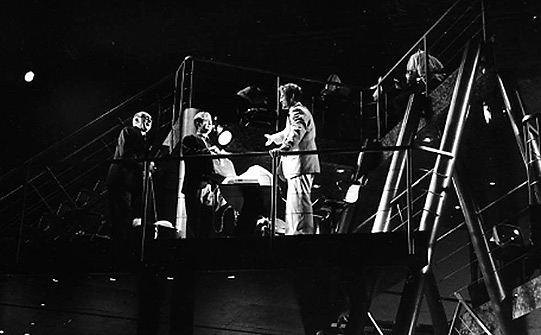
The set for Venice in the RSC production of The Merchant of Venice, 1993

The set for Venice in the RSC production of The Merchant of Venice, 1993

The idea of connecting Shakespeare’s London with Venice was really brought to life in the production of the play staged by the RSC in 1993. Here Venice was indeed the City of London: the slick and shiny metal and glass set including ranks of computers dominated the stage, and Bassanio’s friends, dressed in suits, met up in a trendy wine bar. The audience understood immediately what kind of world the play was set in, and the theme of money, which Jonathan Bate has emphasised in the MOOC, was at the forefront. Shylock (David Calder) was almost completely integrated into the world of the Christian characters, wearing similar clothes but showed himself even more civilised by, when at home, relaxing in a comfy armchair while listening to classical music.

Antony Sher as Shylock, RSC 1987

Antony Sher as Shylock, RSC 1987

A few years before, the 1987 production had a different focus: set in the Venice of Shakespeare’s period, the foreignness of Shylock and Jessica was emphasised with both of them wearing exotic, colourful costumes. Antony Sher as Shylock even had a low couch on which he reclined, and he spoke with a strong accent. The set, including both a Christian Madonna and a daubed Jewish star, made it clear that this production was to be about religious conflict and Shylock’s isolation rather than the rights and wrongs of the financial system.

Evidence for these productions is to be found in the photographs, prompt books, reviews and videos of the performance archives. Comparing photographs of the sets, or of a few characters, or looking at the way in which the text has been cut in the prompt book, is a really stimulating way of thinking about the play through production choices.

Share
Posted in Legacy, Shakespeare on Stage, Shakespeare's World | Tagged , , , , , , , | Comments Off on Shakespeare and his world: MOOC in progress

Stratford’s historic spine, Shakespeare forgery and April Fools


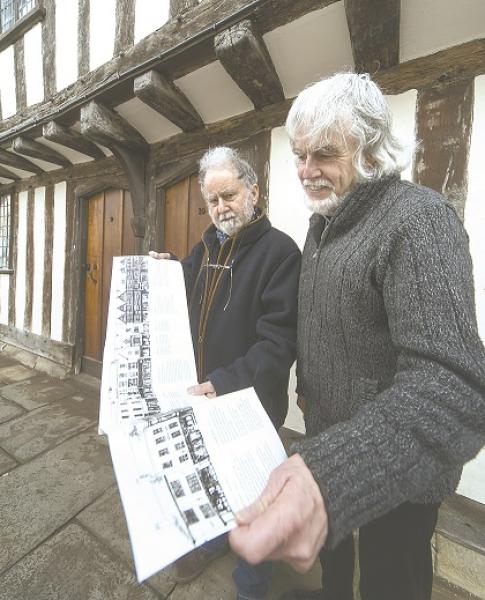
images_articles_Paul_and_Bob___Historic_Spine_282511485Away on holiday last week, but still in touch with email and twitter, I spotted lots of Shakespeare and Stratford-related stories in the press and online. My post on the Market House coincidentally went live on the same day that a new book was published on the whole of what’s called Stratford’s Historic Spine. The spine begins at the Bridge   Street end of High Street, as it happens at the Market House itself and continues along Chapel Street, Church Street and Old Town towards Holy Trinity Church. This is the route which is followed by many thousands of tourists, but in a piece for the Stratford Herald Robert Bearman suggests that the book  provides “the opportunity to bring home the fact that the true value of the spine lies not just in its well-known showpiece but in the many other attractive buildings which provide the links between them.”

The Stratford Society describes how ” two members of the Society, Paul Burley, retired architect and practising artist, and Bob Bearman, formerly Head of Archives at the Shakespeare Birthplace Trust, have spent the last three years working on a project to get the story of the Spine into book form. Paul has drawn every building along it in the form of eight continuous friezes and underneath each building Bob has provided notes of its historical and/or architectural interest.” The book is priced at £7 and can be obtained from the Society or local bookshops.

The schoolroom at KES

The schoolroom at KES

One of the most important clusters of buildings on the Historic Spine is the Guild Chapel/Guild Hall/King Edward VI School. On April 1 the school put out a lovely April Fools joke declaring that among a recently-discovered bundle of documents had been found some that mentioned Shakespeare, and indicated that he had not only been at the school (there are no records of the pupils from the time) but that he had been punished for bad behaviour several times while there.   Documents had indeed been found a few weeks before, but they were all of relatively recent date.  This time the aim of the good-natured jest was to draw attention to the school’s bid for funding to restore the schoolroom and Guild hall.

Forgery hasn’t always been so easy to uncover, or so well-intentioned. Back in the eighteenth century there were many people obsessed with trying to find out all they could about Shakespeare’s life. Samuel Ireland was one of these who collected all kinds of Shakespeariana, but it was his son, William Henry Ireland who in 1794 claimed to have found documents that related to Shakespeare. Former Head of Local Collections for the Shakespeare Birthplace Trust Mairi Macdonald, in a piece written for the Stratford Herald back in June 2009, described the documents that included ” a sequence of legal and personal documents from the same supposed source, designed to cast Shakespeare in the light of a punctual and efficient businessman and well-regarded man of the world: a letter to the earl of Southampton (with a reply), a confession of faith proving the bard to be a good protestant, theatrical contracts, a love letter and poem to ‘Anna Hatherrewaye’ with a lock of hair (proving the poet to be an affectionate husband), and a remarkably friendly letter from Queen Elizabeth. Shakespeare’s library, with marginalia, was discovered; an original manuscript of King Lear showed that all the bawdy talk had been interpolated by actors. ”

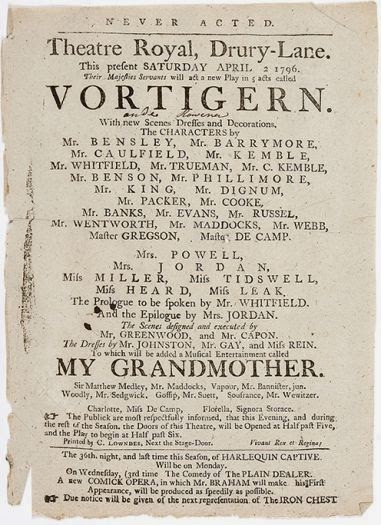
The playbill for the performance of Vortigern

The playbill for the performance of Vortigern

The item that provoked the most attention, though, was the manuscript of a play “Vortigern”.  Last week I found this site that includes a video telling the story of this notorious play which was given a single performance at Drury Lane Theatre in 1795.

It was after this that the story of the whole manuscript discovery began to unravel, led by historian Edmund Malone.  It’s easy now to scoff at the gullibility of, among others, James Boswell, but the success of many April Fools jokes reminds us that we’re easy to deceive. And how much we would all love to find a document that showed us more of Shakespeare’s life or a new play. The KES story, like that of the Charlecote poaching incident, suggest that Shakespeare was a boy of spirit, a bit like Prince Hal in the Henry IV plays, the bad boy who reformed.

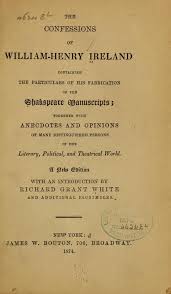
William Henry Ireland's Confessions

William Henry Ireland’s Confessions

The story of William Henry Ireland is ultimately a bit sad: apparently he only began forging documents to impress his father, and after the truth came out he wrote The Confessions of William-Henry Ireland in which he explained how had created his forgeries. One method was to take an original document of the right period and write a Shakespeare signature into a gap. Ireland forgeries of this type have found their way into many major collections including that of the Shakespeare Birthplace Trust, and an Ireland document is in the Folger Shakespeare Library’s current exhibition Shakespeare’s the thing.

Share
Posted in Legacy, Stratford-upon-Avon | Tagged , , , , , , | Comments Off on Stratford’s historic spine, Shakespeare forgery and April Fools

Staging the balcony scene from Romeo and Juliet

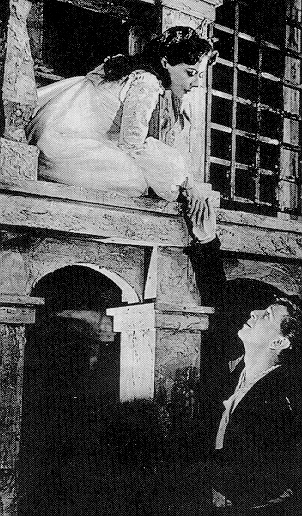
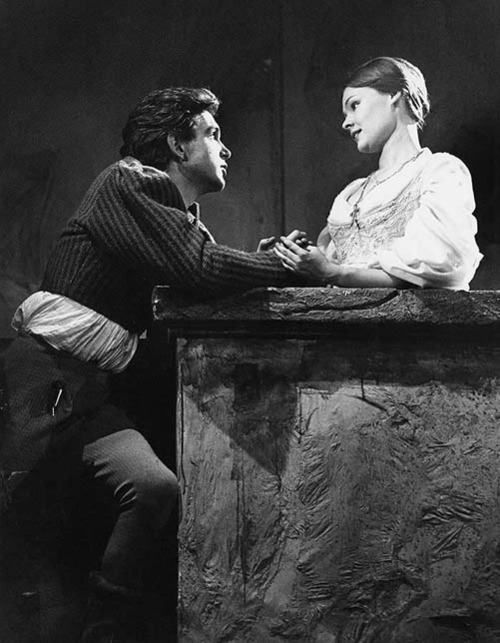
John Stride and Judi Dench Old Vic 1960

John Stride and Judi Dench Old Vic 1960

In an earlier post on the subject of Juliet’s balcony, I talked about the original staging of this scene, and how the scene came to be known  as “the balcony scene” even though in Elizabethan England the word balcony was not used, let alone by Shakespeare.

It made me think about how many ways I’ve seen this scene staged, and how many pitfalls it can present. Some of these relate to the space in which the scene is staged: in Shakespeare’s theatres the option to use a balcony at the back of the stage could have made it difficult for those at the sides or high up in an upper gallery to see. In nineteenth century theatres built with a proscenium arch upper galleries tend to over-hang the stalls resulting in the effect which I remember well from the Aldwych Theatre where the view from the rear stalls was like looking through a letter box. Anything high up was invisible unless it was way upstage. This theatre took transfers from Stratford and sets designed for  the RST stage often had to be cut down to fit the smaller theatre with its difficult sightlines. Thrust stages or fan-shaped auditoria can have their own problems: the National Theatre’s Olivier stage offers unobstructed views from all over the house, but the audience can feel distant from the stage and being able to see from three sides makes designing a balcony tricky if it’s to be anywhere near the front of the stage.

Dorothy Tutin and Brian Murray, RST 1961

Dorothy Tutin and Brian Murray, RST 1961

Russell Jackson’s book Romeo and Juliet, in the Shakespeare at Stratford series published by the Arden Shakespeare, documents in detail performances of the play from 1947 to 2000. Fifteen productions and fifteen solutions to staging the balcony. He points out: “Despite the scene’s customary name – and a well-established theatrical and pictorial tradition – the lines nowhere refer to a “balcony”, and the action does not necessarily require one: but simply appearing at a window allows Juliet little scope for movement”.

Directors and designers have to ensure the lovers can be seen and heard, so there’s a tendency to bring them forward.  Every production finds its own solutions, but there are many questions: Where should the balcony be: in the centre or to one side where it’s easier to see both Romeo and Juliet? How high should it be? Should it be part of the permanent set, or a structure moved into position specially for the scene? Should Juliet be remote and unattainable, or is Romeo able to get to her on her balcony?  Jackson again:
“No stage direction, actual or implicit, required him to climb up to it, but, as we shall see, many productions have been unable to resist the temptation”.  Re-reading Russell Jackson’s authoriative book reminded me of some of the best and worst solutions I’ve seen, and I searched the internet for some visual examples.

I was delighted to find the whole scene from the RSC’s 2010 production at the Courtyard Theatre filmed. Sam Troughton and Mariah Gale are both excellent though filming from several angles makes it easy to forget it was a stage performance, and to me she looks awkward with nothing to lean on or stand behind. And why the intimidating metal railings when he is able to get round them? In his book Jackson asks “Should Romeo and Juliet touch hands at any point?” but this pair, in modern dress, do far more than just hold hands.

There is some great material on this production on BBC Shakespeare Unlocked


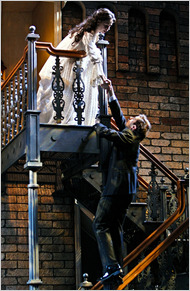
Laura Esposito and Sonny Valichti at the Baruch Performing Arts Center, NY 2012

Laura Esposito and Sonny Valichti at the Baruch Performing Arts Center, NY 2012

At least Troughton has to make an effort to reach Juliet: in the photograph here, Sonny Valichti could easily reach his Juliet if he used the stairs just to the right (one of the drawbacks of a permanent set is that the balcony serves other purposes and can usually be accessed by a staircase which kind of spoils the illusion).


In Terry Hands’ romantic Italianate production in 1989  Juliet was positioned on the top level of the Swan stage, much too far away for her Romeo, Mark Rylance, to reach her, so they really did have nothing but the words. The  scene, after all, is about promise, not fulfilment.


Rupert Evans as Romeo and Morven Christie as Juliet, RSC 2006

Rupert Evans as Romeo and Morven Christie as Juliet, RSC 2006

And I know the audience is expected to use its imagination but the bare metal ladder that came up through the stage floor in the 2006 RSC production really didn’t do it for me, with Juliet having to balance precariously on its rungs.


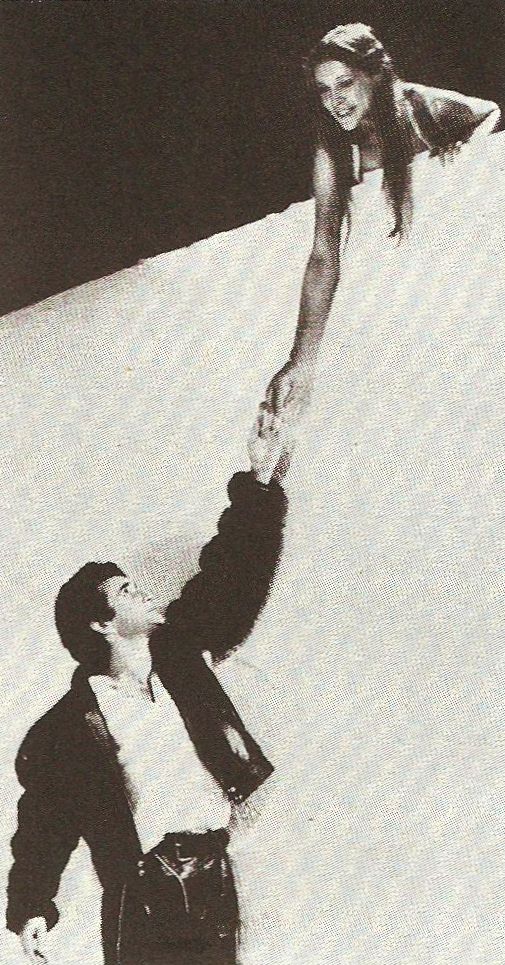
Judy Buxton and Anton Lesser, RST 1980

Judy Buxton and Anton Lesser, RST 1980

I thought the 1980 production at the RST got the balance about right. Judy Buxton appeared above a plain white wall that had swung downstage to bring her closer to the audience, enough to keep her separate from her Romeo but not so high that they couldn’t touch hands briefly.

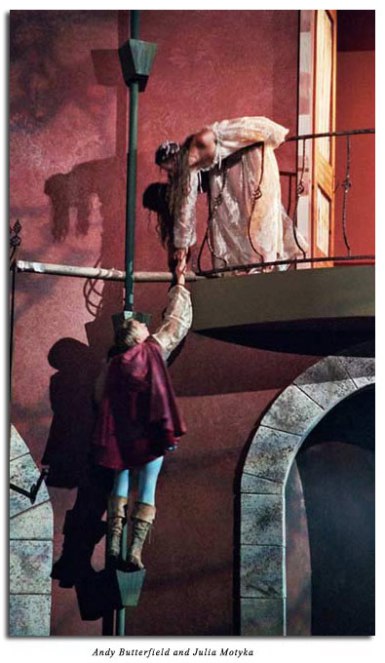
Andy Butterfield and Julia Motyka  The Marin Shakespeare Company, California 2005

Andy Butterfield and Julia Motyka The Marin Shakespeare Company, California 2005

I also like the one from the Marin Shakespeare Company,  though seen just as a still photograph the drainpipe looks as if it could have comic potential.


Share
Posted in Plays and Poems, Shakespeare on Stage | Tagged , , , , , , | Comments Off on Staging the balcony scene from Romeo and Juliet

Stratford-upon-Avon’s Market House

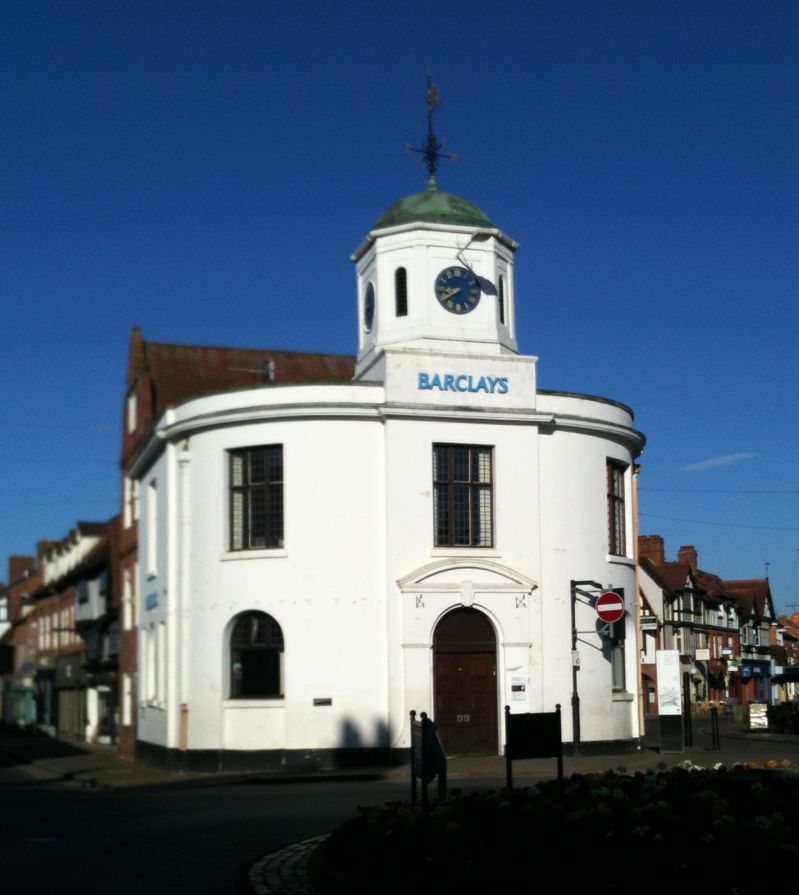
The Market House today

The Market House today

In Stratford’s town centre, Barclays Bank overlooks Bridge Street and the traffic island at the junction of Henley Street, Wood Street and High Street. It’s one of the town’s most visible landmarks, and never more so than on Shakespeare’s Birthday, when Bridge Street is filled with flags, dignitaries and onlookers. Outside the bank the band plays the National Anthem before the flags are pulled and the procession begins. Royal accessions, coronations and weddings have been marked here, and troops rallied here before departing for the battlefields of WW1. Nowadays the Market House is often photographed by tourists whose guides stop there to point out the town’s places of interest.

You might think, then, that Barclays Bank, originally the Market House, has always been admired as a quietly dignified structure. But this is far from the case. The very first sentence of Dr Robert Bearman’s pamphlet* on the building in the Stratford-upon-Avon papers series is “There can be few buildings in Stratford-upon-Avon which have provoked such vociferous and persistent criticism as the town’s Market House”.

I’m indebted to this publication for many of the facts in this post. The history of the building, in a way, dates right back to the time in the 1190s when the streets were laid out in a grid pattern. Bridge Street already existed, but making it wide allowed for the weekly market to continue there and made it the centre of the town’s trading activities. At some point the High Cross was erected at its top. By the late 1400s a building must have stood there as we know a clock was hung on it. There’s no visual record of this building until around 1800 when, a few years before it was replaced, Captain James Saunders drew it. It had remained much the same for centuries, standing close to the corner where Wood Street joins High Street.

Like later market buildings in the town, it was open at ground level with an enclosed upper floor. The base of the old cross stood at its centre. In Shakespeare’s time it’s thought that this covered area was where the glovers, including Shakespeare’s father, sold their goods.

But by Shakespeare’s time Bridge Street’s spacious marketplace had been divided by Middle Row, a central row of small shops that must have made the area very congested. The old Market House was taken down in 1821 and the current building put up at the junction of Wood Street and Henley Street, but with the row in place it was not the focal point of the street for people approaching from Bridge Street. The old cross itself was taken down, and Saunders, again, salvaged the base. This relic of the spot where John Shakespeare sold his wares was for many years in the garden of Shakespeare’s Birthplace.

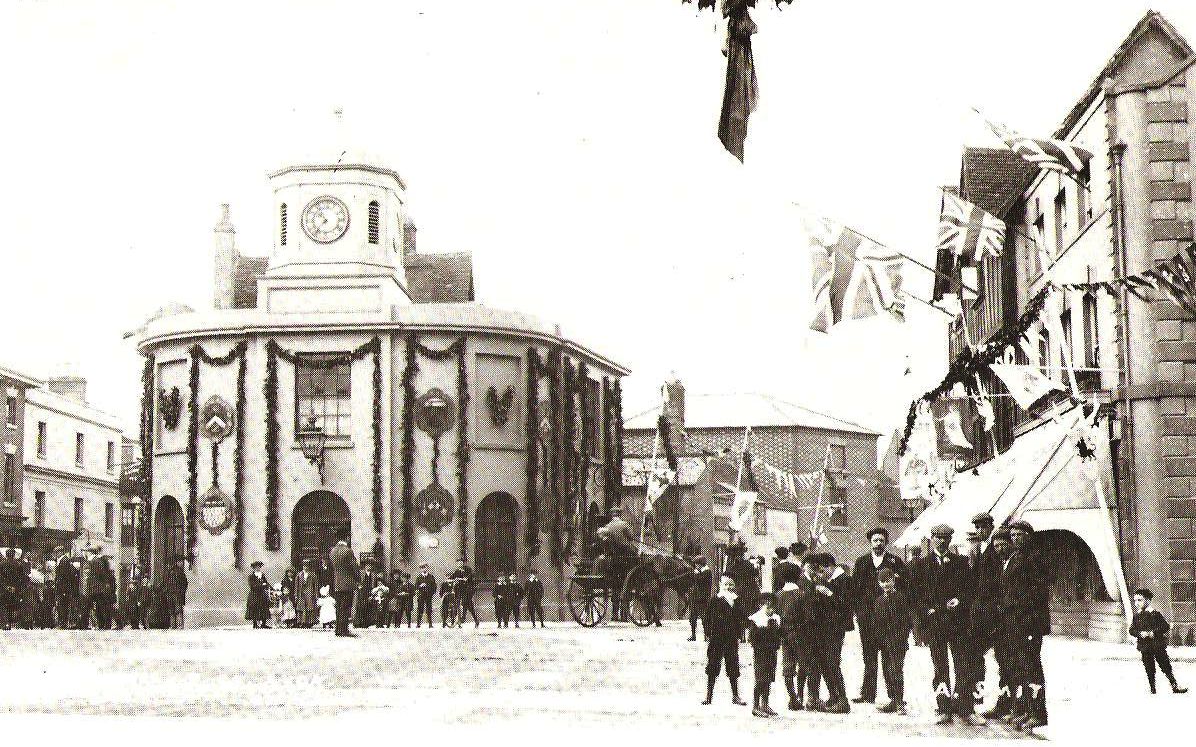
The Market House decked out for Shakespeare's Birthday Celebrations, around 1908

The Market House decked out for Shakespeare’s Birthday Celebrations, around 1908

The new building was opened in 1822. Three doors at ground level were entrances to the covered market, and stalls could also be erected round the outside of the building. The upper floor, meanwhile, was used as a meeting room. At about the same time an improvement scheme was devised which led to the gradual demolition of Middle Row, eventually completed in the 1850s, and the houses in Bridge Street received facelifts. Maybe with its surroundings becoming increasingly gentrified, the Market House began to look small and scruffy.

By the 1860s Stratford was definitely smartening itself up. It had a railway station and its own newspaper. Shakespeare’s Birthplace had been much improved, and in 1864 the Tercentenary of Shakespeare’s birth brought thousands of people to the town, including foreign visitors who were able to stay at smart hotels.

At the time of Garrick’s Jubilee in 1769 disparaging comments had been made about the state of Stratford’s streets, and these must have been remembered when it came to the Tercentenary. The Market House became the target for criticism, and in March 1864 the Corporation voted to erect a monument to Shakespeare where the Market House was. Fortunately for the Market House, although the celebrations successfully attracted crowds of visitors they lost money, so this idea was never pursued. It didn’t stop the criticism though: in 1869 the building  was called “ugly and inconvenient” , and in 1902 “ungainly, unattractive and … almost useless”.

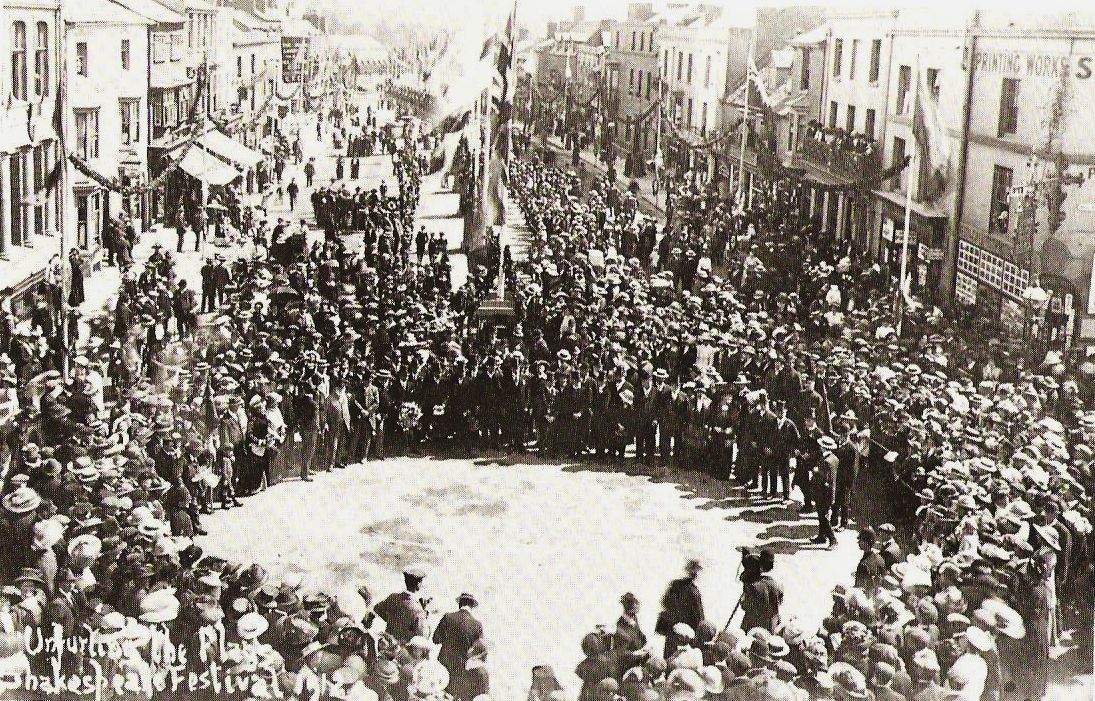
Bridge Street crowded with people for the Birthday celebrations in 1912, taken from the Market House

Bridge Street crowded with people for the Birthday celebrations in 1912, taken from the Market House

Eventually the United Counties Bank took the lease on the building and renovated it, closing off the side doors, improving the windows and adding a decorative porch before moving in during 1908. It has had much the same appearance ever since, and looking at the building now it’s hard to see how it could ever have been so unpopular. But even as work went on Edward Fox, the printer, wrote to the newspaper regretting that “the finest and most prominent site in Stratford” was not to contain a memorial  “which would confer honour and distinction on Shakespeare’s town”. In fact this elegantly understated building has shown itself to be an ideal backdrop to the busy activities of the town which probably has enough memorials to its most famous son.

*Bearman, Robert. The Market House, Stratford-upon-Avon. Stratford-upon-Avon: Stratford-upon-Avon Society, 1990.

PS By happy coincidence a post on the base of the original market cross has just been published on the SBT’s Finding Shakespeare blog at http://findingshakespeare.co.uk/stratford-upon-avon-high-or-market-cross-base

Share
Posted in Legacy, Stratford-upon-Avon | Tagged , , , , , | Comments Off on Stratford-upon-Avon’s Market House