Shakespeare and Stratford in World War 1

Recruitment in Stratford in the early years of the war

Recruitment in Stratford in the early years of the war

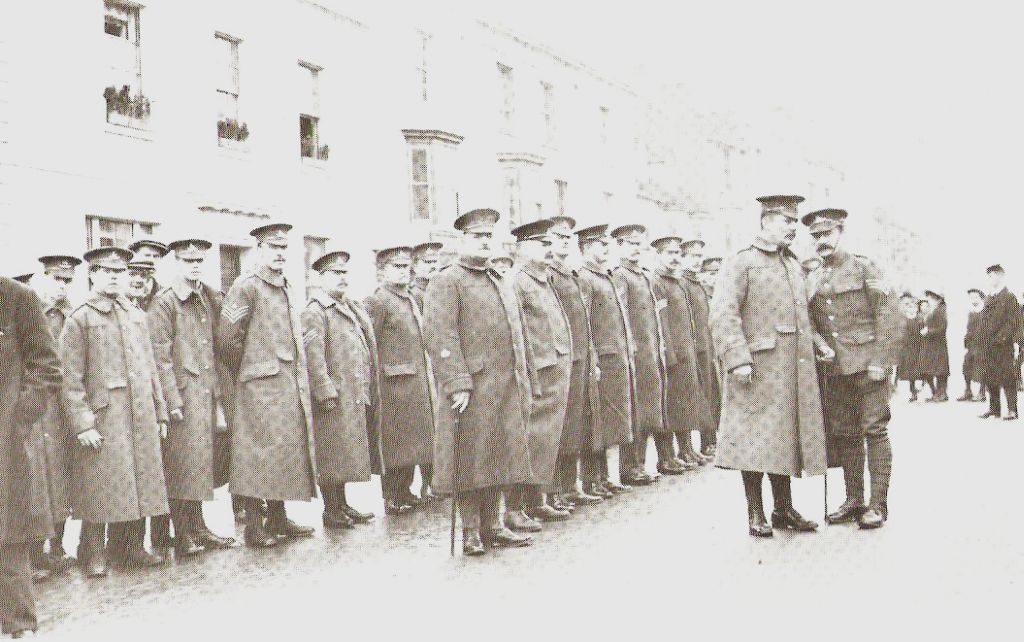
The outbreak of the First World War in late summer 1914 generated a huge recruiting campaign all round the country. In Stratford, where the summer Festival was taking place, a special performance of Henry V was mounted at the end of which the company marched on stage holding weapons including halberds and spears. The following day the leader of the company, Frank Benson, took part in the recruitment of soldiers in the neighbouring villages. The Benson company had always been great sportsmen and were known for their patriotism. Shakespeare was though of as the ultimate patriot, the plays dealing with foreign conflicts, Henry V and King John, often brought out at times of international dispute. And Stratford had a great reputation for recruitment: in 1914 a higher proportion of its young men than the national average signed up, and later on in the war the town gave generously to fundraising initiatives.
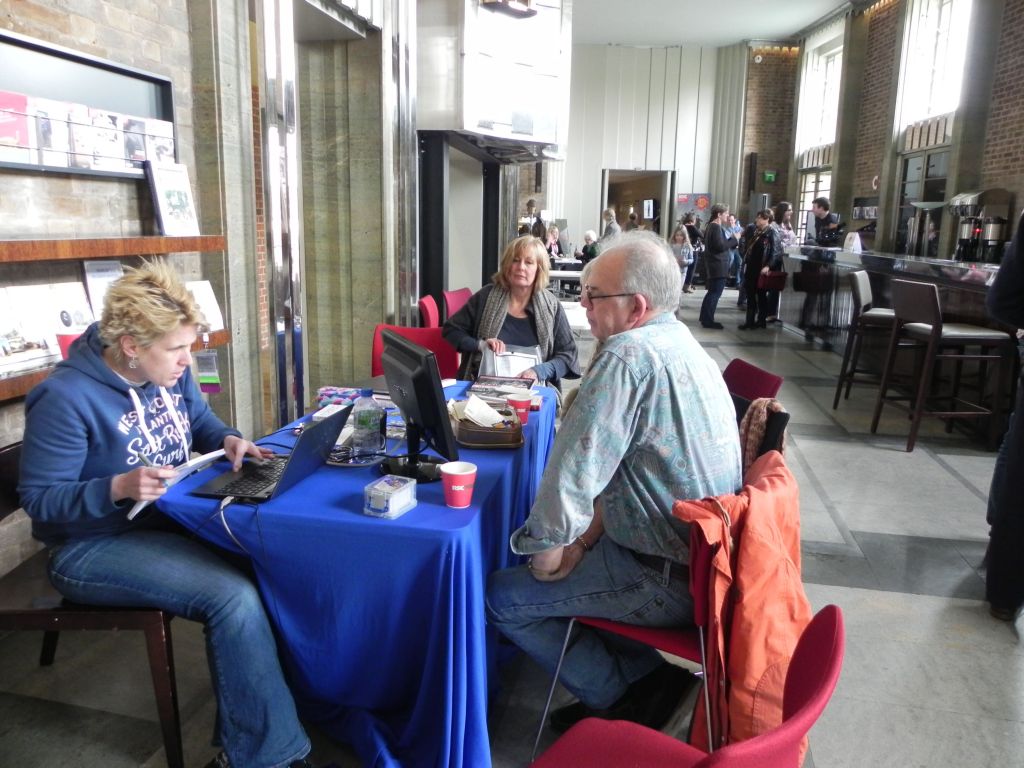
The WWI event at the RST

The WWI event at the RST

This last weekend the RSC held an event at which they have asked local people to share their stories of the First World War. The Foyer of the 1932 theatre was filled with people clutching mementoes, with representatives of the Warwickshire Regiment, family historians, RSC staff scanning and recording memories, and people from the Shakespeare Centre Library and Archive showing off some of the objects they hold which have a war connection.

christmastruce_2014The RSC is involved is because in November the company will be staging a new play by Phil Porter, The Christmas Truce, inspired by the real-life famous football match held between German and British troops on the battlefield at Christmas 1914. This match was recorded by Bruce Bairnsfather, whose cartoons of life in the army became famous and who worked in the theatre for a time. Phil Porter is hoping to incorporate some of the stories that have been told during this weekend into his play.

But in 1914 the story was all about recruiting young men to fight. Looking at the old photographs of troops assembling to go off to war in the town centre it’s easy to make the connection with Shakespeare. The stirring battle speeches are the most famous, but Shakespeare also wrote about the business of recruiting in both parts of Henry IV. Both times, it’s his most famous comic creation, Falstaff, who is the one doing the recruiting. His contempt for his men, who he describes as”, “the cankers of a calm world and a long peace”, “scarecrows”, and “good enough to toss, food for powder, … they’ll fill a pit as well as better” must have been shocking even then. My Penguin edition of the play notes rather drily “Were he not a comic figure he could not but appear despicable here; the dramatic conventions of comedy protect him from the full implications of what he says”. The soldiers recruited in Stratford’s streets appear fit, but some look very young, and the photos are terribly poignant since we know how many never came back or if they did, bore the physical and psychological scars for the rest of their lives.
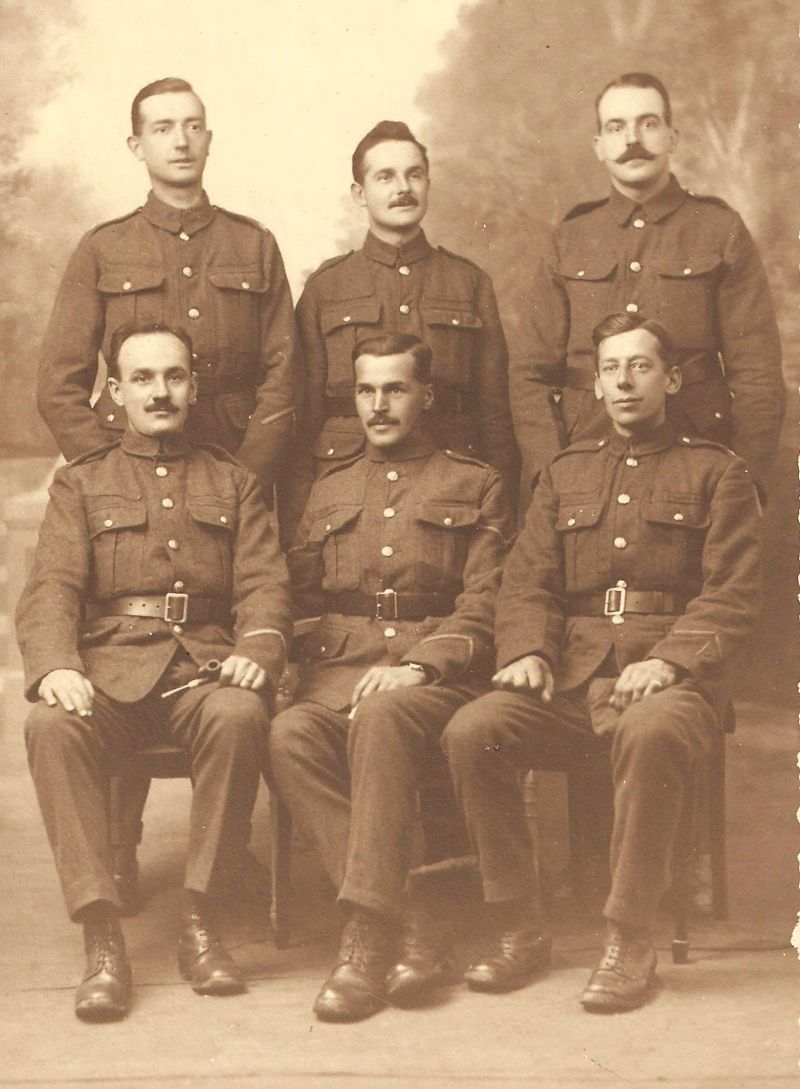
George Harriss, front row centre, taken while on service in France

George Harriss, front row centre, taken while on service in France

The battlefields must have felt like a million miles from leafy Warwickshire. But Stratford, and Shakespeare, were affected by the war. During wartime the Bensons, much-loved thespians, certainly were. The Bensons’ son was killed in the war, and they devoted their time to war work, cancelling the Shakespeare Festivals for a couple of years. I have only a very simple story of World War 1 in Stratford. My great uncle, George Harriss, was the professional golfer working at Stratford’s Golf Course. He didn’t go to war until 1916 when he became a driver, remaining in France until 1919. Although he wasn’t injured, after the war he became increasingly ill and died in 1929. He had been a popular young man, extremely handsome, and his early death caused his family great sadness. All her life his sister, my grandmother, kept a Christmas card he sent back from France in 1918 looking forward to his return to Stratford. Those at home suffered terrible anxiety, and there was a real sense of solidarity among the women left behind. I have the autograph book belonging to George’s wife, May, from the period. In November 1914 one friend wrote a beautifully-decorated version of “Auld Lang Syne”, and another, writing in May 1916, quoted a poem on the importance of love and friendship in uncertain times. Many of George’s family were Shakespeare-lovers, proud of their town’s connections. In 1912 George wrote a few lines for May in her autograph book which she must have treasured while he was away. The lines come from The Two Gentlemen of Verona:
                           she is mine own,
And I as rich in having such a jewel
As twenty seas, if all their sand were pearl,
The water nectar and the rocks pure gold
.

I’m indebted to Nicholas Fogg’s book Stratford: A Town at War, 1914-1945, for some of the facts in this post.

Share
Posted in Legacy, Shakespeare's World, Stratford-upon-Avon | Tagged , , , , | Comments Off on Shakespeare and Stratford in World War 1

Taking Hamlet around the Globe

C Walter Hodges' painting of actors outside a country inn

C Walter Hodges’ painting of actors outside a country inn

Touring has been an essential part of acting life for centuries: Shakespeare is thought to have seen his first plays as a child when a professional touring group came to Stratford-upon-Avon, and we assume he was one of the actors who regularly went on tour when he was working in London. The work of the Records of Early English Drama project has since the 1970s been painstakingly unearthing information about performances around the country, and a fuller picture is gradually emerging.

Actors have gone on touring with Shakespeare’s plays ever since. All the great names went on tour, including The Kemble family, Edmund Kean and Henry Irving. The Bensons, as well as performing in Stratford, toured almost obsessively, at times having two touring companies operating simultaneously, and in 1913-14 they embarked on an exhausting tour of the US and Canada that took up almost a year in all. British actors also went as far as Australia.

globe to globe hamletThe live video relays of productions might be thought to have reduced the need for companies to tour: why go through all the trouble of travelling, when it can be transmitted to a cinema? But Dominic Dromgoole says “Touring is in our blood”, and his Globe to Globe project will be going to the other extreme, taking one production, a fresh production of Hamlet, on a two-year tour that will take in every country in the world, beginning on April 23 2014.  He describes it as “a completely unprecedented theatrical adventure”. Here’s the link to the map.

This week the production has been in the news with the announcement of the cast list and more information about how it will work: twelve actors will share roles over the two years, with two actors playing Hamlet. Eight of the twelve will perform at a time, giving actors a chance for breaks and allowing for indispositions. Otherwise it would be an awful long time for anyone to put their life on hold.

The project has its own website with more details:
The small company of actors will travel to all nations in the world to stage Hamlet in a huge range of unique and atmospheric venues, from town squares to national theatres. They will travel by boat, train, car and aeroplane, planning their routes across the seven continents to minimise the tour’s carbon footprint as much as possible.

Hamlet is a great choice: not only is it Shakespeare’s most celebrated play, but there is a record of it being performed in 1608 by the crew of a ship of the East India Company off the coast of Yemen. This performance happened only a few years after the play was written, in 1608, an amazing record that tells us much about how widely Shakespeare’s play was known.

Many modern companies such as Cheek by Jowl and Propeller have made their names as touring companies, and in 2006 the National Theatre of Scotland was founded, as a national company without a permanent theatre.

Internationally renowned director Peter Brook who has worked in Paris and on tour for over thirty years, was asked his opinion of the tour:
The six simplest words in the English language are to be or not to be. There is hardly a corner of the planet where these words have not been translated. Even in English, those who can’t speak the language will at once recognise the sound and exclaim ‘Shakespeare!’ Hamlet is the most all encompassing of Shakespeare’s plays. Everyone, young or old can today find an immediate identification with its characters, their pains and their interrogations. To take Hamlet in its original language around the world is a bold and dynamic project. It can bring a rich journey of discovery to new audiences everywhere.

C Walter Hodges' painting of actors on the road

C Walter Hodges’ painting of actors on the road

Dominic Dromgoole has described the performers of the Globe to Globe Hamlet as “a squad of brilliant actors and intrepid adventurers”. Here is the list: Keith Bartlett, John Dougall, Ladi Emeruwa, Phoebe Fildes, Miranda Foster, Naeem Hayat, Beruce Khan,   Tom Lawrence, Jennifer Leong, Pawiri Paratent, Matthew Romain, Amanda Wilkin. You can find out more about them on the website. A couple of names jump out at me: both John Dougall and Keith Bartlett have performed extensively with the RSC in the past and both have taken part in the Company’s tours.

In As You Like It, Rosalind blames the experience gained in travel for Jaques’ melancholy: “I had rather have a fool to make me merry than experience to make me sad – and to travel for it too”. Nowadays we expect travel to bring us positive experiences, and at the end of their two years of touring the Globe to Globe actors should have much to celebrate.

Share
Posted in Legacy, Shakespeare on Stage, Shakespeare's World | Tagged , , , , , , , | 2 Comments

The end of a tradition: Charlecote’s deer and Nigel Playfair’s As You Like It

Fallow deer at Charlecote Park

Fallow deer at Charlecote Park

As You Like It was in the very first season of plays performed at the Shakespeare Memorial Theatre in April-May 1879. With its references to the Forest of Arden the gently romantic comedy was bound to please. The other Shakespeares in Barry Sullivan’s season were the sure-fire comedy Much Ado About Nothing and Hamlet. But it was As You Like It, given just two performances, that created the biggest impression, and a couple of reports of the closing performance on 3 May still exist.

Mary Elizabeth Lucy, from Charlecote, was there: “we all went to the comedy of As You Like It, one of my favourite plays of Shakespeare. My dear grandchildren were wild with delight when in Act Two Scene One, the Forest of Arden, a Charlecote deer (which their papa, as requested, had shot for the occasion) appeared on stage, and Masters, the Charlecote keeper dressed up as a forester, led on two of the deer hounds. The effect was charming and the house rang with shouts of applause and encore. We all came home saying we had never enjoyed a play so much before’. This extract from Mary Elizabeth Lucy’s Memoirs was quoted in a post on the Charlecote Park blog.

The other account was written by Sarah Flower, the wife of Charles Edward Flower, the chairman of the theatre. “Some of the actors went to Charlecote and asked Mr Lucy if he would let them have a deer from his park – he readily assented, and it was brought on this evening – his keepers and some dogs also appearing on the stage.
It was put into the mouth of one of the keepers that he said boastingly “Lots of people come from all round the country and even from London to see me and my dogs”. The deer was afterwards stuffed and kept as a property slung up in the picture gallery to be used always in this play. ”

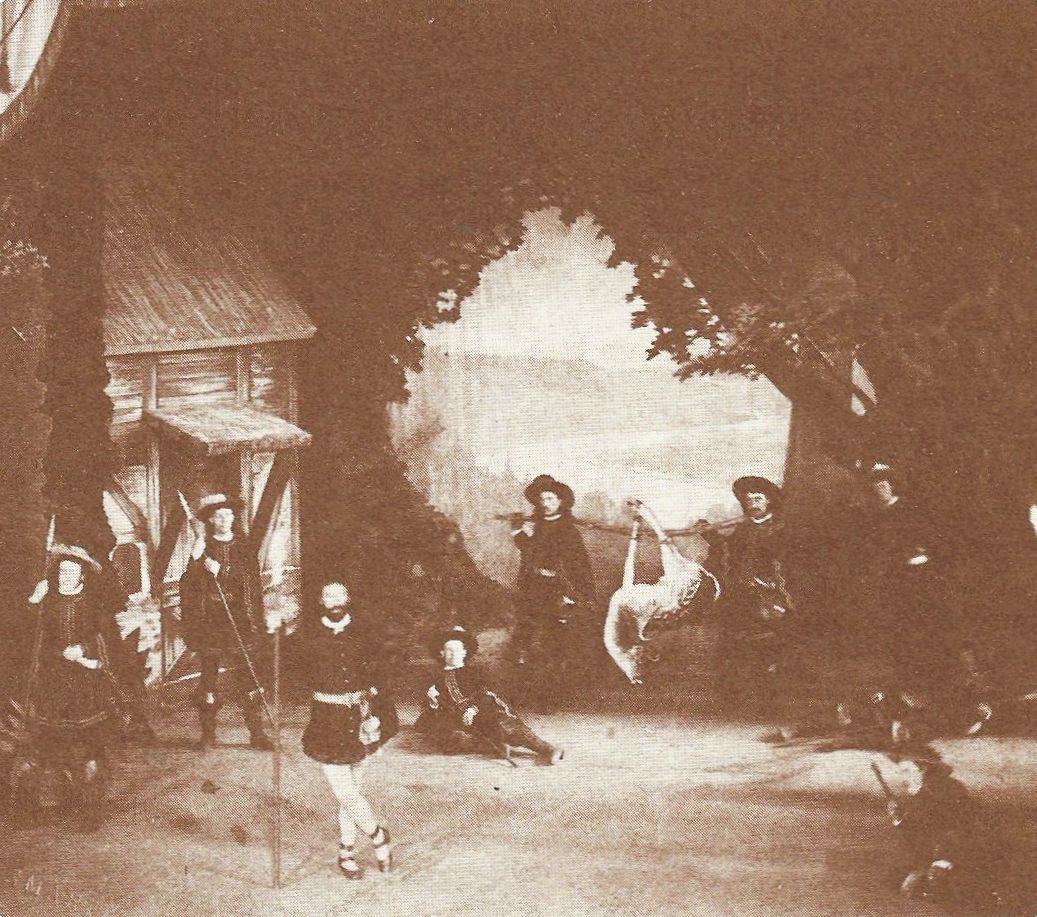
The foresters and deer in As You Like it, 1879

The foresters and deer in As You Like it, 1879

Reviewers commented on this scene, and special photographs were taken. As well as the deer, the dogs, and the Charlecote keeper, the sumptuously leafy designs by theatrical artist John O’Connor were seen for the first time. The Stratford-upon-Avon Herald commented “the scene was most picturesque”. O’Connor’s watercolour sketches for the forest sets and many other scenes for the Memorial Theatre still exist in a large volume now kept in the Theatre’s archives. The Saturday Musical Review approved: “In answer to the query What shall he have that killed the deer? the glee of that name was sung in a manner which would do credit to any choir in the kingdom”. Again as mentioned by the Stratford-upon-Avon Herald, “all the performers were Stratfordians”.

It’s easy to see how this scene came to be a cherished part of every production of As You Like It. But the Benson Company, taking over in 1886, didn’t produce the play at all until 1894, a gap of 9 years and the longest time this play has ever been absent from the Stratford theatres. It became a favourite, given one or two performances almost every year. The three Benson prompt books in the RSC’s archives show how the play was cut and scenes moved around. Each was marked up for different performance conditions (the Bensons toured widely), but all indicate a procession happening, rather oddly, in the scene where Celia tells Rosalind that Orlando is in the forest. The most elaborate prompt book mentions not just the deer but the dogs as well.

Illustration of Charlecote from Dixon Scott's book on Stratford-on-Avon, 1911

Illustration of Charlecote from Dixon Scott’s book on Stratford-on-Avon, 1911

Sarah Flower mentions that the deer was stuffed and hung up in the Theatre’s Picture Gallery, and photographs confirm this. But whoever invented the ritual, it wasn’t Benson, as the deer had been shot fifteen years before his first production. The deer (or maybe a replacement by then) made its last appearance in 1915.

In the first Festival after the end of the First World War it became clear that the deer had made its last appearance. As You Like It was one of the plays to be staged by Nigel Playfair’s company from Hammersmith. As J C Trewin wrote in his book Benson and the Bensonians, “in the quick spring of 1919, it was the hour for change”. The actors were under-rehearsed, and new to Shakespeare. And Playfair’s style was very different. He engaged the designer Claud Lovat Fraser, who, inspired by medieval illustrations, designed brightly-coloured, “daringly outrageous” costumes, and, worse, “not a single leaf in the show”. Trewin again: “It was new broom Shakespeare in a theatre nurtured on tradition”.

The story is now famous that the omission of the stuffed deer caused the outrage of locals. Robert Smallwood, in his book on the play in the Shakespeare at Stratford series calls it “one of the most notorious episodes in the performance history of As You Like It at Stratford (or anywhere else for that matter)”. Although the Morning Post (not a local paper) review suggested that the audience was “tickled rather than irritated” by the innovations, “it was unmistakeably in favour of what it was used to”. The Stratford-upon-Avon Herald pleaded “restore our scenery and our dresses”. Maybe too the audience weren’t used to watching the full text of the play, briskly performed.

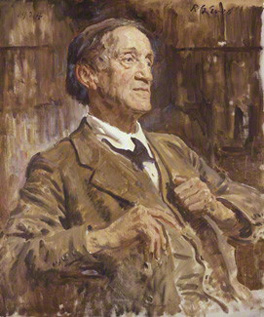
Portrait of Frank Benson by Reginald Grenville Eves, 1924. National Portrait Gallery

Portrait of Frank Benson by Reginald Grenville Eves, 1924. National Portrait Gallery

Specific regrets at the passing of the Charlecote deer, though, are difficult to find. The Morning Post is one of the few papers to mention it: “one never quite grasped the point of featuring as fresh killed venison the stuffed deer that had for many years been one of the mustiest exhibits in the Memorial museum”. Reports in the local press, several pages long, concentrated on Frank Benson’s lecture on wartime experiences, “The Song of the Shrapnel” and the formal tributes made to him and Lady Benson, acknowledging their tireless work for Shakespeare and Stratford. The deer may have been a nostalgic symbol of the past, but in the outpouring of emotion that accompanied the end of the Benson era I doubt that many tears were really shed for it.

Share
Posted in Legacy, Shakespeare on Stage, Stratford-upon-Avon | Tagged , , , , , , | Comments Off on The end of a tradition: Charlecote’s deer and Nigel Playfair’s As You Like It

Fact or fiction: Shakespeare at Charlecote

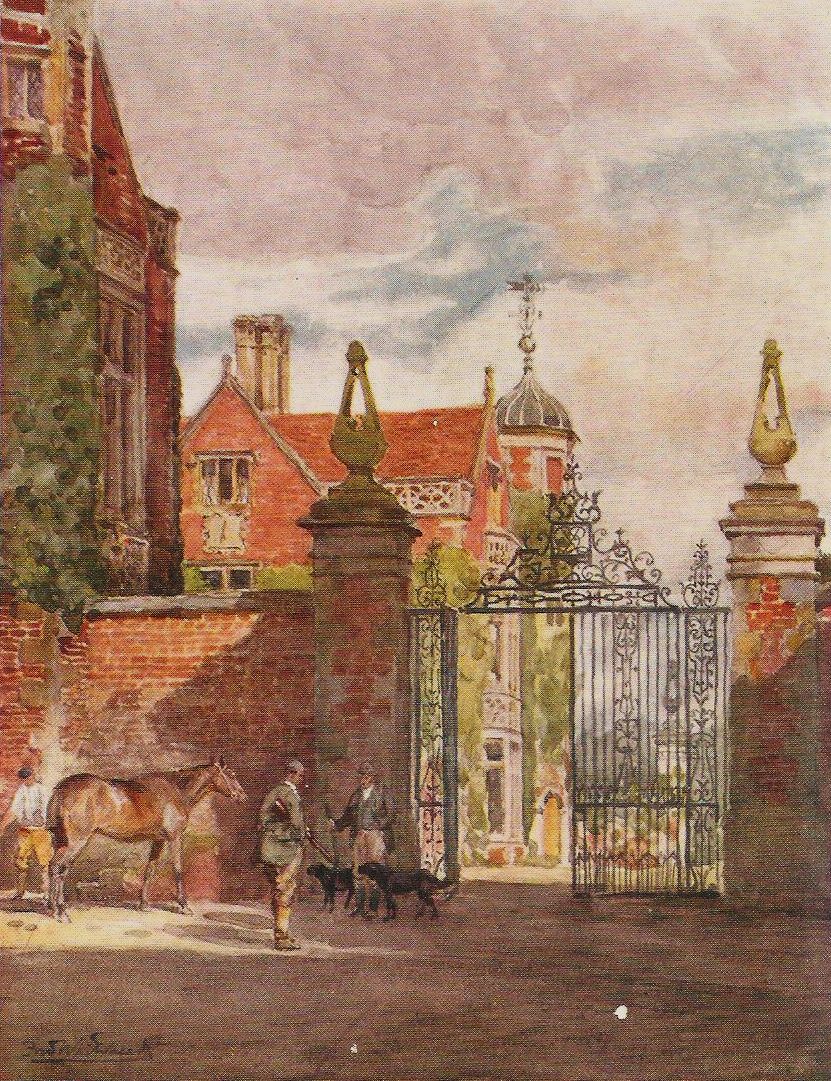
E W Haslehust's painting of the gatehouse at Charlecote House

E W Haslehust’s painting of the gatehouse at Charlecote House

There are many legends about Shakespeare’s life, but none is more compelling than that linking him with Charlecote Park, near Stratford-upon-Avon. Local historian Dr Robert Bearman has just sent me details of a new publication that relates to it:
Anyone interested in Shakespeare’s life will have come across reference to
his alleged youthful deer-stealing activities at Charlecote Park, leading to
a life-long feud between him and the local lord, Sir Thomas Lucy. There have  always been problems with this story, not least that the Lucy family didn’t  seek official consent to create a park at Charlecote until 1615. Undeterred,  later purveyors of local folklore shifted the scene of the crime to  neighbouring Fulbrook where there *was* a park, or at least a run-down one,
during Shakespeare’s childhood. The problem here was the Lucys didn’t buy it
until after Shakespeare’s death! No doubt the story will prove more than a
match for these obstacles but those who prefer to deal in hard facts might
like to read about how the park at Fulbrook came into existence in the first
place. Leading social historian, Professor Chris Dyer, has recently
contributed an article on just that subject to the journal ‘Warwickshire
History’ (Vol. 15, no. 6, Winter 2013/14). With the aid of maps and diagrams
he demonstrates in great detail how, in the early 15th century, Fulbrook’s
lord, John Duke of Bedford (Henry V and Henry VI, Part 1!), built a grand
new house within the manor, at the same time transforming a traditional
landscape of open arable fields into extensive parkland. As for the village,
admittedly already in decline, it simply disappeared. Professor Dyer deals
only briefly with the later history of the park which became a royal
possession on the duke’s death and remained so almost until its purchase by
the Lucys, during which time the grand house was pulled down. He also steers
clear, perhaps wisely, of any reference to the deer-poaching story but the
article may still be of interest to those Shakespeareans wishing to sort
fact from fiction. To acquire a copy of the article, you can contact the
editor, Robert Bearman, via the Society’s email address:
info@warwickshirehistory.org.uk
 

The tradition is one of the earliest relating to Shakespeare’s life, as well as one of the most popular. In his book Shakespeare’s Lives, Samuel Schoenbaum considers its sources. It appeared in the first published biography of Shakespeare, written by Thomas Rowe to accompany his 1709 edition of the plays:
He had, by a misfortune common enough to young fellows, fallen into some ill company: and among them, some that made a frequent practice of deer-stealing, engaged him with them more than once in robbing a park that belonged to Sir Thomas Lucy, of Charlecote, near Stratford.  For this he was prosecuted by that gentleman, as he thought, somewhat too severely.

The avenue leading to one of Charlecote's gates

The avenue leading to one of Charlecote’s gates

The story continues that Shakespeare fled to London to avoid further trouble.  It’s made more convincing by the number of independent accounts that exist. One, a manuscript dating before 1709, notes that Shakespeare was “much given to all unluckiness in stealing venison and rabbits, particularly from Sir ____ Lucy, who had him oft whipped and sometime imprisoned and at last made him fly his native country.” Another, including a verse of a ballad said to have been written by Shakespeare and pinned to the gates of Charlecote House, was passed on by a man known to have died in 1703.

It surfaces in Shakespeare’s play The Merry Wives of Windsor where there are references to the three luces or louses (pike) on the Lucy coat of arms, and Justice Shallow has come to Windsor to make a Star Chamber matter of a poaching incident, blaming Falstaff for killing his deer. With so many doubts about the truth of the story, Samuel Schoenbaum wonders if locals, having heard or read about the story in Merry Wives, somehow invented the story of Shakespeare and the poaching episode.

Charlecote House

Charlecote House

The romantic appeal of the story has proved irresistible ever since. The American author Nathaniel Hawthorne visited the Stratford area in the 1850s, and admired the beauty of Charlecote where “among those refined  and venerable trees, I saw a large herd of deer, mostly reclining, but some standing in picturesque groups, while the stags threw their large antlers aloft, as if they had been taught to make themselves tributary to the scenic effect. …They have held a certain intercourse with man for immemorial years; and, most probably, the stag that Shakespeare killed was one of the progenitors of this very herd.”

The National Trust, not surprisingly, agrees with Nathaniel Hawthorne in approving the story of the deer poaching, and the website for Charlecote Park includes a page on the subject. And even today few commentators can totally resist it, suggesting there may be at least a germ of truth in the story.

In my next post I’ll be looking at links between Charlecote and the performance of Shakespeare’s As You Like It.

Share
Posted in Legacy, Shakespeare's World, Sources, Stratford-upon-Avon | Tagged , , , , , , , , , , | 2 Comments

Christopher Marlowe, 450 years on

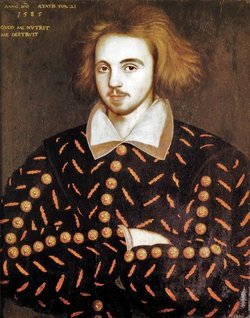
Portrait, perhaps Marlowe, found in Cambridge

Portrait, perhaps Marlowe, found in Cambridge

Earlier this week the 450th anniversary of Christopher Marlowe’s birth passed without a lot of media interest. Yet events to celebrate Shakespeare’s 450th are already getting a lot of attention. Although Marlowe is still highly-regarded, and his plays are performed and have been filmed, his reputation doesn’t come close to that of Shakespeare. But as Stanley Wells points out in his book Shakespeare & Co, “Though the dates and sequence of Shakespeare’s early plays are problematic, it seems certain that if Shakespeare had died when Marlowe did, we should now regard Marlowe as the greater writer”.

Marlowe was born in Canterbury, and baptised on 26 February 1564 two months before Shakespeare. Both came from similar backgrounds, Marlowe the son of a shoemaker, Shakespeare the son of a glover. Marlowe attended the King’s School in Canterbury, a school at which he won a scholarship to attend Corpus Christi College, Cambridge, where he was expected to be prepared for Holy Orders.

Most of what we know about Marlowe comes from his rather frequent brushes with authority. His spying activities are inferred when in 1587 the Privy Council wrote to the administrators of Cambridge University to explain his absences, saying he had “done her Majesty good service…in matters touching the benefit of his country”.

After leaving Cambridge he moved to London where in 1589 he was arrested for murder having been involved in a street fight, but was later found to have been acting in self-defence. In 1592 he was deported from the Netherlands on charges of counterfeiting coins. Later that year he allegedly assaulted two constables in Shoreditch, and in Canterbury he was accused of damaging property though the charge was dropped. In May 1593 a series of events culminated in Marlowe’s death in Deptford, a shady business for which the coroner’s report was found only in 1925.

In between all this, Marlowe wrote the plays and poems for which he is remembered, including Hero and Leander, Tamburlaine the Great (2 parts), Dr Faustus, Edward II and The Jew of Malta. Incidentally only one example of Marlowe’s writing exists: a signature on a will which he witnessed, spelled “Marley”.

Shakespeare refers to Marlowe in As You Like It, with the quotation from Hero and Leander “Who ever loved, that loved not at first sight”, and a mention of the “dead shepherd”. Among other examples, the Player’s speech in Hamlet seems to refer to Marlowe’s play Dido, Queen of Carthage. Some of Marlowe’s dramatic poetry is extremely striking and deservedly famous: here is the speech describing Helen in Dr Faustus:

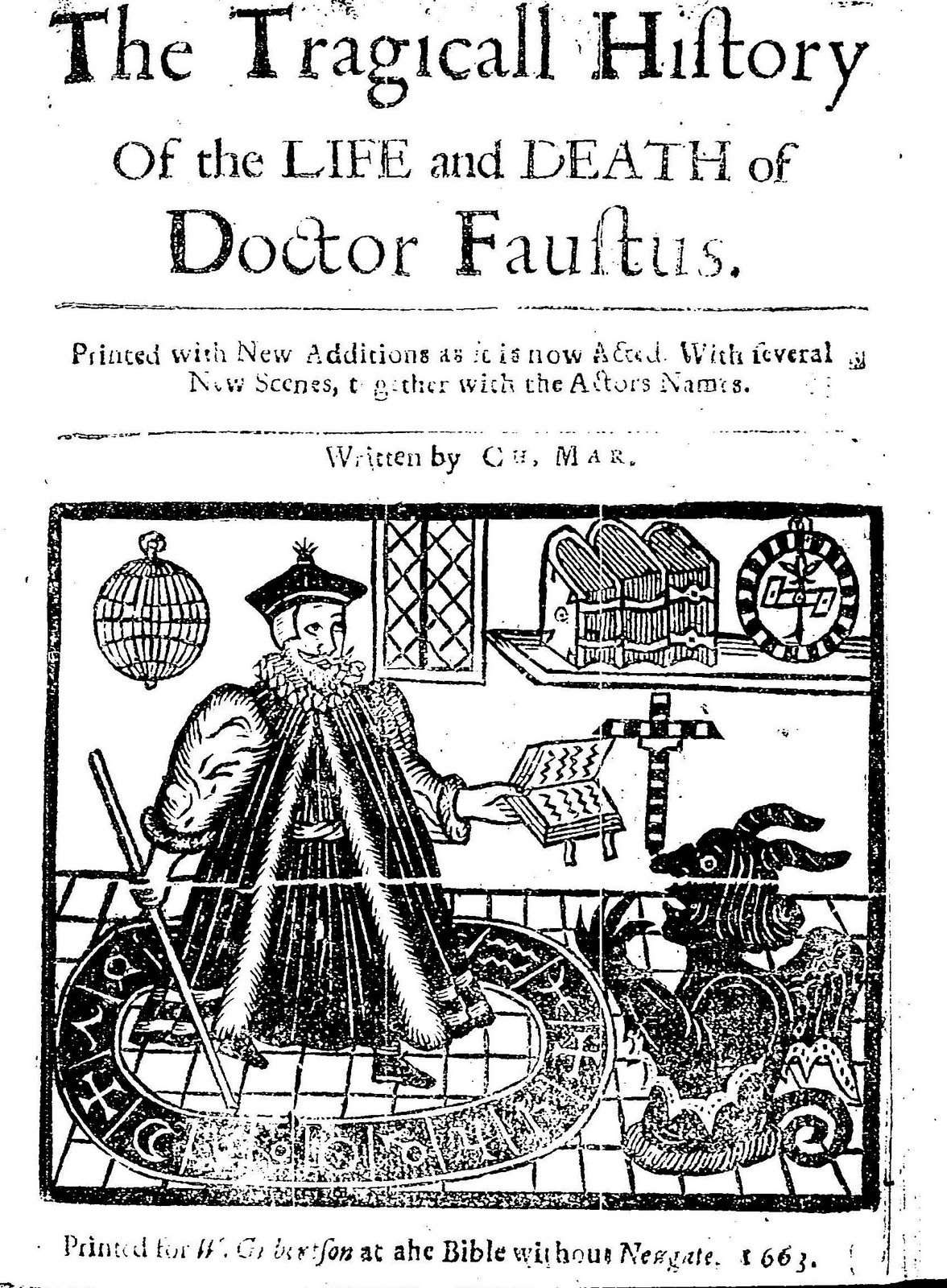
Title page of a late quarto of Dr Faustus, 1663

Title page of a late quarto of Dr Faustus, 1663

Was this the face that launch’d a thousand ships,
And burnt the topless towers of Ilium?
Sweet Helen, make me immortal with a kiss.
Her lips suck forth my soul: see where it flies!
Come, Helen, come, give me my soul again.
Here will I dwell, for heaven is in these lips,
And all is dross that is not Helena.
I will be Paris, and for love of thee,
Instead of Troy, shall Wittenberg be sack’d;
And I will combat with weak Menelaus,
And wear thy colours on my plumed crest;
Yea, I will wound Achilles in the heel,
And then return to Helen for a kiss.
O, thou art fairer than the evening air
Clad in the beauty of a thousand stars;
Brighter art thou than flaming Jupiter
When he appear’d to hapless Semele;
More lovely than the monarch of the sky
In wanton Arethusa’s azur’d arms;
And none but thou shalt be my paramour!

Marlowe was writing for the Admiral’s Men, and their leading actor Edward Alleyn. His heroes are men of dangerous ambition: Tamburlaine the conqueror, Faustus who sells his soul to the devil in return for unlimited knowledge. The Jew of Malta is a play that seems to set out to offend everybody: Jews, Turks, and Christians (monks and nuns). The plays were spectacularly successful, full of horrors and seemingly unstageable events.

So how is Marlowe’s 450th being celebrated? The Marlowe Society at Cambridge University is one of the most distinguished student acting groups in the country, founded in 1907 and during the year all of his plays are to be acted in Cambridge.

Events are also taking place in London and Canterbury. The Marlowe Society’s website includes a great deal of information:
The Marlowe Society together with the Marlowe Theatre, Fourth Monkey Theatre Company, and University of Kent have organised a series of events in Canterbury to mark the anniversary. The Fourth Monkey Theatre Company is to present three of Marlowe’s plays in March, and a number of eminent speakers will each give a lecture associated with one of the productions at different historic venues in the city.

The Marlowe Memorial in Canterbury

The Marlowe Memorial in Canterbury

From 31 May-1 June there will be a special weekend held by the Alliance of Literary Societies to coincide with the anniversary of Marlowe’s death. It’s being held at the schoolroom of the King’s School, Canterbury, and will include wreath-laying at the Marlowe Memorial. I didn’t know until just now that there was a Marlowe Memorial. Dating from 1891 the statue shows the semi-naked figure of the muse of poetry. It’s a charming piece of work, but hardly seems to match up with the Marlowe we now remember for his homosexuality, violence and atheism.

Away from Canterbury itself there are a variety of events. On 13 March there’s a free lecture entitled Dire Goings-on in Deptford at the Guildhall Library in London, and on 18 March a one-day symposium at the University of Kent on the subject Marlowe in Performance: Then and Now. A fitting year of celebrations after all.

Share
Posted in Legacy, Shakespeare's World | Tagged , , , , , , , | Comments Off on Christopher Marlowe, 450 years on

Shakespeare and the Georgians

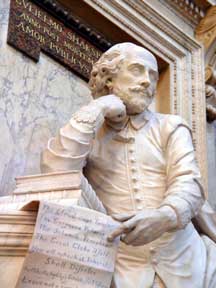
The 1741 statue of Shakespeare in Poet's Corner

The 1741 statue of Shakespeare in Poet’s Corner

2014, it seems, is going to be the year of the Georgians, with several different exhibitions looking at different aspects of life in the period covering 1714 to 1837. At the British Library there is an exhibition Georgians Revealed: Life, Style and the Making of Modern Britain. To quote the exhibition website: 

From beautifully furnished homes to raucous gambling dens, Georgians Revealed explores the revolution in everyday life that took place between 1714 and 1830. Cities and towns were transformed. Taking tea, reading magazines, dancing, gardening and shopping for leisure were commonplace, and conspicuous consumption became the pastime of the emerging middle classes.

Popular culture as we know it began, and with it the unstoppable rise of fashion and celebrity. Art galleries, museums and charities were founded. In this time of incredible innovation, ideas were endlessly debated in the new coffee houses and spread via the information highway that was mass print.
This major exhibition is on until only 11 March, so you haven’t got long to catch it.

One of the costumes on display in Bath Costume Museum

One of the costumes on display in Bath Costume Museum

The conspicuous consumption talked about in the British Library is now on view in the Bath Fashion Museum where a whole series of stunning original costumes are on show. These include “gowns made of colourful and richly patterned woven silks, as well as embroidered coats and waistcoats worm by Georgian gentlemen of fashion”.. The exhibits, “a selection of the finest fashions worn by those attending Assemblies, and other glittering occasions of 18th century life”  also trace the changes in fashion over the period, including some of the most extreme and impractical of garments, the wide-skirted dresses worn at Court in the 1750s and 1760s. A review of the exhibition is here.

Another major exhibition has just closed in New York about the architect William Kent, a major influence in his day but less well-known nowadays. The exhibition William Kent: Designing Georgian Britain has been attempting to set this right with a great website about the exhibition, and a review from the New York Times. The good news for us in the UK is that the same exhibition will be running at the Victoria and Albert Museum in London from 22 March to 13 July 2014.

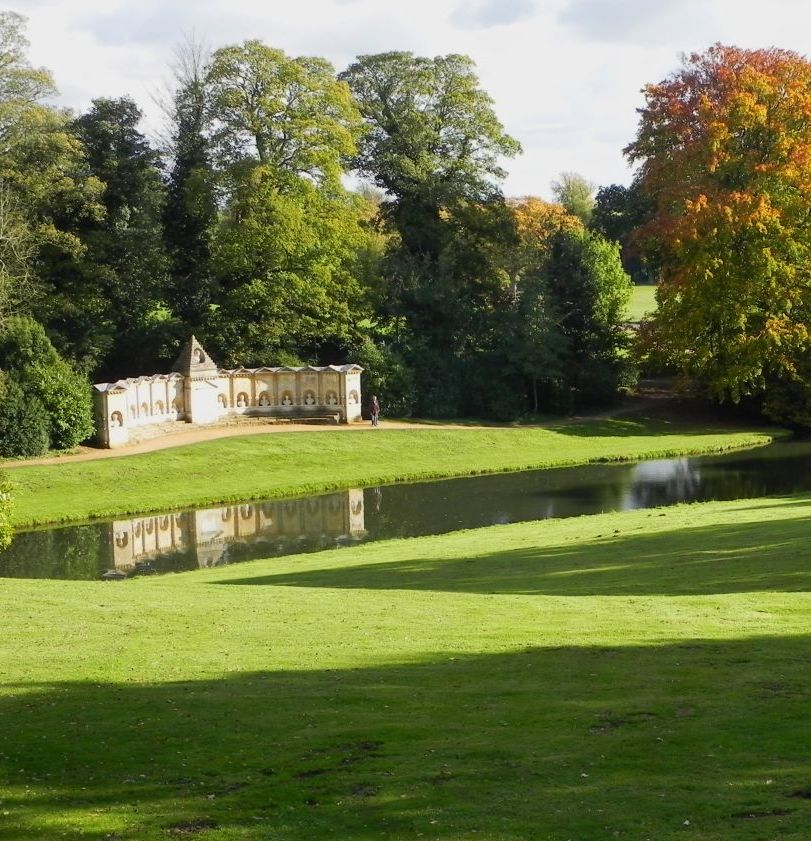
The  Temple of British Worthies at Stowe

The Temple of British Worthies at Stowe

William Kent played a major part in the popularising of Shakespeare in the eighteenth century. He was involved in the creation of the great gardens at Stowe, and designed the Temple of British Worthies in which a bust of Shakespeare featured alongside politicians and scientists.

More famously, William Kent designed the statue of Shakespeare that was executed by Peter Scheemakers and positioned in Westminster Abbey’s Poet’s Corner in 1741. His design, based on classical statuary, and placed within a classical setting, was immediately popular. It was also the first statue of Shakespeare in the capital.

The importance of this image of Shakespeare cannot be over-estimated, according to the book The Face and Figure of Shakespeare documenting an exhibition that took place in 2009, subtitled How Britain’s 18th century sculptors invented a National Hero. “In the 1740s and 50s Britain desperately needed a National Hero. The victories of Marlborough over France and Spain thirty years earlier had receded into the past. In the spring of 1745 the French beat the British, Dutch and Austrians decisively at the battle of Fontenoy. By December of the same year the Jacobites reached as far south as Derby. Only the indecision of his own generals and the effective Royal Navy blockade of French ports prevented Prince Charles Edward Stuart from being supported by an invasion army and regaining the Crown from the usurping Hanoverians”.

In this atmosphere, Shakespeare came to fill the vacant role of national hero, helped by the phenomenal success of the actor David Garrick. And by the end of the 1750s the French had been decisively overcome in a series of battles, to the extent that Garrick staged a pantomime poking fun at them.

While researching this post I came across something I can’t resist sharing with you. The site Locating London’s Past is making available Jean Rocque’s 1746 map of London geo-referenced so you can see the map overlaid with a modern version of the city. It’s fascinating stuff – do enjoy it.


Share
Posted in Legacy | Tagged , , , , , , , , | Comments Off on Shakespeare and the Georgians

Theatre, democracy and Shakespeare

The Theatre in Ephesus

The Theatre in Ephesus

Dr Michael Scott’s BBC4 series Ancient Greece: the Greatest Show on Earth, looking at theatre in the classical world, has reached the Roman period. This is only available to download until 27 February, though you will then have a few weeks to watch it.  I recommend you do so.

The series isn’t just about the history of Greek theatre. Instead Scott shows how theatre expresses the beliefs and values of the civilisation in which it occurs. In this episode he shows what happened to Mediterranean culture once the Romans began to dominate it. He does this through examining the buildings, the plays written for them and the actors who performed in them. His analysis can easily be extended to include the situation in Shakespeare’s England many centuries later.

With glorious shots of Greek theatres he made the point that these were spaces easy to access from all sides, built to have perfect acoustics, to be both inclusive and part of the landscape. Democracy and theatre evolved at the same time, and the two were intertwined. The huge auditoria were designed to hold large audiences attending festivals, and the plays written discussed important political issues on the relationship of the individual to the state, often criticising public figures.

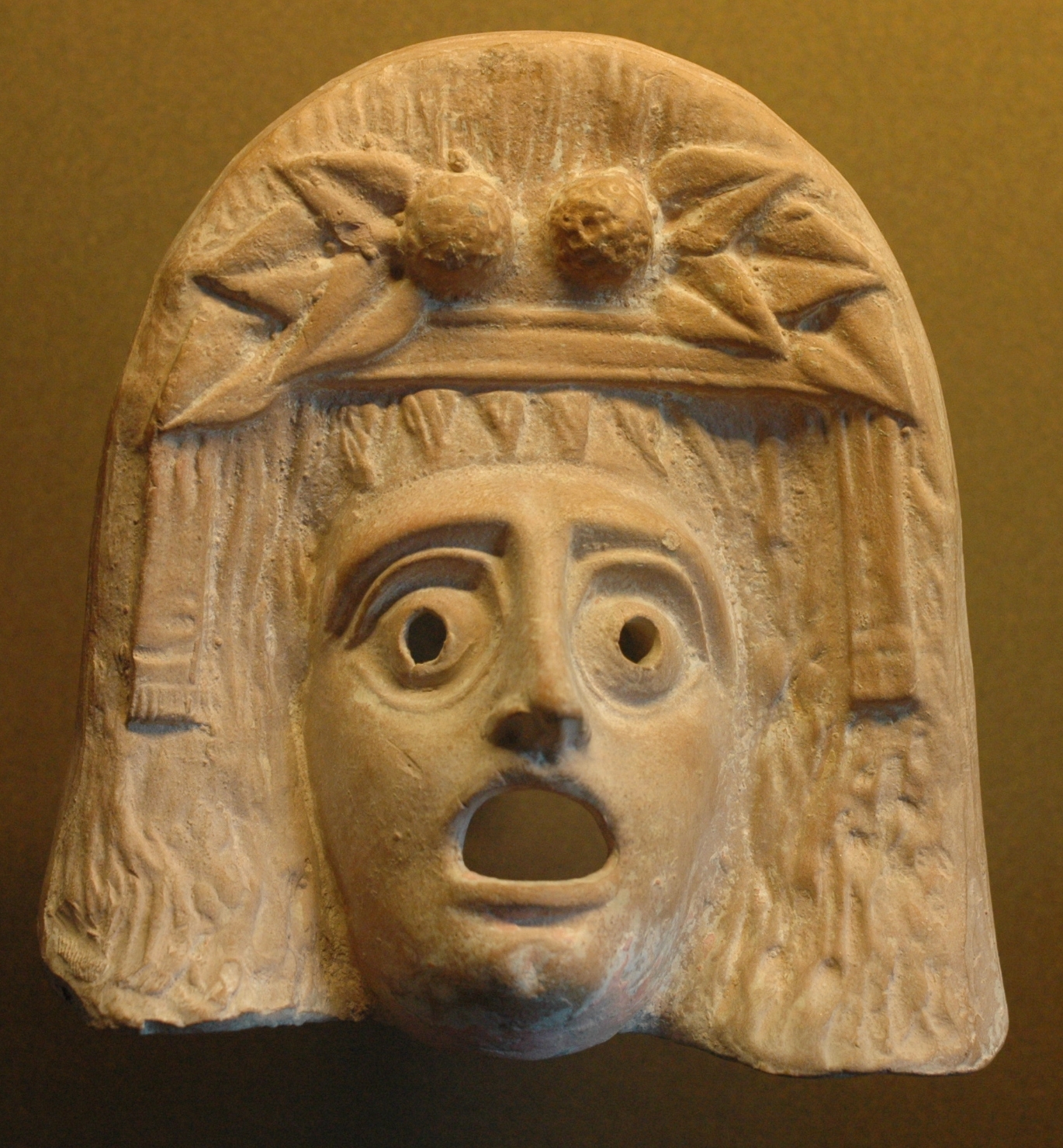
tragedy maskMoving to the Roman period it was possible to see how the physical theatres indicated a change in ideas of government. Although they wanted the prestige and cultural achievements of the Greeks, the Romans began to control their audiences by the use of temporary theatres which could be easily closed. Acting, rather than being a high-status occupation, became low status. When Pompey built his theatre in Rome in 55BC it was the largest building in the city. Later theatres, such as the one built by the Emperor Augustus, were completely enclosed, with lots of entrances that could be controlled. High-status individuals were allocated the best seats while the lower classes sat furthest from the stage. Instead of discussing political ideas, new kinds of entertainments were devised built around mime, music and dance.

He pointed out, thought, that the Roman influence on theatre was not entirely negative. It was in the Library built by the Roman Emperor Hadrian that many of the plays of the Greek and Roman theatre were preserved. 2,500 years after some of them were written, the plays still have an emotional impact on us. We still celebrate the achievements of Greek and Roman culture, and appreciate how important theatre can be in promoting democracy.

How does this relate to Shakespeare’s theatre? A week or so ago Dr Andy Kesson from the University of Roehampton gave a lecture at the Shakespeare Institute. He is currently working on a project called “Before Shakespeare”, looking at theatres in London before 1576 when The Theatre, the first “permanent” theatre was built. He questioned this idea of permanence, since playhouses were poorly built, prone to fall down, and noted that several “permanent” theatres were only used for a short time. In London, unlike ancient Greece or Rome, playhouses were not officially sanctioned and had to be put up outside the city walls, though the companies themselves were invited to perform privately in a number of venues, even before royalty. Plays were potentially subversive and had to be approved before they could be performed: not much sign here of the freedom allowed in ancient Greece, but neither were the actors restricted to the bland propaganda that developed in Rome. Maybe the London authorities realised that theatre was a valuable safety valve where political issues could be discussed as long as they were not too obviously related to current events. Hence the need for Shakespeare’s plays to be set in either a historical period or a distant place.

In the last few days Laura Nicklin has reported on a lecture by Professor Jonathan Neelands from the University of Warwick on the new BSA Education Network blog. His subject was Shakespeare, Theatre and Democracy: Towards a Playful Future.

I’d encourage you to read the whole post. Neelands agreed with many of the points raised in Scott’s TV programme about the importance of theatre to democracy in its encouragement of engagement.  He took it further, though, suggesting that theatre can have an important role in education, as he had observed “children aged six years old and thirteen years old …engage in playing games and functioning as though they were a miniature society. This highlighted children’s ability through play to develop through their own imaginative creations democratic systems.”   And ” the ability of theatre to enable and develop these specific skills cannot be overlooked, nor should it in preparing and equipping children for their participation in a truly democratic future”.

Today theatre in the UK is seen as a peripheral activity, but all three of these presenters share the belief that in a democracy theatre can have an important role in promoting discussion and sharing political and social ideas.

Share
Posted in Legacy, Shakespeare's World, Sources | Tagged , , , , , | Comments Off on Theatre, democracy and Shakespeare

Parodying Hamlet

Rosencrantz and Guildenstern 1967: John stride as Rosencrantz, Edward Petherbridge as Guildenstern

Rosencrantz and Guildenstern 1967: John stride as Rosencrantz, Edward Petherbridge as Guildenstern

The best-known play based on Shakespeare’s play Hamlet is Tom Stoppard’s brilliant 1966 play Rosencrantz and Guildenstern are Dead. It follows the plot of Hamlet from the  point of view of the pair of hapless and confused courtiers, owing much to Samuel Becket’s Waiting for Godot and his characters Vladimir and Estragon. Dating from the exuberant 1960s it has its own existence independent of both the plays that inspired it. With the recurrent idea that every exit is an entrance somewhere else, Stoppard gives us the conversations between Rosencrantz and Guildenstern after they’ve first met Claudius and Hamlet, where they reveal themselves to be completely out of their depth. In Shakespeare’s play there’s little sympathy for the pair, but Stoppard’s characters are little people who have no control over the situation they find themselves in.


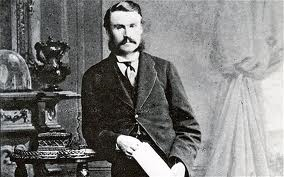
W S Gilbert

W S Gilbert

W S Gilbert’s spoof Rosencrantz and Guildenstern is a much frothier story containing many of the elements of Victorian comic romance with a hint of melodrama. It’s based much more loosely on Hamlet, without the murders. Ophelia, betrothed to Hamlet, meets Rosencrantz and the pair fall in love. In order to get Hamlet out of the way of their love, Rosencrantz, Guildenstern and Ophelia plan to trick him into performing a play written years before by Claudius which was so disastrous that even mentioning it is banned. Hamlet is held responsible for the performance, but execution is averted by the alternative suggestion that he should be exiled to “Engle-land” instead. At one stage, Hamlet tries to deliver the “To be or not to be” soliloquy, constantly interrupted by Rosencrantz and Guildenstern. Exasperated, he exclaims “Gentlemen,/ It must be patent to the merest dunce/ Three persons can’t soliloquize at once!” The play was written in 1874, staged in 1891, and has since received a number of performances.

Last Sunday’s event was a great opportunity to hear a rehearsed reading of this rarely-performed Hamlet spoof, but for me the most interesting of the offerings was a rehearsed reading of an even rarer play that had been performed only once before in Yasumi Prisoner of War Camp, Japan, on 3 June 1944. The play, entitled Shamlet, was written by David Piper, imprisoned in the PoW camp from 1942-1945. The play typescript, and Piper’s notebook, are both kept at the National Army Museum. PoW camps were usually grim places, but Piper records that the prisoners held monthly concerts. These are the notes Piper wrote after the performance:
 We put on “Shamlet” on Saturday, side-splitting success. Stage is 4 platforms in the open outside the hospital, and some curtains; costumes odds and ends, mostly odds. I was Laertes with a white D.J (off-white at least), a pair of Blue Nip trousers, bare feet and a huge sunflower as a buttonhole. Brian France who is a gaunt cadaverous man known as “Golgotha”, was Hamlet in a shirt and a pair of long woollen issue underpants. Ophelia in bathing trunks and bogus bosom etc. It’s good fun while it lasts, but afterwards it makes you so homesick, that everything bears strange associations, and turn where you may, all that you see makes you sick with nostalgia… 

The play has a chorus figure, the Commentator. This is part of his introduction:
We have chosen to present you – Hamlet. Not without some difficulty, of course – William takes 31/2 hours over it, deploying X characters (not including alarms and excursions) – 31/2 hours to disentangle the very simple case of our hero, who, however, complicates the whole thing by going all introspective (broody). So we had to change it a bit, & I hope you’ll agree it peps the whole thing up…

The Commentator is joined by the Little Man, who is ignorant of Shakespeare’s play. In the play Hamlet turns out to be a keen and robust golfer (Polonius is killed with a golf club). Piper himself played Laertes, a coward who faints at the sight of blood.

The home-sickness of the prisoners is apparent in the script, with its golfing terms, mentions of popular film stars such as Mae West and the longing for female company. In this play too Hamlet is constantly interrupted while trying to soliloquize, here the key line is “Frailty, thy name is woman”:
Hamlet: O woman, thy name is… thy name is…
Commentator: Mary Anne? Hypatia? Jane?
Hamlet: Shut up! You’ve got me all boxed up.. ah!
Woman, thy name is frailty.
Commentator: Nope. Haven’t met her.
Little Man: But what is woman?
Commentator: Well, well. Where’ve you been all these years? Woman? Well, now: it’s hard to explain..  Like you and me, but different (makes appropriate gesture). See?
Little Man. O yes. I remember now.. a long, long time ago.  Nice.

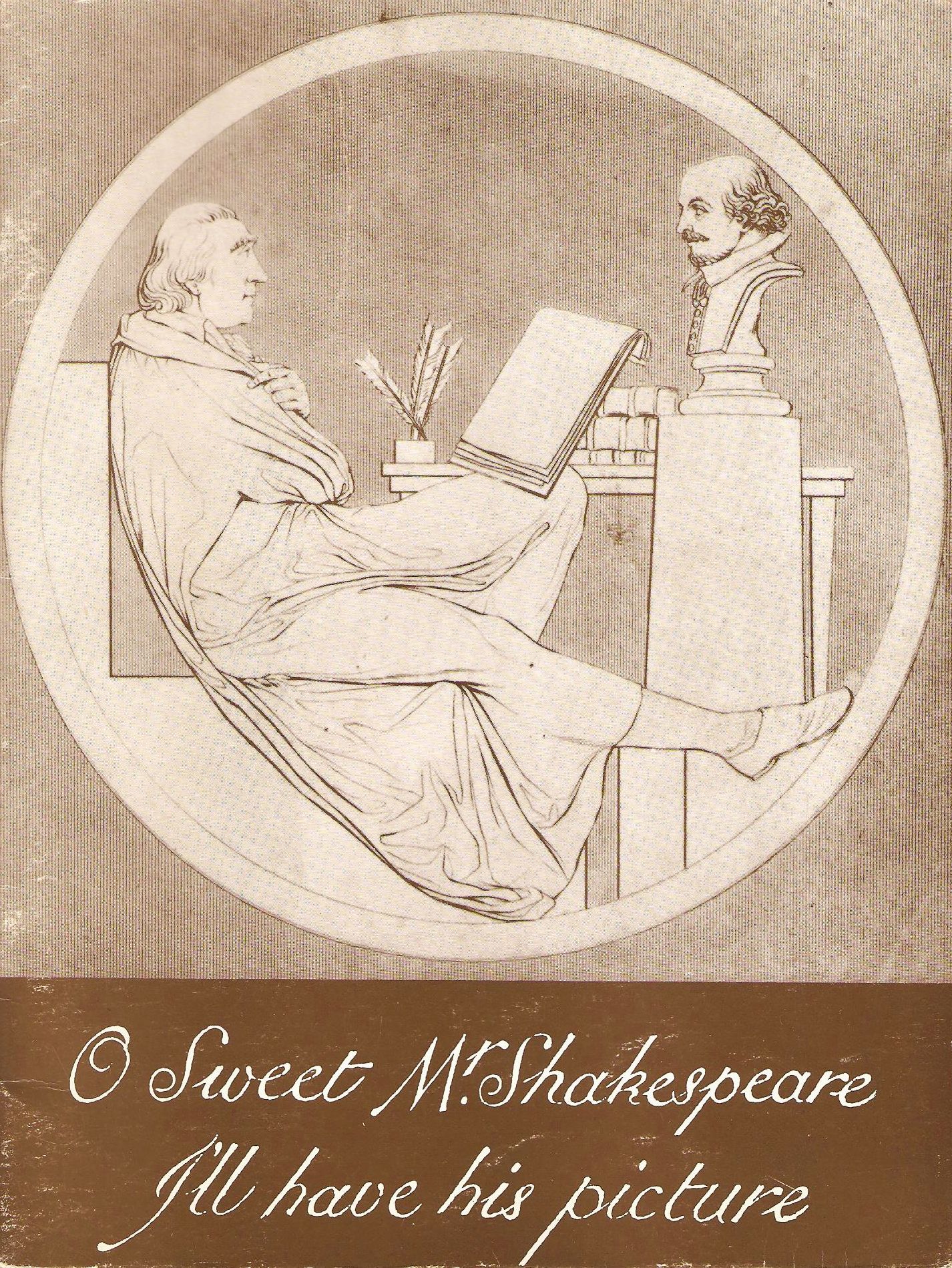
piperosweetmrshakespeareAfter being freed from the PoW camp David Piper went on to  have a distinguished career not as a playwright or actor, but as an art historian, who became in turn Director of the National Portrait Gallery, the Ashmolean Museum in Oxford and the Fitzwilliam Museum in Cambridge.  In 1964 while at the NPG, he wrote O Sweet Mr Shakespeare! I’ll have his picture“, a highly-illustrated popular 40-page booklet about images of Shakespeare.  His play, though, remained unknown and unperformed until now.

Share
Posted in Legacy, Plays and Poems | Tagged , , , , | 2 Comments

Shakespeare’s Italian context

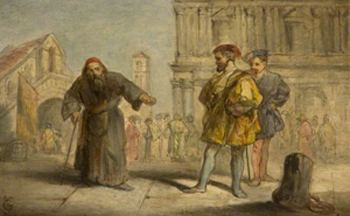
The Merchant of Venice

The Merchant of Venice

At least a couple of events relating Shakespeare and Italy are due to happen this year, one imminently in the UK and one, over the summer, in Italy itself.

I’ve already written about the summer school due to take place in the Italian city of Urbino from 12-26 July 2014 , but full booking details have now been released including timetabling and accommodation details.

James Stredder has just written about it for the newly-revamped British Shakespeare Association Education Network blog. His post is entitled  A Summer school in Italy to inspire teachers, students and Shakespeare enthusiasts.

Here is part of the description of what’s happening during the course, which has an amazing line-up : it “will feature three leading Shakespearian directors and performers, Bill Alexander, Michael Pennington and Martin Best. The careers of each include many years of work with the Royal Shakespeare Company. Bill Alexander and Michael Pennington will lead work on ‘The Merchant of Venice’ and ‘Romeo and Juliet’, respectively, and Martin Best will perform his lecture-recital, ‘Shakespeare’s Music Hall’ – and teach a seminar on the Sonnets.”

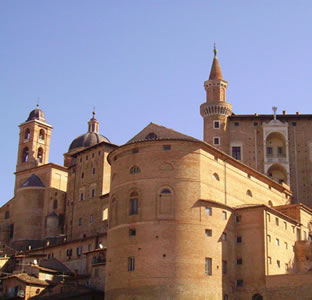
Urbino

Urbino

The post itself explains what participants can expect to get from the school:
 The Summer School brings together practitioners whose working lives have been devoted to performance, especially to realisation of the works of Shakespeare, in the theatre and in the concert hall. Their teaching sessions will focus on lively and creative approaches to Shakespearean texts (with the option for students of participating actively or of observing the ways in which performance evolves), but they will also set out to discover what part Italy and ‘the Italian context’ play in the appreciation and understanding of Shakespeare.
It should be a very special fortnight.

James’s post contains the idea that Italy held, and still holds, a special place in the minds of people from England. As far as we know, like most of his audiences, Shakespeare never travelled to Italy, but used it as a glamorous location for plays containing danger, violence, treachery and romance. In Cymbeline the innocent British man Posthumus is persuaded by the cunning, lying Italian Iachimo that Imogen has been unfaithful to him. She suggests “That drug-damn’d Italy hath out-craftied him”.

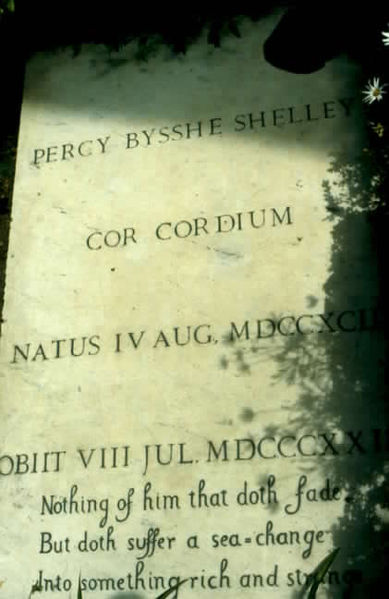
Shelley's gravestone in Rome

Shelley’s gravestone in Rome

The country retained its risky reputation when in the early nineteenth century several young Romantic poets were attracted by the possibility of living more unconventionally than in England. Byron and Shelley spent several years in Italy and Keats travelled there in the hope of easing his tuberculosis.  He died in Rome, both he and Shelley being buried in the same graveyard. Inevitably they admired Shakespeare’s writings about the country: several lines from The Tempest are carved on Shelley’s gravestone.

After Shakespeare’s time wealthy Brits became great travellers to the continent and particularly to Italy on the Grand Tour, an essential part of their education. Their search was for the foundations of European art and culture and tourists commissioned works of art with which to impress their visitors back home. In his anthology of almost a hundred accounts The Fatal Gift of Beauty: The Italies of British Travellers, M Pfister claims that these tourists, like Shakespeare, misrepresented the country:
The Italy perceived by the British travellers is – at the least – “half-created” by them. Or, to put it in less romantic and more fashionable terms: it is a construction, and “Italy made in England”. 

This idea is being investigated in the one-day interdisciplinary conference being held at the University of Warwick this Saturday 22 February Italy Made in England: Contemporary British Perspectives on Italian Culture. Sadly for anyone who hasn’t reserved their place booking is now closed, but places are still available for the free screening of the documentary Girlfriend in a Coma at 4pm on Friday.

Quoting from the website: “Our proposal is to bring together scholars and specialists from a wide range of disciplines to answer the following critical questions:…How it Italy perceived within global culture, and indeed, how many and what kinds of Italies circulate today? This will span from the Renaissance image of Italy as a pinnacle of culture to the modern-day “sick man of Europe”.

In his Shakespeare, Politics and Italy blog, based around his book of the same title, Michael J Redmond agrees that the English perception of Italy tells us almost more about us than them.

Just like most of his contemporaries… Shakespeare was a voracious consumer of Italian books and English books about Italy. In many ways, the importance of Italy in every aspect of early modern English culture reflects the provincialism of that island, watching the intellectual ferment of the Renaissance from afar.

Italy’s a country that retains its fascination for those of us in the cold, damp islands of Britain.

Share
Posted in Legacy, Shakespeare's World | Tagged , , , , , , , | 2 Comments

Sadness and the four humours in Shakespeare

Hamlet - the Gower Memorial

Hamlet – the Gower Memorial

The February 2014 meeting of the Stratford Shakespeare Club featured Dr Erin Sullivan, Lecturer and Fellow of the Shakespeare Institute, speaking on Beyond Melancholy – Sadness and Selfhood in Renaissance England. Even her title was a reminder of how much has changed in the description of health since Shakespeare’s time. The word “sad”, she told us, originally meant “gorged, full of food, replete”, and “selfhood” was probably not used at all.

Much of her talk was about the idea of melancholy as one of the four humours which were believed to determine the health of the human body. This theory, dating from ancient times, dominated  Western medicine until only about 200 years ago, yet it has been almost completely forgotten.

200px-Every_Man_in_his_Humour_title_page_1616The word “humour” was also used in Shakespeare’s period in relation to character (very obviously in Ben Jonson’s plays Every Man in his Humour and Every Man out of his Humour). Shakespeare uses the word many times: in sonnet 91 he writes “Every humour hath his adjunct pleasure,/ Wherein it finds a joy above the rest”. The word only developed its modern association with being funny in the late 17th century.

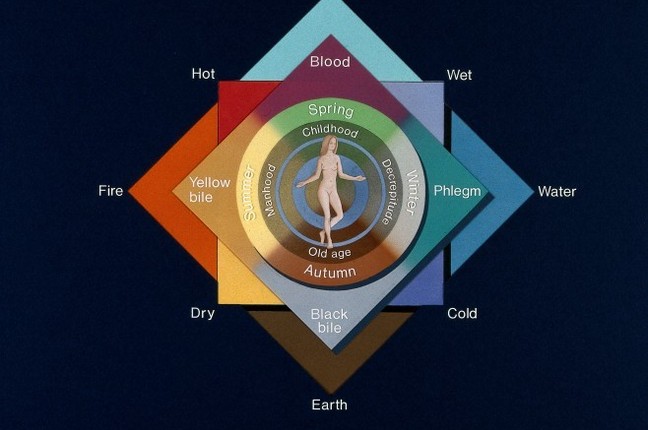
The four humours were blood, yellow bile, black bile (or melancholy) and phlegm. Each was linked with one of the four elements of earth, air, fire and water and two of the qualities hot, cold, wet and dry. A year or two ago the US National Library of Medicine created an exhibition on the subject, with an informative website.   This page in particular gives more explanation, and some lovely images from the Folger Shakespeare Library.

V0048018 The four elements, four qualities, four humours, four seasonThis diagram admirably shows these connections and more: humours were associated with both the seasons and phases of life. The element “air” is missing from the diagram but should be at the very top.  To be healthy the body had to be in balance, and illness was caused by having too much of one of the humours. Melancholy was linked with the element earth and the qualities of dryness and cold. It was also associated with autumn, and with old age. It was the most powerful of the humours, and could cause physical illnesses such as digestive problems, fits and lethargy. It’s easy for us today to think of melancholy as simply the mental illness known as depression, but the ancient theory of the humours is more sophisticated. The necessity of  treating the whole person rather than just the obvious symptoms of a reported illness is an idea that is becoming more dominant again.

I’ve been getting rather behind with the Shakespeare Institute’s MOOC on Shakespeare’s Hamlet, and  have only just tackled week 3 in which Erin Sullivan talks about Hamlet’s melancholy and madness. If you’re not enrolled on the course it’s still possible to read her online article Melancholy, medicine and the Arts which was published in The Lancet Vol 372 issue 9642, in 2008.

Hamlet is Shakespeare’s most famous melancholic, memorably coming face to face with the reality of mortality when holding Yorick’s skull. Earlier, he analyses his own mental state:
I have of late, but wherefore I know not, lost all my mirth, forgone all custom of exercises: and indeed it goes so heavily with my disposition that this goodly frame the earth, seems to me a sterile promontory…. What a piece of work is a man … and yet to me, what is this quintessence of dust?” 

Melancholy is also linked to introspection, thoughtfulness, and genius. No wonder it became so fashionable. Shakespeare’s characters Jaques in As You Like It and Don Armado in Love’s Labour’s Lost seem to affect it, rather than having it. Jaques doesn’t want to be thought of as having an ordinary kind of melancholy: “it is a melancholy of mine own”, he says, “in which my often rumination wraps me in a most humourless sadness”. Antonio in The Merchant of Venice, though, is a genuine sufferer, opening the play with the line “In sooth I know not why I am so sad”.

Erin Sullivan also mentioned that she had examined the casebooks of a number of doctors in Shakespeare’s period, including that of his son-in-law John Hall, and found that only about 5% of cases describe melancholy as opposed to grief or other kinds of sadness which had an obvious cause.

She also talked about the effect of the changes brought about by religion, in particular uncertainties of the time. Sadness could be caused by “godly sorrow”,  the result of sin, and the idea that we can never grieve or repent enough. Despair, an extreme form of sadness, could be a result of the Calvinist idea that only the elect will be saved.

Towards the end of her talk she suggested that maybe in Shakespeare’s period misery was the dominant human condition. Did people expect to their lives to be dominated by suffering?  Today we feel entitled to be happy. After all the Declaration of Independence in 1776 enshrined the right to “Life, Liberty and the pursuit of Happiness”, though the Universal Declaration of Human Rights more moderately states “Everyone has the right to life, liberty, and security of person”.

Shakespeare’s audiences may have expected their own lives to be full of suffering but they wanted to see on stage characters experiencing the extremes of sadness and joy. A potentially happy marriage or two usually ends the comedies, but anyone believing in the theory of the humours would have expected the extreme emotions of Romeo and Juliet to end in disaster.

Share
Posted in Shakespeare's World | Tagged , , , , , , , , , | Comments Off on Sadness and the four humours in Shakespeare