Music and dancing for Queen Elizabeth

Buttercups in a Warwickshire field. By Phil Mills

We’re just reaching the end of the merry month of May, and about to embark on a weekend of celebrations for the Platinum Anniversary of Queen Elizabeth II’s accession to the throne. Events, many of them outdoors, will be taking advantage of the long days and good weather is forecast for much of the time. The UK’s outdoor spaces, whether gardens, public parks or countryside, are looking fresh and beautiful. And after two difficult years, people are ready to enjoy them.

Although much has been made of the eating and drinking part of the festivities, it wouldn’t be a proper celebration without music and dancing. Shakespeare-lovers will remember the sheep-shearing festival in The Winter’s Tale,  which onstage can turn into riotous, bacchanalia. That party takes place later in the summer, after the hard work of shearing the flock is over. This week has more the feeling of one of the songs in As You Like It, looking forward to the summer and better times ahead:

It was a lover and his lass,
With a hey, and a ho, and a hey nonino,
That o’er the green corn-field did pass
In the spring time, the only pretty ring time,
When birds do sing, hey ding a ding, ding.
Sweet lovers love the spring.
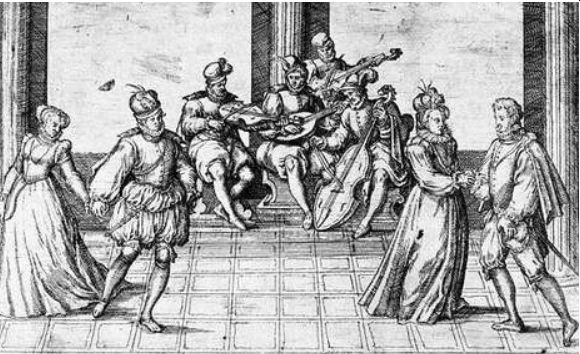
A courtly Elizabethan dance

Shakespeare loved music, using it to create all kinds of mood in his plays. He also often staged dances, but I hadn’t realised until I listened to a recent radio programme quite how many references to dances, often courtly ones, there are. The programme was The Early Music Show on Radio 3 on 29 May 2022 (a repeat from 2019).

In this, choreographer and dance historian Darren Royston and Lucie Skeaping take a look at the 16th-century dancing manual, Orchesographie, published in France in 1589. It was as a result of this publication that many of the dances described became familiar across Europe. It’s a fascinating listen that includes many references to Shakespeare, including recordings of some of his songs.

Jigs were so popular they were performed at the end of each play staged, and Shakespeare mentions morris dancing and the hobby horse so casually it’s clear they were known to all. One of the sections they focus on in the programme is a discussion in Twelfth Night between Toby Belch and Andrew Aguecheek. Andrew hopes to make an impression on Olivia by his skill in dancing, egged on by Toby. He delights in masques and revels, claims he can do a kickshaw, and they go on to use a whole series of terms to describe more courtly dances:

Toby Belch: What is thy excellence in a galliard, knight?
Andrew Aguecheek: Faith, I can cut a caper.
Toby Belch:  And I can cut the mutton to’t.
Andrew Aguecheek: And I think I have the back-trick simply as strong as any man in Illyria.
Toby Belch:… Why dost thou not go to church in a galliard and come home in a coranto? My very walk should be a jig; I would not so much make water but in a sink-a-pace… Is it a world to hide virtues in? I did think, by the excellent constitution of thy leg, it was formed under the star of a galliard.

All this and more is explained in this really enjoyable programme. While our present Queen isn’t going to be doing any dancing this weekend, remember the music and dances loved by her forbear, Queen Elizabeth 1.

Share
Posted in Legacy, Shakespeare on Stage, Shakespeare's World | Tagged , , , , , , , , , , , , | Comments Off on Music and dancing for Queen Elizabeth

Celebrating Gregory Doran and Sir Antony Sher

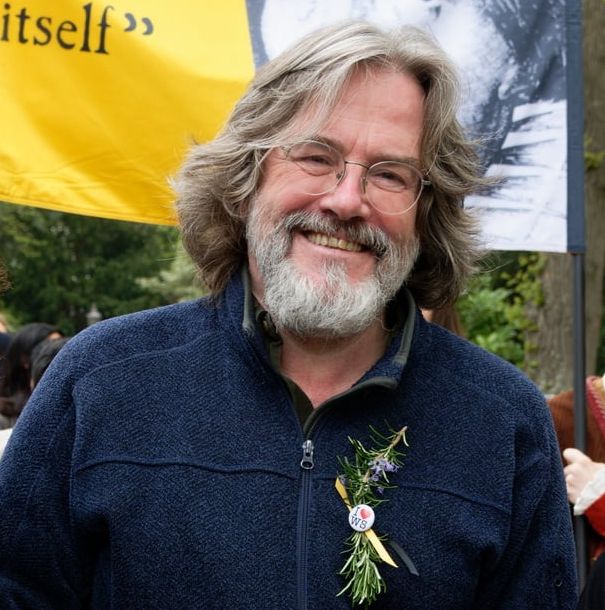
Gregory Doran at the Shakespeare Birthday Celebrations 23 April 2022

The day before Shakespeare’s Birthday, 22 April 2022, Gregory Doran announced that he was standing down from his post as Artistic Director of the Royal Shakespeare Company. He’s held it for 10 years, a period of political unrest with issues like Black Lives Matter, of national change with Brexit, of worldwide chaos due to the Covid Pandemic which has hit theatres particularly hard, and of personal tragedy with the illness and death of his husband Sir Antony Sher in 2021.
The search for a replacement has already begun, but Doran will be a difficult person to replace. His relationship with the RSC goes back to the 1980s and his knowledge of all things Shakespeare is well-known, often being called on to discuss almost any Shakespeare-related issue. He was interviewed on the BBC Radio 4 Today programme on 6 May. Here is the link: the interview begins at 2hrs44 mins 50 secs and lasts about 6 minutes. He described the leaving of the RSC as a wrench, but said it was also the right time. Keeping the Company functioning during the last couple of years has obviously been extremely challenging, but you can still hear in his voice his enthusiasm for Shakespeare and the excitement of directing his forthcoming production of Richard III. All they can do is “With our hearts and minds [to] experience the play new”. The production comes as Vladimir Putin’s Russia continues to invade its neighbouring country Ukraine. “You don’t have to make Shakespeare relevant. He just is”.

For the first time at the RSC a disabled actor, Arthur Hughes, will play the title role in his RSC debut. Talking about his late husband Antony Sher, Doran commented that “doing Richard III which has his fingerprints all over it is a great privilege and a pleasure”. Performing this role cemented Antony Sher’s reputation as a great Shakespearean actor and led the way to him playing many leading roles including Macbeth, Prospero, Iago, Falstaff and King Lear, often directed by Doran. They created an extraordinarily successful partnership, both personal and professional. Doran is not completely severing ties to the Company, remaining Emeritus Director, and taking part in celebrations of the 400th anniversary of the publication of Shakespeare’s First Folio in 2023.

Sir Antony Sher

It’s not too late to sign up to a free online event taking place from 14.15 on Monday 16 May 2022 that will celebrate Sir Antony Sher’s life and many achievements. The Equality Festival, organised by the Shakespeare Institute in Stratford-upon-Avon begins with Sher’s Shakespeare. It was recently announced that Gregory Doran will take part as part of a panel including Dame Harriet Walter, Amanda Harris and Alexandra Gilbreath.

Other speakers during the afternoon include Sir Stanley Wells, Professor Carol Rutter, Professor Russell Jackson and Professor Sir Jonathan Bate, and the Festival will go on until 15 June. It is free to register to take part in the virtual session, and here is the link.


Share
Posted in Legacy, Shakespeare on Stage, Stratford-upon-Avon | Tagged , , , , , , , | Comments Off on Celebrating Gregory Doran and Sir Antony Sher

Happy 458th Birthday William Shakespeare

21st century William Shakespeare

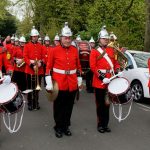
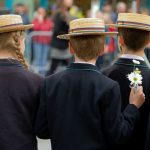
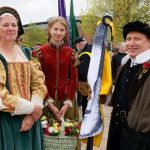
A little late, I’m posting some photographs from the Parade on 23 April 2022, at Shakespeare Birthday Celebrations in Stratford-upon-Avon. There was a particularly celebratory feel to this event as people came together for the first time since 2019. It’s easy for residents of Stratford to forget to what extent their town is known around the world, but many nations are always represented in honouring the world’s most famous playwright. The conflict in Ukraine was not forgotten, with their flag flying at the top of Bridge Street, and many of the flowers laid at William Shakespeare’s grave were in the national colours of blue and yellow. I hope you enjoy the photograph gallery below.

All the photographs were taken by Charles Tompkins.


Share
Posted in Legacy, Stratford-upon-Avon | Tagged , , | Comments Off on Happy 458th Birthday William Shakespeare

Shakespeare’s Come Home – the story completed

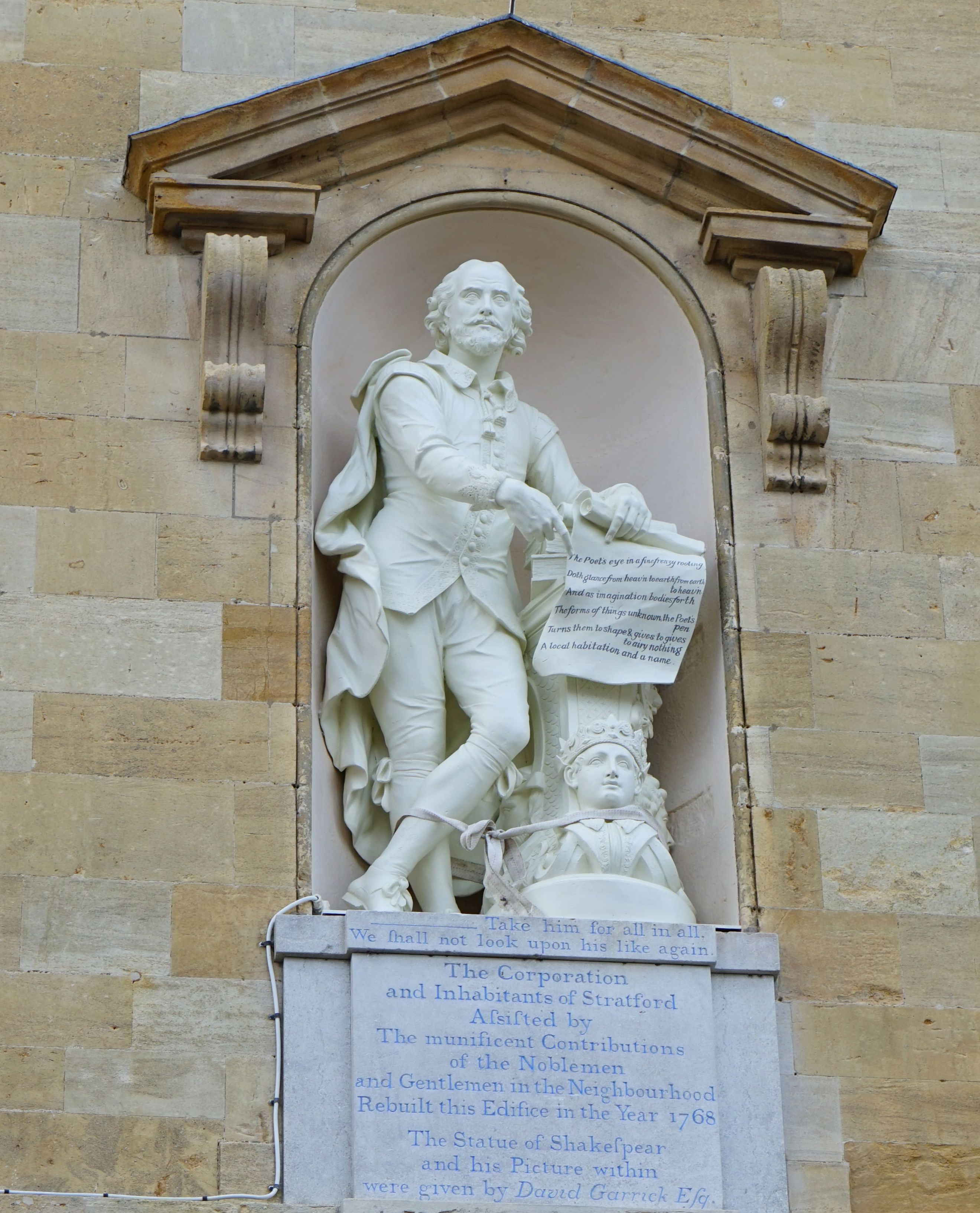
The restored statue is revealed

On Friday 22 April 2022 the project to restore the 1769 statue of Shakespeare to the Town Hall was finally completed. I wrote recently about the process of conservation and placing the statue back in place. The money to carry out the work was raised through a community project that is also worth remembering. Rev Dr Paul Edmondson, Head of Research at the Shakespeare Birthplace Trust, challenged local people to raise funds to restore the statue by a marathon reading of Shakespeare’s works entitled Shakespeare’s Coming Home!

From 1 to 12 March 2022 readings took place in the beautiful ballroom of the Town Hall. Famous actors including Harriet Walter, David Troughton, Michael Pennington and Janet Suzman all took part but perhaps more significantly so did hundreds of local people from businesses, cultural organisations and educational establishments.

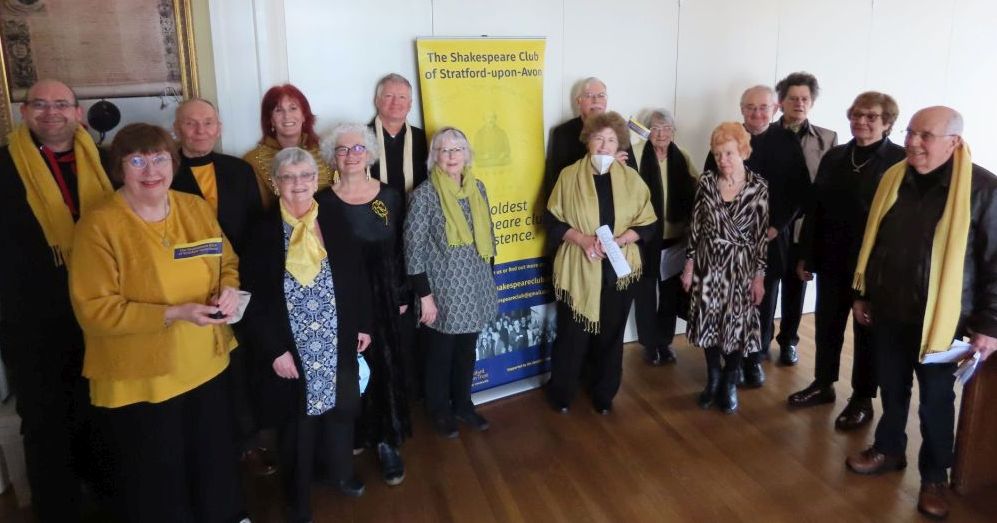
Members of the Shakespeare Club ready to read All’s Well That Ends Well

Examples included Pericles read by the Greek restaurant El Greco, Titus Andronicus read by Stratford Town Walk, Romeo and Juliet by Playbox Theatre, and Richard II led by St Andrew’s Church Shottery. Stratford’s own Shakespeare Club read All’s Well That Ends Well. The Club has links with the Town Hall going right back to its earliest days in the 1820s when it was the only Shakespeare organisation in the town.  The project was carried out in conjunction with Stratford’s leading jewellers, Pragnells, which matched the funding raised by local donations. In the end, the aim of £45,000 was raised.

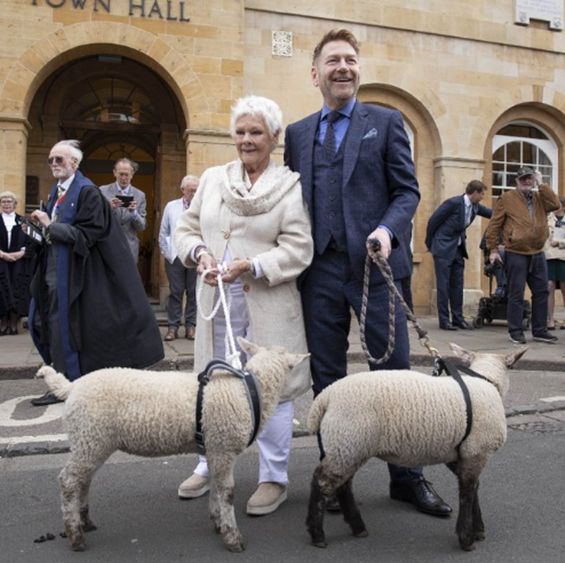
Dame Judi Dench and Sir Kenneth Branagh having received the Freedom of Stratford-upon-Avon 22 April 2022

So Stratford-upon-Avon’s first Birthday Celebrations since 2019 began in fine style with the official opening of the statue with Dame Judi Dench and Sir Kenneth Branagh removing its temporary cover. Both actors also received the Freedom of the Town of Stratford-upon-Avon, an honour also given to David Garrick in 1769 who originally gave the statue to the town.  David Garrick, like Dame Judi and Sir Kenneth, was the most celebrated Shakespeare actor of his day. Asked what privilege she would like to exercise as Freeman of the Town, Judi Dench asked to be allowed to herd sheep up the Town’s Sheep Street. The sheep were friskier than anticipated as you’ll see if you watch the video created by the Stratford on Avon Herald. It was a charmingly entertaining part of the event, but I think we can be sure that David Garrick didn’t do anything so undignified.

Share
Posted in Legacy, Stratford-upon-Avon | Tagged , , , , , , , , | Comments Off on Shakespeare’s Come Home – the story completed

Shakespeare’s Come Home!

The restored statue of Shakespeare on Stratford’s Town Hall

In August 2021 I wrote a post about the project to restore the 1769 statue  of Shakespeare that has stood in its niche on Stratford’s Town Hall ever since David Garrick gave it to the people of Stratford. It’s the only object that directly relates to David Garrick’s Jubilee that effectively turned Stratford-upon-Avon into a destination for visitors from all around the UK and indeed around the world.

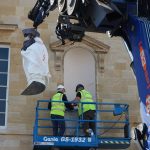
It can’t be said to have had a happy time in the intervening 250 or so years during which weather, pollution, and even a fire have had terrible effects on its appearance. I didn’t expect much of an improvement, but conservator Rupert Harris has done a spectacular job of returning the statue to its original state. I spent much of Wednesday 20th April 2022 watching a team of workers, under Mr Harris’s supervision, carefully and delicately replacing it ready for its official unveiling by Dame Judi Dench and Sir Kenneth Branagh. This will take place at 1pm on Friday 22 April as part of the Birthday Celebrations. Watching this process take place was a real treat.

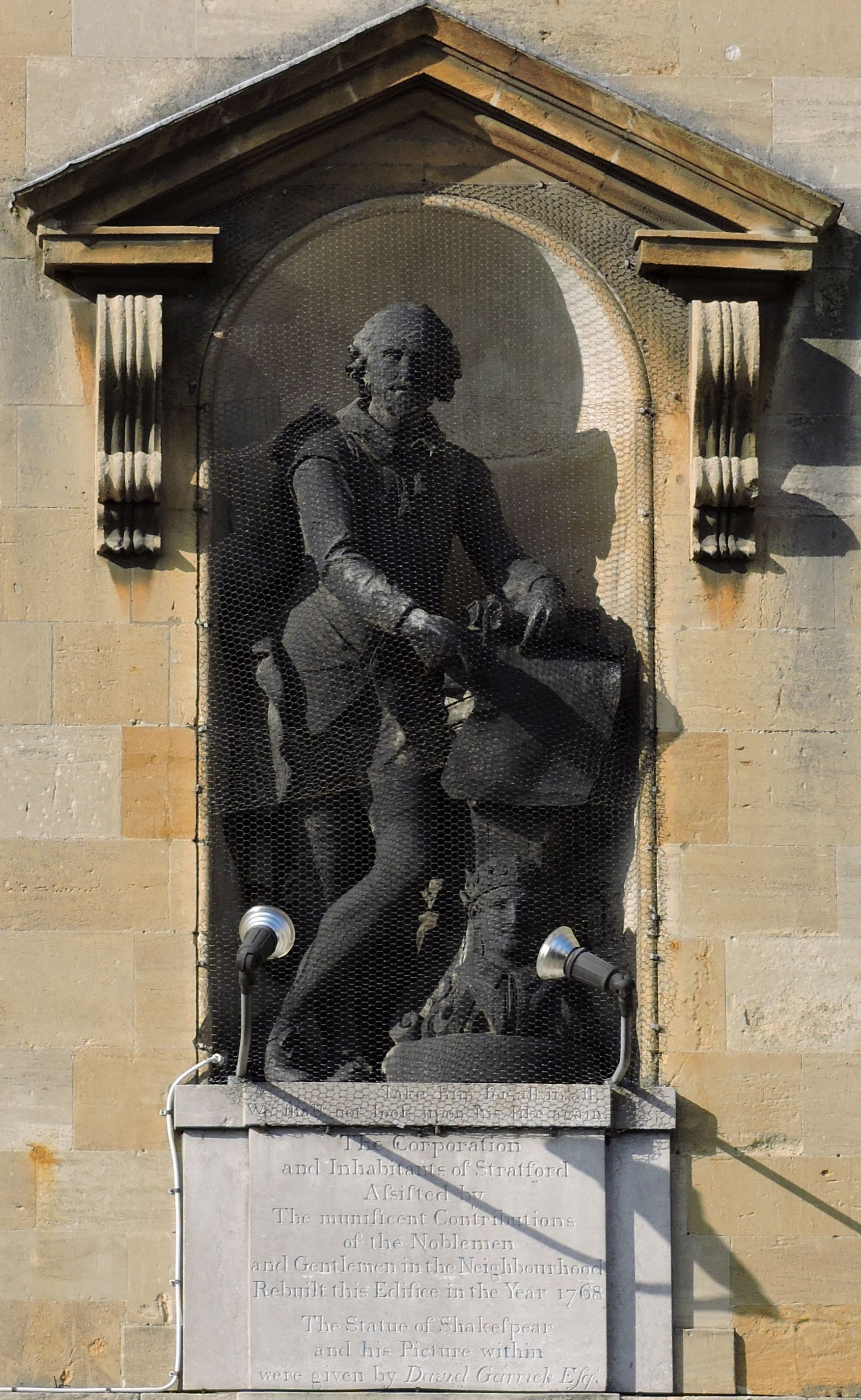
The statue of Shakespeare donated by David Garrick before restoration

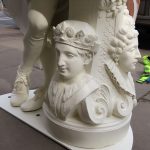
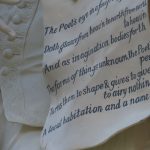
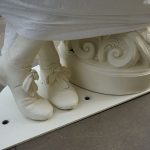
While waiting around I was lucky enough to be able to meet the conservator himself who showed me the date, September 1769, inscribed on the statue, hidden ever since it was hoisted into place. It’s the only lead statue he’s ever seen with a date on it – but then this was an important object, and a significant date. It was fantastic to see the statue up close: wrinkles on the breeches, embroidery on the stockings, details on the costumes of the monarchs, and even needle-holes on the shoes. Who would have guessed from its former appearance that the head of Shakespeare himself would  be so full of life?

The most striking difference is the statue’s colour. Lead statues imitated carved stone, so were always painted. Apparently there were still traces of paint on the back of the statue though that at the front had long since disappeared. I think you’ll agree the statue now looks magnificent and is a fitting memorial to both our Shakespeare and to David Garrick’s Jubilee. This corner in Stratford, with the newly-cleaned Town Hall and the restored statue is now how it was intended to be, an imposing site worthy of Shakespeare’s town.

Special thanks to Richard Morris for taking the photographs.

Share
Posted in Legacy, Stratford-upon-Avon | Tagged , , , , , | 1 Comment

Sir Antony Sher:”thou’lt come no more”

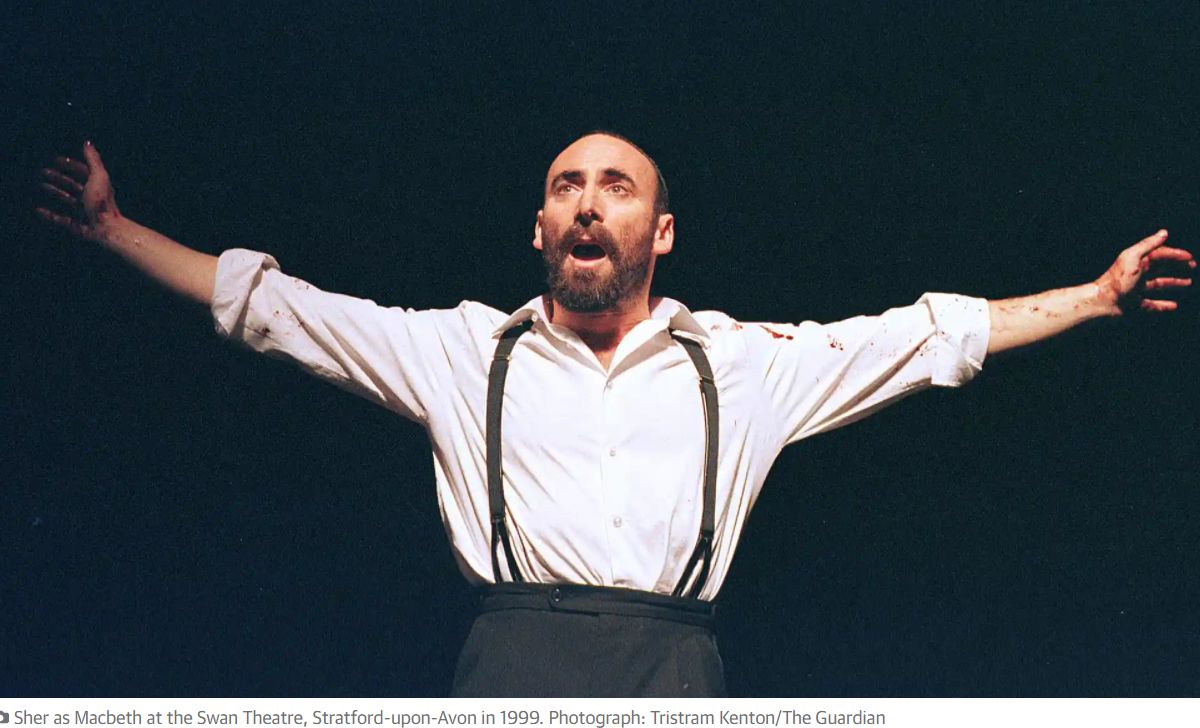
Antony Sher as Macbeth, RSC

This morning, 10 December 2021 was bright and sunny in Stratford-upon-Avon. We headed for the river for a walk while the sunshine was strong at this, the darkest time of year. Approaching Holy Trinity Church, where Shakespeare is buried, we heard the slow toll of a single bell. A funeral. As we neared the west entrance to the churchyard we could see people, including actors and people from the theatre, striding along the path to the church. Tony Sher.

It became a pensive walk. Passing the Royal Shakespeare Company’s theatres we remembered some of those roles we’ve seen Tony Sher perform over a period of well over thirty years. His Shakespeare career at the RSC began with the Fool in King Lear in 1982, memorably wearing a red nose, and ending with King Lear himself. In between, so many extraordinary performances: Richard III of course, Shylock, Malvolio, Vendice in The Revenger’s Tragedy, Tamburlaine, Macbeth, Leontes, Prospero, Falstaff. More recently, in modern plays: Willy Loman in Death of a Salesman, Kunene and the King. I particularly remember his outrageously funny Tartuffe, performed at the RSC’s intimate theatre the Pit at the Barbican. I’ve heard several accounts over the past week of how much painstaking preparation he put into creating performances that sometimes felt on the verge of being out of control.

You will have your own memories, and since the RSC’s announcement of Tony’s death on 3 December there have been many tributes including this one. You don’t need me to tell you what a powerful presence he bought to everything he did. Hearing Judi Dench trying to define his quality, and clips of his King Lear have  reminded me how ephemeral and elusive theatre performance is.

Gregory Doran and Antony Sher

This afternoon, back from another walk before the light faded, I received a message from a friend that the BBC’s Last Word, coming on in minutes, was to include a tribute to Tony Sher from his husband, the RSC’s Artistic Director Gregory Doran. They have formed an extraordinarily powerful partnership in the world of theatre, and not just in the UK.

Hearing Gregory Doran speak about their life together was very touching, and the best tribute Tony Sher could have wished for. “He was my all the world, and I’ll miss him very, very much”.

Here is the link to the programme: It’s the first item, just twelve minutes. It ends with a wonderful bit of Tony performing “Tomorrow and tomorrow and tomorrow” from one of his most powerful performances, Macbeth.

Share
Posted in Legacy, Shakespeare on Stage | Tagged , , , , | Comments Off on Sir Antony Sher:”thou’lt come no more”

Shakespeare, bonfires and climate change

Guy Fawkes procession

Guy Fawkes Night, or Bonfire Night, celebrated in the UK on 5 November, marks the anniversary of an attempt to blow up Parliament in 1605 while Shakespeare was living and working in London. Macbeth was his strongest response to the shocking events, but the plot must have had a subconscious impact into the lives of Londoners in the years that followed, colouring political and social life. The Thanksgiving Act, passed by Parliament at the end of 1605, made sure it was not forgotten, with annual church services to commemorate the failure of the plot being held for the next 200 years. I wrote about some of the long-term impact of the Plot back in 2014

Even now the events of Guy Fawkes Night, or our way of celebrating them, are related to current events.  Checking back over my posts, I found that for instance in 2011 Guy Fawkes masks were worn by protestors trying to “Occupy Wall Street”, and a few years ago Donald Trump’s effigy was burned in London.

Gunpowder, treason and plot: Guy Fawkes and the Shakespeare connection

In the last couple of years global attention has shifted to the impact of COVID 19 and climate change.

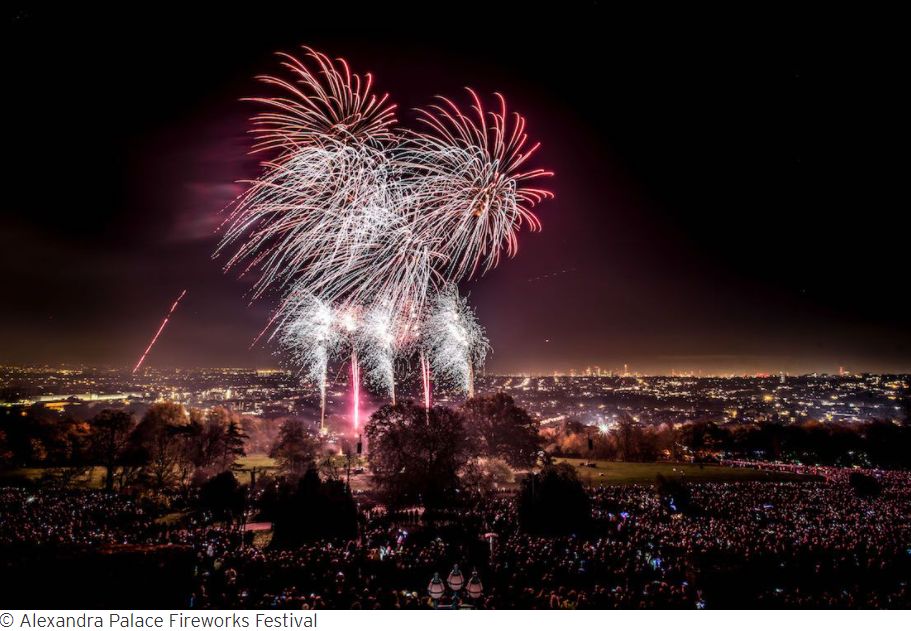
Fireworks display at Alexandra Palace

Last year this article noted the spike in airborne pollution caused by fireworks. Most organised displays were cancelled in 2020 to avoid crowds gathering during the COVID 19 outbreak, but this may have resulted in more fireworks being let off in back gardens across the country.

This year, 2021, Bonfire Night coincides with the COP 26 conference in Glasgow. The pollution caused by fireworks is probably small compared with other sources but this article from 2018 notes that it’s often the most polluted night of the year, and in 2010 “estimated emissions from bonfires lit for Guy Fawkes celebrations were greater than those created by municipal waste incineration over the entire year”. It is suggested that the effects were not just short term, the extra pollutants in the atmosphere contributing to “the detrimental impact to the health of the planet”.

We might think this is a modern problem, but this post by Sarah Hovde from the Folger Shakespeare Library notes that even in Roman times there were concerns about the effects of fires on air quality, and that in 1661, just a few decades after Shakespeare’s time, John Evelyn wrote a treatise against air pollution called Fumifugium, and proposals to reduce pollution were discussed by Parliament. Shakespeare might not have recognised our twenty-first century problems associated with global warming, but he knew that “rheumy and unpurged air” was bad for our health, just as fresh air and the natural world was good for it.

Share
Posted in Legacy, Shakespeare's World | Tagged , , , , , , , , | Comments Off on Shakespeare, bonfires and climate change

Judi Dench’s Shakespeare connection: Who Do You Think You Are?

Dame Judi Dench

For years now Who Do You Think You Are has been great TV, but the episode featuring Dame Judi Dench on 19 October 2021 was outstanding. The programme uncovers aspects of the family history of celebrities and has covered everything from destitution to connections with royalty. This one, though, revealed that one of Judi Dench’s ancestors probably saw a performance by Will Kemp at Elsinore, the castle setting for Shakespeare’s Hamlet.

It was a complicated story, starting with Dame Judi’s already-known Irish heritage. One of her distant ancestors married and went to Copenhagen in Denmark and through this ancestor she is related to the great astronomer Tycho Brahe (1546-1601). In an age before modern scientific method, Brahe’s great contribution was to make accurate astronomical observations that could then be used by other scientists. One of these was Johannes Kepler, most famous for defining the laws of planetary motion,  who worked as Brahe’s assistant. This link alone would have made an interesting programme, but there was a lot more.

Astronomer Tycho Brahe, 1586

Brahe came from a prominent Danish family, ensuring that he received an excellent education and giving him enough influence with King Frederick II to be granted funds for an observatory where he could collect data. This was set up in the mid 1570s and attracted visitors from around Europe. But the reason why Brahe was part of Judi Dench’s story was really to do with two of his relatives, who feature on this engraving of Brahe published in 1586 showing him surrounded by the names and heraldic shields of his noble relations.

Among them are two families, Guldesteren and Rosenkrans, names familiar to anyone who knows Shakespeare’s play Hamlet. In the many sources for the play, the two devious courtiers who attempt to betray the protagonist are not named, and when Shakespeare came to give them names in his play Rosencrantz and Guildenstern are the only characters with genuinely Danish names.

Does the picture itself help to solve the question of how Shakespeare arrived at these names? Did he know the picture? If so, how? The image has been known for many years. Harold Jenkins in his 1982 Arden edition of Hamlet refuses to get over-excited at the possibilities. He thinks it isn’t necessary for Shakespeare to have known about Brahe and his work, and it’s unlikely that Shakespeare saw the engraving in the house of English astronomer Thomas Digges as some have suggested. He notes that both were common names: several members of both families attended the court of Frederick II, and one in ten of the noblemen who attended the coronation of his successor Christian IV bore one of the names.

The programme then put forward another way in which Shakespeare might have heard the names Rosencrantz and Guildenstern.

During the 1580s English performers went on tour to the Continent and the Earl of Leicester’s Men, including William Kemp, accompanied Leicester on his diplomatic mission to the Low Countries and Denmark in 1585-6. The document noting Kemp’s appearance before King Frederick II at court still exists and indicates that the King paid the players himself. This is not a new discovery but it is still thrilling to see the handwritten entry.

William Kemp

A few years later Kemp was employed as the Clown in Shakespeare’s company, and Shakespeare wrote the part of Dogberry in Much Ado About Nothing and possibly the part of Bottom in A Midsummer Night’s Dream for him. Kemp might have told stories of his foreign adventures in 1585 including the names of courtiers, and Shakespeare remembered them when he started to work on his own Hamlet story. By the late 1590s though there was a falling out and Kemp left the company. Perhaps Shakespeare no longer wanted to write plays in which Kemp would be the star of the show. It’s referred to in Hamlet itself in the Prince’s advice to the players.

And let those that play your clowns speak no more than is set down for them; for there be of them that will themselves laugh, to set on some quantity of barren spectators to laugh too. (3.2.40-5)

Finally it was suggested that as Judi Dench’s ancestor was a lady in waiting at the court of King Frederick at Elsinore she almost certainly attended one of Kemp’s performances.

It’s quite a story. I read one comment complaining that the programme misrepresents historical research by making it look easy, and while this is undoubtedly true, it does a fantastic job of exploring the less obvious treasures held by our Library and Archive Collections. I’d like to congratulate too the archivists who explain the significance of documents and images for the lay person, whose pleasure in sharing the stories is always delightful. And I’m in awe of the amazing researchers who chase up obscure links and the writers who pull all the elements together to make a compelling piece of TV, in this case covering over 400 years.

If you have a British TV licence the whole thing is available on IPlayer here:

But if not, Who Do You Think You Are’s YouTube channel has clips from past episodes. The following four clips are all there:

The Irish connection

From the Danish National Archives

Elsinore and the Danish Royal family

William Kemp and Shakespeare

Share
Posted in Shakespeare's World, Sources | Tagged , , , , , , | Comments Off on Judi Dench’s Shakespeare connection: Who Do You Think You Are?

Restoring John Cheere’s Shakespeare statue

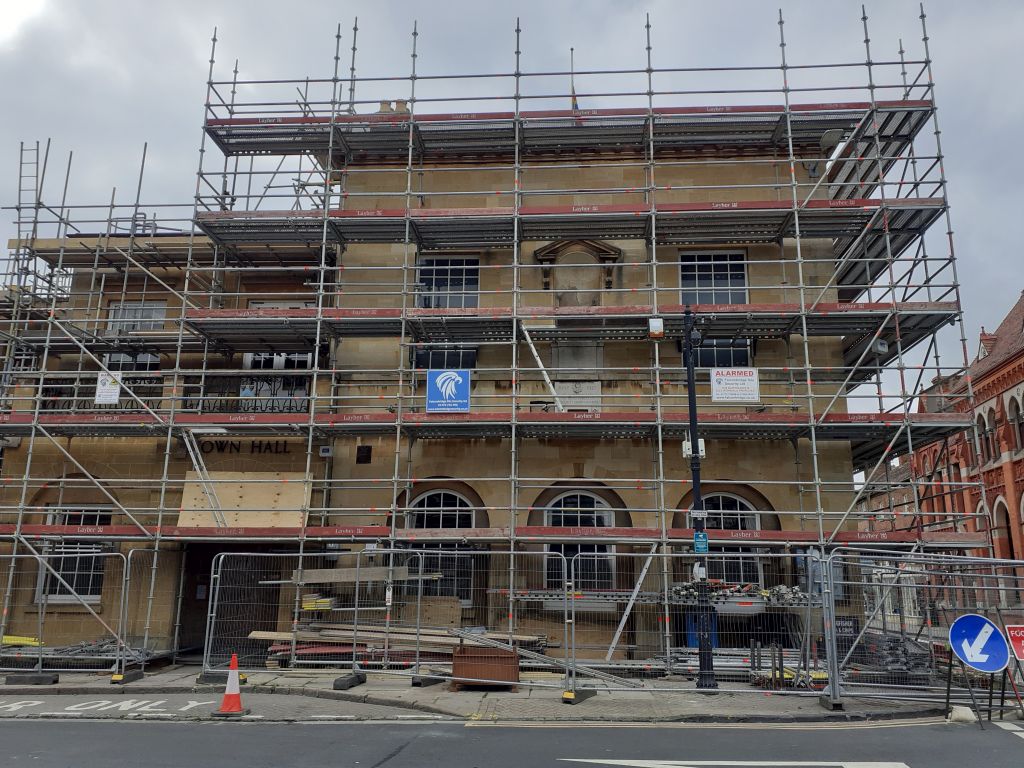
Stratford’s Town Hall August 2021

Stratford-upon-Avon’s  Town Hall is one of the most important of the town’s buildings, associated with Shakespeare through its dedication at the time of the Garrick Jubilee in 1769. This summer its familiar stone frontages have been covered in scaffolding as it has a facelift. Without any fanfare, on Friday 20 August 2021 its most historic feature, the lead statue of Shakespeare, was removed from its niche and sent away for restoration.


I’ve written before about the Town Hall itself and its history.

The statue of Shakespeare donated by David Garrick

Since it was dedicated the building has undergone many changes: the open lower floor was only enclosed in the 1860s, and the building suffered a fire in 1946 in which the famous painting of David Garrick by Gainsborough was destroyed. The statue has survived it all, including pollution and two hundred and fifty years of British weather. High up, and obscured by pigeon-deterring wire though, this culturally-important object is often overlooked. Let’s look closer.

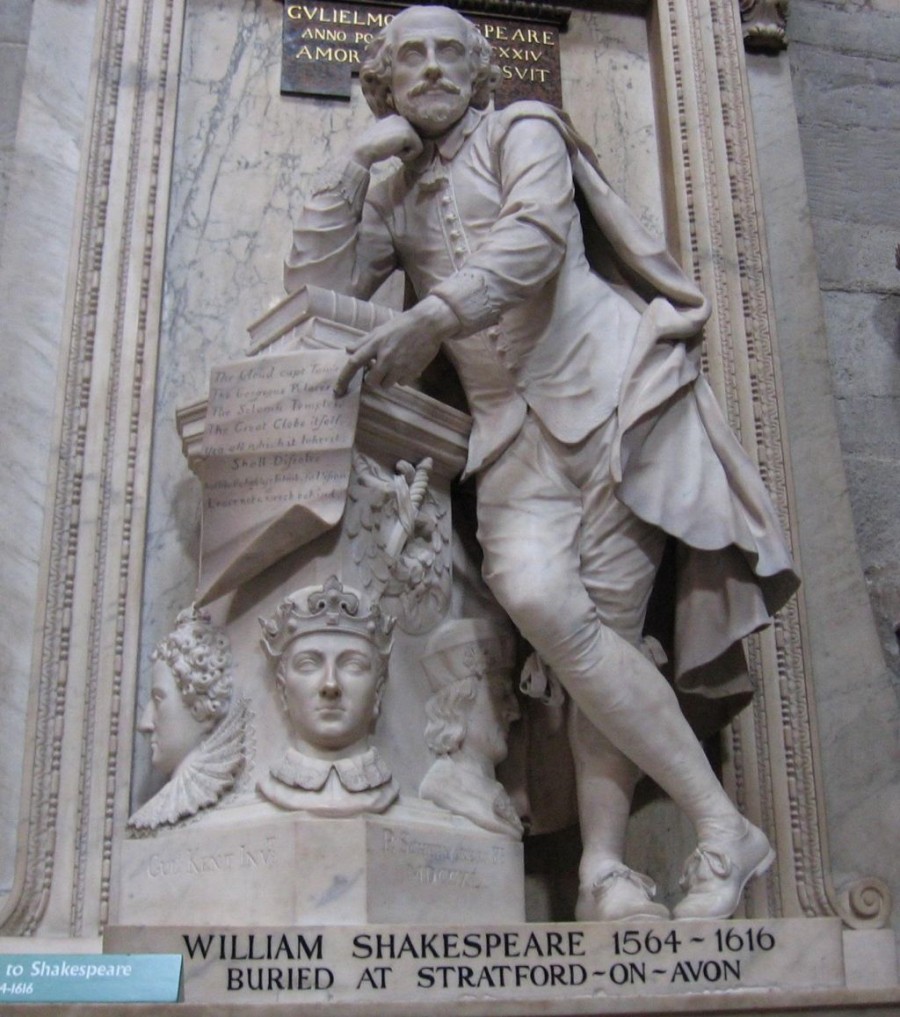
The statue of Shakespeare in Poets’ Corner

The  statue is a copy, in reverse, of the marble statue of Shakespeare that stands in Poet’s Corner, Westminster Abbey, designed by William Kent and executed by Flemish sculptor Peter Scheemakers (1691-1781). It dates from 1740. There is a full description on Westminster Abbey’s website.

The two men had already been involved in the creation of the Temple of British Worthies at Stowe in Buckinghamshire. Kent, again, had designed the monument in which a series of niches are filled by stone busts. Shakespeare was one of the worthies: his bust created by Michael Rysbrack, but many of them were by Scheemakers, completed 1734-5.

The Westminster Abbey statue proved to be extremely popular, inspiring many copies in the form of pictures, statuettes and stained glass.  It’s hardly surprising then that the statue commissioned to decorate Stratford’s Town Hall was a copy of this statue. John Cheere (1709-1787) was a follower of Scheemakers, and although he worked in a variety of media he was particularly well-known for his lead statues which were commissioned for garden settings. Many examples that stand in National Trust properties are illustrated of this page of the National Trust’s website.

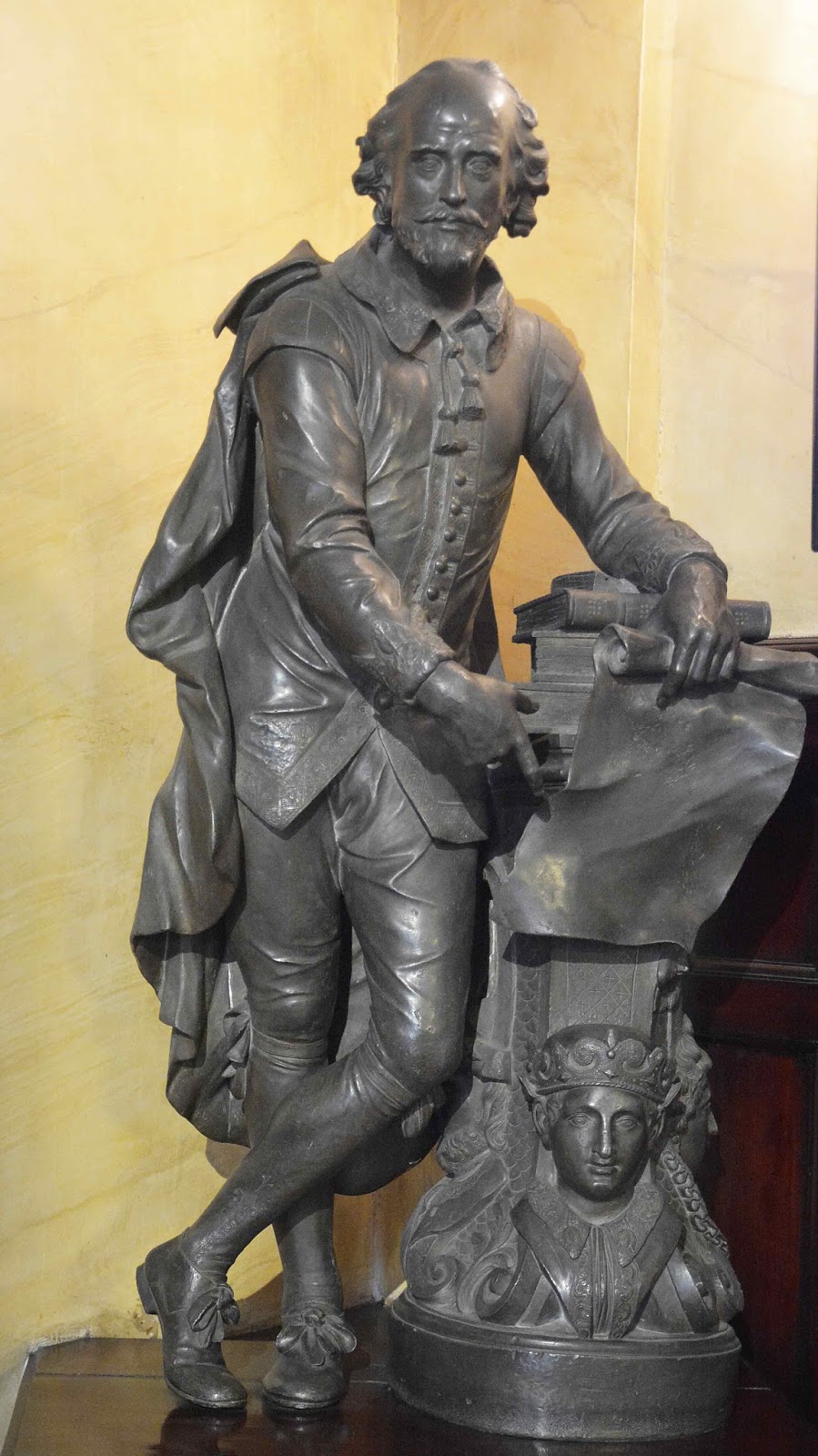
Shakespeare statue by John Cheere at Drury Lane Theatre. Photo by David Bridgwater

There’s one other statue, though, that has a particularly strong link to Stratford’s. A lead statue of Shakespeare now stands in the foyer of the Theatre Royal, Drury Lane, thought to be a later cast of the one on the Town Hall.

It appears that the statue was presented to the Theatre by brewer Samuel Whitbread Jr in 1809. He inherited his father’s estate Southill Park in Bedfordshire in 1796 and around that time he purchased a collection of Cheere’s statues that were being sold off, presumably with the aim of displaying them in the grounds. He and his brother shared the running of the hugely profitable Whitbread brewery, though worries over his financial involvement in Drury Lane Theatre may have contributed to his suicide in 1815.

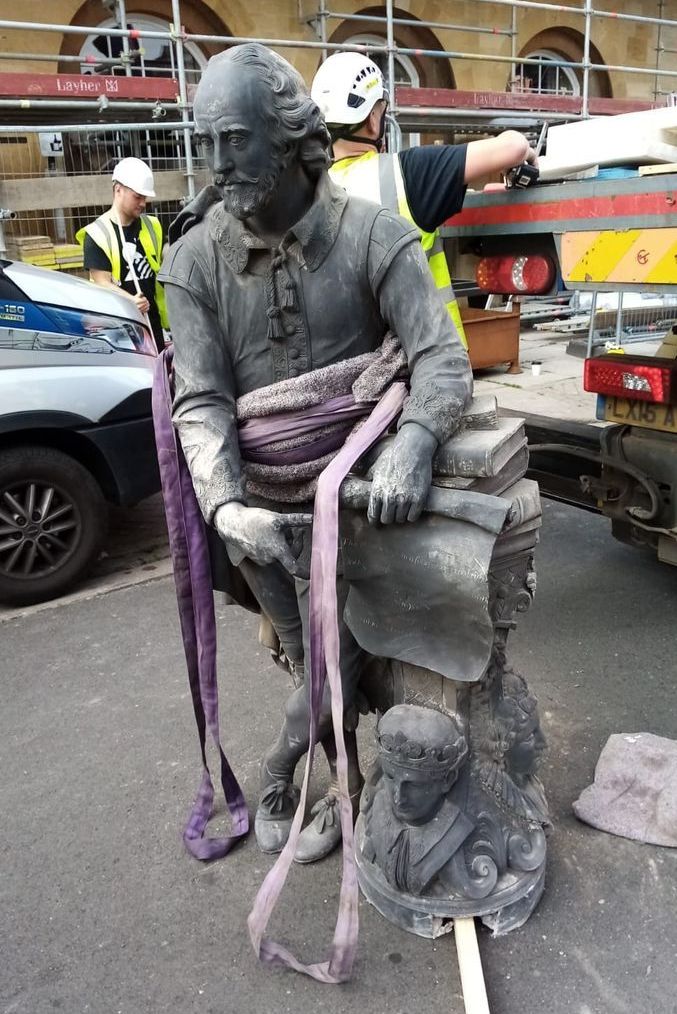
Shakespeare’s statue from the Town Hall. Photo by Pat Bojczuk

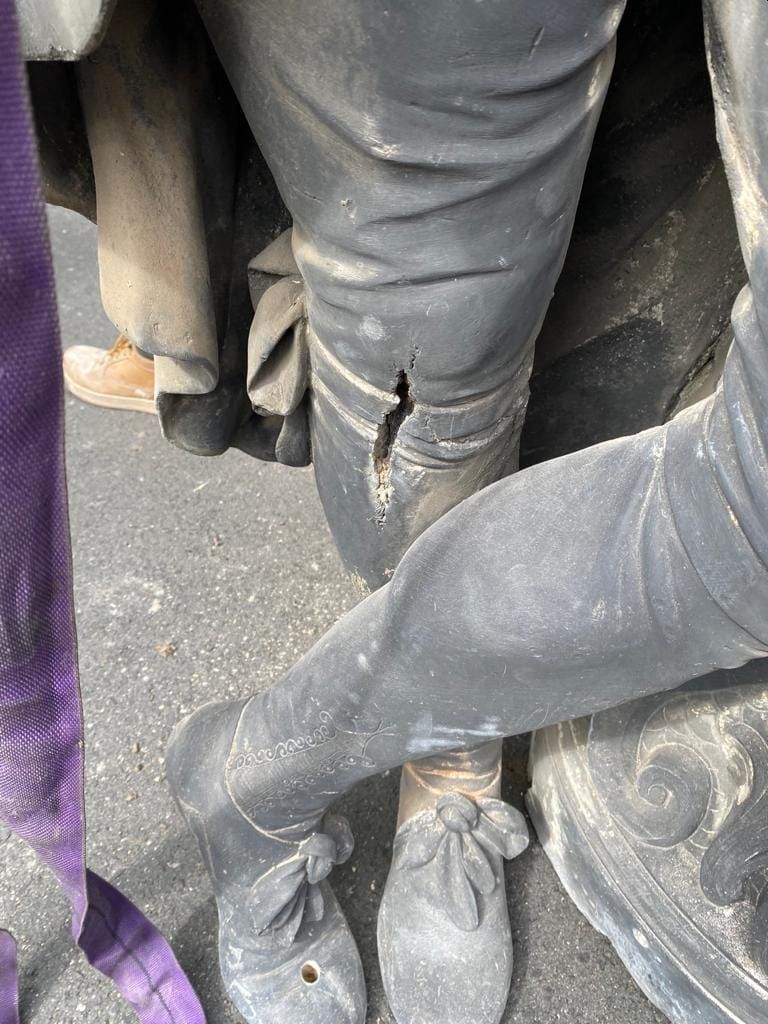
It’s identical: not only is it a mirror image of the statue in Westminster Abbey, looking at the Stratford statue once it was off its plinth the details are revealed.  The pattern on the stockings, the folds of the clothes, and the lacy collar, all the same. It’s also clear how much damage has been caused by being outside for so long. Apart from a spell on top of the portico, the Drury Lane statue has spent most of its life indoors.

Shakespeare statue on Town Hall, detail. Photo by Pat Bojczuk

I’m very much indebted for information about the Drury Lane statue to the Bath, Art and Architecture blog written by historian David Bridgwater who has a particular interest in John Cheere. His post contains many photos of the statue and a huge amount of information. The photos of the Stratford statue were taken by Pat Bojczuk.

But why did John Cheere chose to make his sculpture a mirror image of the Westminster Abbey one? Apart from these two statues, every version shows the stand to the left as you look at it. Shakespeare leans his right elbow on a pile of books, pointing with his left hand at an unfurled scroll.

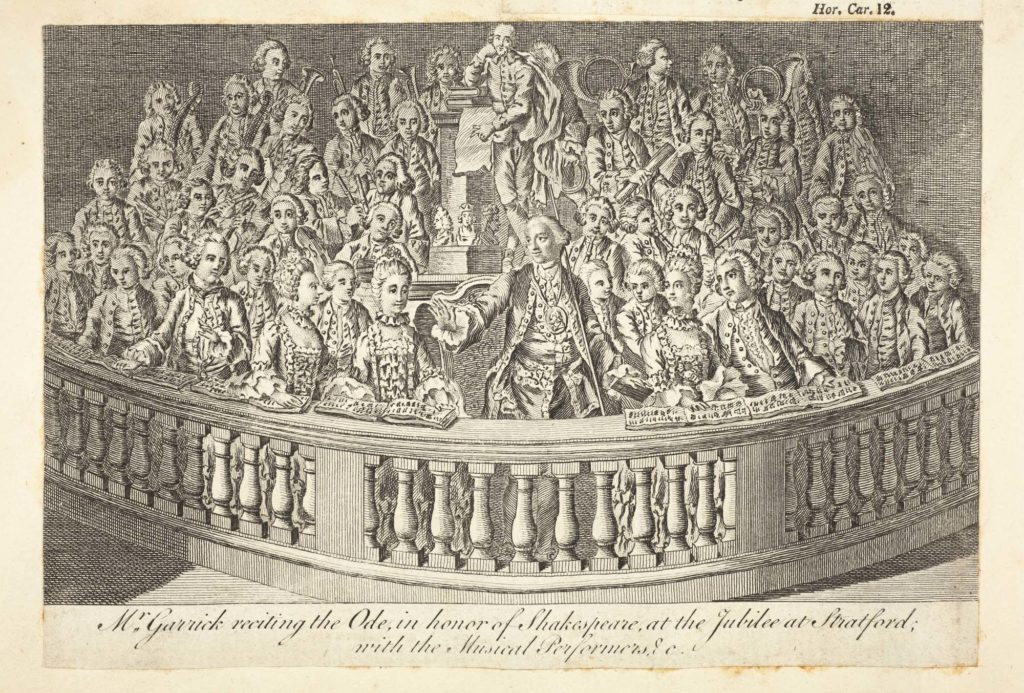
David Garrick reciting the Ode at the Jubilee at Stratford,1769.

Even the engraving showing Garrick delivering his Ode at the 1769 Jubilee shows the statue that way round, presumably done by an artist more familiar with the Scheemakers original. Perhaps Cheere just wanted to make his own mark on this famous subject.

I’ve been really excited to see David Bridgwater’s photos that show how beautiful the Stratford statue was originally, but they also demonstrate how much the restorers have to do. Let’s hope the Stratford statue can be brought back to something like its original condition, and when it returns in spring 2022 that it will be given a big welcome back.

Share
Posted in Legacy, Stratford-upon-Avon | Tagged , , , , , , , , , , , | Comments Off on Restoring John Cheere’s Shakespeare statue

Farewell to Jim Morris

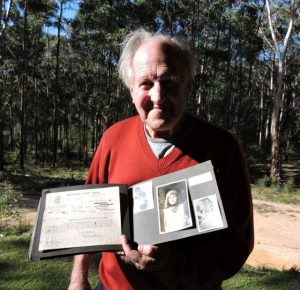
Jim Morris with his scrapbookThis morning, 21 August 2021, my brother-in-law, James (Jim) Morris died in hospital in Australia, where he had lived for over sixty years. Although he had left Stratford as a teenager and his subsequent life was full of adventure he never forgot Stratford-upon-Avon. Sometimes local people seem to want to ignore the town’s Shakespearean heritage, but Jim always remembered that it is this that makes the town special and was proud of the contribution he had made towards it.

Over the past few years I’ve written a couple of blog posts about Jim, and in his memory I’m including links to them for anyone who is interested in this local boy’s experiences. The first was about the staging of the casket scene in The Merchant of Venice, including his recollection of how it was done in 1953 when he was one of three local boys chosen to be casket bearers. He was at the time head choirboy at Holy Trinity Church and as well as having a beautiful voice he was used to performing in public. He retained a great love of music throughout his life.

Staging the caskets: The Merchant of Venice

The second was written after I had visited Jim at home in New South Wales, where he showed me the memorabilia he had kept and carried with him after he emigrated. These included a photograph album containing a signed photo from Peggy Ashcroft (Portia), informal photos of the boys having fun, and a design sketch showing how his wig for Richard III was to look. Somehow the little pottery pig that Peggy Ashcroft had given him on the press night of The Merchant of Venice had also survived. I was amazed how much he had kept, but even after an incident-filled life and many moves Jim still treasured these items. Handling them brought back recollections which he was delighted to share. His pride in his contribution to the Theatre’s work, too, was clear.

Shakespeare memories from the Bush

Jim was blessed with an extraordinary memory, and those of us who knew him will remember him telling stories of the Stratford of his youth. We will all miss him, but how lucky he was to be involved in the work of the town’s Shakespeare organisations, giving him opportunities to remember so vividly even from the other side of the world, and many years later.

Share
Posted in Legacy, Stratford-upon-Avon | Tagged , , , , , | Comments Off on Farewell to Jim Morris