
Relics of the Shakespeare Memorial Theatre’s fire

Monroe wearing the historic jacket

Last year on 6 March, the anniversary of the fire that destroyed the first Shakespeare Memorial Theatre I wrote a piece about the events of the day. Most people who were living in the town at the time remembered it vividly, and over the years I’ve heard several accounts.

Fire engines from miles around made their way to Stratford, but I hadn’t realised that people from outside the town had also come to watch, though photographs of the fire certainly show hundreds of people standing around the building as it burned. I’m grateful to Bronwyn Robertson, who for many years ran the RSC studio theatre The Other Place, for sending me the story about her father, John Charles Robertson and the fire:
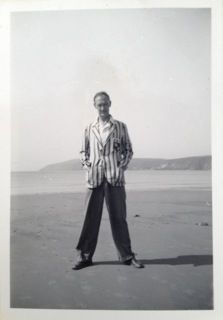
John Charles Robertson wearing the jacket on holiday

My father and friends jumped in a car and raced over to Stratford from Coventry when they heard the theatre was on fire. He was wearing his striped blazer from Coventry Cricket Club (where he was a member) and it had a hole from one of the embers that blew across the river. Only last year I passed on the blazer to my son Monroe who’s taken it back to NYC where he now lives.

This jacket has become a family heirloom, and Bronwyn comments that it was a family tradition for her father to wear the jacket on their family holidays to the seaside, as shown in the photograph.


Charred wood and stone from the ruins of the Shakespeare Memorial Theatre

The other keepsakes of the fire I have been shown are relics of the building itself. After the fire the ruins became a sort of tourist attraction in their own right. Apparently a local resident made her way down to the theatre and picked up a charred piece of wood and a piece of the stone, both of which were lying around. From the wood a rough bowl has been carved, and these have now found their way to Shakespeare-fan Bryan Palin.

Some wonderful photographs were taken of people standing on the curved wall of the auditorium, with no apparent regard for safety. The the statue of Lady Macbeth from the Gower Memorial, then just outside the theatre, was visible through a gap where once there had been a window. Appropriately she is shown wringing her hands in despair.

The Picture House in Greenhill Street was converted into a temporary theatre within a few weeks, and plans for a new theatre were created almost immediately. In spite of local affection for the building, the fire was seen by some as a blessing in disguise. Archibald Flower claimed that there had been so much discontent with the old theatre that discussions had already taken place amongst the governors with a view to building a new theatre. George Bernard Shaw was so opposed to the old theatre that he sent a telegram of congratulations to the Governors after the fire.

It was not a foregone conclusion that the theatre would stand where it does, connected to the old building. Other sites were considered, especially The Paddock off Southern Lane which had been the venue for the 1864 Pavilion. This had the financial advantage of being visible only from two sides, not all the way round as with the riverside site. But it was eventually decided that the site by the river was so imposing it could not be ignored.  It’s interesting to think how much difference this change of venue would have made, particularly to the older, quieter end of the town.

Share
Posted in Legacy, Stratford-upon-Avon | Tagged , , , , , | 2 Comments

Seeking A Midsummer Night’s Dream in “the winds of March”

Image for the Bristol Old Vic production

It’s the beginning of March and signs of spring are still few and far between after a long and dreary winter. What does the dedicated Shakespeare-lover need to cheer themselves up? A Midsummer Night’s Dream, of course! And of course you don’t need to be a Shakespeare-lover to enjoy this most endearing of comedies.

It’s the play that’s got everything: romance, music, comical mistakes, transformations, dance, and of course that magical stuff that brings out the child in all of us. If you’re lucky you’ll also get a real live dog!

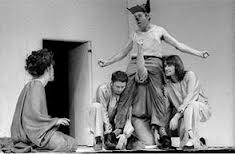
A Midsummer Night’s Dream, 1970, Peter Brook’s RSC production

Ever since Peter Brook’s landmark “white box” production in 1970 it’s also been impossible to ignore the fact that it’s also Shakespeare’s sexiest play. Among all the misunderstandings the mechanicals can provide a surprisingly moving play within a play and you’ll hear a good deal of beautiful poetry, such as Oberon’s description of the place where Titania sleeps:
I know a bank where the wild thyme blows,
Where oxlips and the nodding violet grows,
Quite over-canopied with luscious woodbine,
With sweet musk roses and with eglantine.

If you do want a flavour of midsummer madness the good news is that you don’t have to wait because there are already productions ready to lift your spirits.

A couple of tours are currently in progress, one by Custom/Practice, and the other Sell a Door Theatre Company. Both are in action during March in a variety of venues.

Bristol Old Vic are just launching a new production in association with Handspring Puppet Company, running through March and April until 4 May. This sounds like it’s going to be a bit special: Handspring are the company responsible for the puppets in the phenomenally successful production of War Horse, and  the production is going on to perform in the USA over the summer. The director Tom Morris has described it as “an experimental production”. And the Bristol Old Vic has recently reopened after a redevelopment. To celebrate, the Old Vic are running a competition, the prizes for which are three pairs of tickets and programmes to this major new production. Follow this link to have the chance to win. The closing date is 8 March.

Also in March the Shakespeare Institute Players in Stratford-upon-Avon are staging the play from 14-16 March. This is sure to be good fun so do go along!  And later on the Norwich Players are performing at the Maddermarket Theatre from 21-30 March.

From April onwards there’s lots of choice, including a production at Shakespeare’s Globe, one in Northampton, another at the Stamford Shakespeare Festival, and at Stafford Castle, and from September  to November there will be a production in the West End directed by Michael Grandage.

Incidentally,if you’re ever looking for a production of a Shakespeare play in the UK, The University of Birmingham’s Touchstone is a really great listing.

This year, forget the economic gloom and go along and see A Midsummer Night’s Dream. There’s really no excuse not to enjoy Shakespeare’s most joyful and entertaining play.

Share
Posted in Shakespeare on Stage | Tagged , , , , | Comments Off on Seeking A Midsummer Night’s Dream in “the winds of March”

Remembering Professor Marvin Spevack

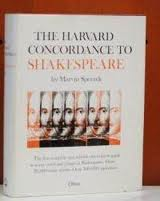
A few days ago the death of the veteran Shakespeare academic Marvin Spevack was announced. For me his name is always associated with Concordances to Shakespeare’s works, both the one-volume Harvard Edition and the Complete and Systematic version in nine large volumes. There must be many people who have consulted this major work which, using the power of computing, gave a full statistical breakdown of the plays including what seemed at the time mind-boggling details not available elsewhere such as the number of lines spoken by each character. Dr Marga Munkelt has generously given me permission to reproduce her piece on his life and achievements, from which this is an extract:

Marvin Spevack was born in New York. After his undergraduate studies at the City College New York and Harvard University, he received his PhD from Harvard in 1953 with a doctoral dissertation on “The Dramatic Function of Shakespeare’s Puns.” He was a Fulbright Lecturer in Munich and Muenster (1961-63), before, in 1964, he became Professor of English Philology at the English Department of the University of Muenster.

When Professor Spevack came to Muenster, the project which made him internationally known was already on his mind: his pioneering computerized concordance to Shakespeare founded his reputation as one of the first (if not the first) scholar ever to utilize the computer for research in the humanities. Spevack’s nine-volume Complete and Systematic Concordance to the Works of Shakespeare (Hildesheim and New York, 1968-80) and soon after the one-volume Harvard Concordance to Shakespeare (Cambridge, MA, 1973) not only broke new ground for other computerized research in non-numerical disciplines but has also become, since then, a source and inspiration for electronic Shakespeare scholarship world-wide. Moreover, his Shakespeare Thesaurus (Hildesheim and New York, 1993) is the first in a row of similar attempts at classifying Shakespeare’s vocabulary.

Before and after his retirement, Professor Spevack was a versatile, enthusiastic, and productive scholar. Among his substantial contributions to Shakespearean scholarship, the facsimiles of Shakespeare: The Second, Third and Fourth Folios (Cambridge, 1985), his New Variorum Edition of Antony and Cleopatra (New York, 1990), and his New Cambridge Edition of Julius Caesar (Cambridge, 1988; updated 2004) need to be singled out. Moreover, his enormous output of publications in other fields testifies to his range of interests as well as to his eloquence and beautiful prose. He wrote, for example, about communication and the new media as well as about ongoing changes in the current secondary education systems; he discussed subjects like dictionaries as well as aspects of book or library studies.

As a teacher, Marvin Spevack was a true “generalist”: in addition to teaching all fields of English literature, he also taught American drama, aspects of historical linguistics, and lexicography. Marvin Spevack was a dedicated, charismatic, and inspiring teacher who was deeply humane and outgoing; his openness for unorthodox topics—always based, however, on serious and sound research—was famous and his great sense of humor proverbial. He had the admirable ability to convey complicated matters in an understandable and accessible style. On the occasion of his sixtieth birthday he was honored by colleagues, friends, and students with a festschrift: Shakespeare–Text, Language, Criticism: Essays in Honor of Marvin Spevack, ed. Bernhard Fabian and Kurt Tetzeli von Rosador (Hildesheim, 1988).

Marvin Spevack’s last book combines his two foremost interests—Shakespeare and the Victorians—in A Shakespearean Constellation: J. O. Halliwell-Pillipps and Friends (forthcoming Muenster, 2013).

Marvin Spevack will be greatly missed and remembered for his brilliant teaching and scholarship as well as for his humanity and generosity.

If you would like to read the entire piece, go to SHAKSPER,  The Global Electronic Shakespeare Conference, for many Shakespearian academics the place to go to for news on their subject. For over 20 years Professor Hardy M Cook, Professor Emeritus of Bowie State University, has run this site that brings together the Shakespeare academic community. Like Marvin Spevack, Hardy M Cook saw the potential of the Internet as a way of improving the supply of information and SHAKSPER is only one of the ways he has achieved this. Over the years it has gone through a number of different versions but is now a website open to all. Posts include requests for information, discussions, announcements of news, of upcoming conferences and of job vacancies. The site contains a searchable archive of past posts and a number of additional features including a list of scholarly resources on the internet and a page of teaching resources. Both these make the site much more than just a notice-board. Anyone may subscribe to receive regular updates by email and contributions are always welcomed.

Share
Posted in Legacy | Tagged , , | 2 Comments

Richard III: the story continues

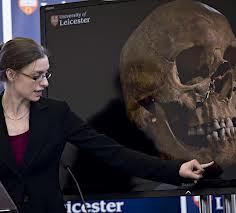
The story of the discovery of the skeleton of Richard III in Leicester is, you can tell, going to run and run. On Wednesday 27 February at 9pm the More4 TV Channel screens another documentary, Richard III: the Unseen Story. The earlier documentary, Richard III: the King in the Car Park, was screened on the day the discovery was formally announced and received 4.9 million viewers and over 60,000 tweets. Many people, including me,  felt this programme was too much about Philippa Langley of the Richard III Society and not enough about the actual findings. Hopefully this second programme will contain more factual footage of the dig and explain how the results of the scientific tests enabled the archaeologists to make a positive identification. It’s a brilliant story in its own right, particularly since the odds of the discovery being made were thought to be extremely slim at the beginning. This link takes you to a piece about the programme.

Since the announcement on 4 February an exhibition has been mounted in Leicester’s Guildhall which has, as hoped, received thousands of visitors. Leicester has every reason to promote this story: just in the last few days there have been more calls for the reinterral to take place not in Leicester, as has been decided, but in York. An online petition has received 23,000 signatures and nine descendants of Richard III have apparently called for a burial in York. I’m somewhat mystified by this assertion, as when the scientists were looking for DNA evidence they had to go to two descendants not of Richard, but of his sister. Where have these nine suddenly come from, I wonder? And seventeen generations on, how do they know what their distant relative would have wanted? This article explains more.

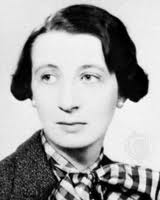
Many people feel they have some sort of insight into or ownership of Richard III, as far as I know the only English monarch to have his own fan club.  The Richard III Society dates back to the 1920s but became popular with the publishing, in 1951, of Josephine Tey’s novel The Daughter of Time. The book has never been out of print. Josephine Tey was actually a pseudonym, one of several she employed. Under another name this woman had in the 1930s created the play Richard of Bordeaux about Richard II, a huge hit for John Gielgud. It seems she had a passion not just for history, but for monarchs about whom Shakespeare had written. She preferred to keep out of the limelight herself, but her success as an author both of drama and the novel is extraordinary. Her life is currently being studied and a biography is planned. What, I wonder, would she have made of the current media interest in Richard III?

Share
Posted in Legacy, Plays and Poems, Shakespeare's World | Tagged , , , , , , , , | 10 Comments

Shakespeare, Brecht and Galileo


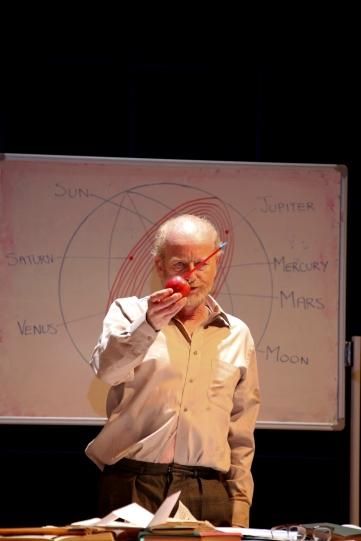
Ian McDiarmid as Galileo in the RSC’s production. Photograph by Ellie Kurttz

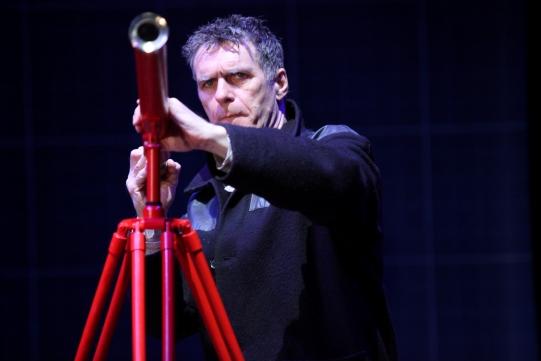
The RSC are currently staging Bertolt Brecht’s play A Life of Galileo in a new translation by Mark Ravenhill. To accompany this play they have put on two events about Shakespeare and Science under the title ShakesSphere. The second of these examined the links between Galileo and his theories, Shakespeare, modern astronomy, Brecht and censorship. An excellent article was published in the Guardian on the subject.

Galileo was an exact contemporary of Shakespeare, though Galileo lived until 1642. The theory that the world did not revolve around the earth had been suggested by Copernicus around a century before, but because Copernicus stopped short of declaring the theory to be true he avoided controversy. It was the military invention of the telescope in 1609 that allowed Galileo to see much more of the universe than any of his predecessors had been able to do, and to confirm the truth of the Copernican theory. He was able to see, for instance, that Jupiter was a disc with moons going round it, that Venus had phases like the moon showing it went round the sun, and that the moon was not a perfect sphere. With this evidence it became  more difficult to argue that all the celestial bodies revolved around the earth perfectly. Galileo clashed with the Catholic church, being forced to recant his beliefs.

Paul Hamilton in the RSC’s current production of A Life of Galileo. Photo by Ellie Kurttz

Shakespeare never had the opportunity to see through a telescope, and to know anything like as much as we do about how the solar system and the universe works, but the astronomer Dr Marek Kukula pointed out that Shakespeare would have been far more familiar than we are with the night sky. Everybody would have known what phase the moon was in: on it depended the ability to travel after dark, and the monthly phases allowed people to measure time. The North star, the one point in the night sky that doesn’t move, is referred to by Shakespeare in the play Julius Caesar. Caesar likens himself to it:
But I am constant as the northern star,
Of whose true-fix’d and resting quality
There is no fellow in the firmament.
The skies are painted with unnumber’d sparks,
They are all fire and every one doth shine,
But there’s but one in all doth hold his place.

Shakespeare refers to the beauty of the milky way in The Merchant of Venice:
Look how the floor of heaven
Is thick inlaid with patines of bright gold.

Although we now understand much more about astronomy, Dr Kakula reminded us that uncontrollable natural events still happen: the meteor that recently landed in Russia injured over 1000 people. He showed a painting by Durer of a meteor which impressed him so much he so wanted to fix in his mind, painting it on the reverse of another picture. His painting is almost identical to photos of the Russian event. And Shakespeare likens the downfall of Richard II to the fall of a star:
I see thy glory like a shooting star
Fall to the base earth from the firmament.

Although he was no scientist himself it’s clear that Shakespeare was aware of the debate about how the universe worked, sometimes playing off the conventional view of the stars against modern theory as a way of emphasising doubt and uncertainty within the argument of a speech. And it’s this sense of doubt, of new thinking, of everything shifting, that perhaps links these two men who never met and may well have never heard of each other. Mark Ravenhill’s translation of Brecht’s play repeats several times the idea that “the earth is on the move”, beginning with these lines:

Galileo

In the year sixteen hunded and nine
The light of science shone
In a modest house in Padua
As Galileo set out to prove
That the sun is fixed
And the earth is on the move

The play ends with Galileo’s follower smuggling his work out of Italy to Amsterdam where it would be printed. Shakespeare too lived in a world were censorship was common, though Shakespeare found ways of working with the system. One of Brecht’s points is that you can’t halt progress in science, or the creativity of the arts, by using the blunt tool of censorship.

Share
Posted in Legacy, Shakespeare's World | Tagged , , , , , , , , | 3 Comments

Shakespeare’s Coriolanus and the bawdy court of Stratford

After reading about the government of the town in Shakespeare’s day as revealed in Mulryne’s book The Guild and Guild Buildings of Shakespeare’s Stratford I decided to find out more about a related subject, the Ecclesiastical Court which was held at Holy Trinity Church, and which was the subject of a book Shakespeare and the Bawdy Court of Stratford.

A whole series of records of the hearings that had taken place in the church were discovered in the early sixties, the announcement taking place with excellent timing in May 1964 in the middle of the celebrations of the Quatercentenary of Shakespeare’s birth.  The documents were found somewhere they wouldn’t be expected to be, in Kent.

The author of the book, E R C Brinkworth, spent several years methodically examining the manuscripts, publishing his book in 1972. The book was solidly aimed at the target of existing Shakespeare biographies. As the cover blurb of the book tells us, he was able to produce “not myths, imaginings or far fetched theories, but a mass of solid facts”. Only a couple of years later came a masterful study of Shakespeare’s life through the use of documents, Samuel Schoenbaum’s William Shakespeare: a Documentary Life.

The records of the Ecclesiastical court shed light on the moral life of the town in Shakespeare’s period. It was the concentration on cases of sexual immorality that led to these being called “Bawdy Courts”. The court also dealt with lesser transgressions not recorded anywhere else.

The records consist of two books covering the period 1590-1616 and 1622-1625. It’s tantalising to speculate that if earlier records had survived Shakespeare himself might have appeared, particularly if he was the wild-oat-sowing youth that biographers have assumed him to be. But both his daughters feature, even if in Judith’s case it is indirectly, as do many people we know Shakespeare was friendly with.

The most regular offences dealt with by the court were non-attendance at church and church-papists who unlike Catholic recusants attended church but failed to receive communion. Shakespeare’s daughter Susannah appears on one of these lists, but it’s hard to know how much can be read into this.

Other rules included the observance of the sabbath. Tradesmen often opened their shops on Sundays, while farmers and their workers sometimes broke the sabbath (and were let off) during harvest time. Misbehaviour and blasphemy in church were punished: Elizabeth Wheeler sounds like a colourful character: she was brought before the court in 1595 for brawling and her comment to the court was “A plague of God on you all, a fart of one’s arse for you”. She was excommunicated.

The most interesting cases, of course, are those relating to fornication and adultery, of which there seems to have been a good deal, and one of these cases intimately involved the Shakespeare family. In February 1616 his daughter Judith married Thomas Quiney, but only a few weeks later the court records that he had had “carnal intercourse” with Margaret Wheelar, a transgression impossible to conceal as only a few days before, she and her baby had died in childbirth. This scandal must have been the talk of the town, and this record helped to explain the changes Shakespeare made to his will between January and March. In it he made specific allowances for his daughter and any children she might have to ensure they had an income independent of her unreliable husband.

The court could order a variety of punishments: people could simply be admonished, but the humiliating ritual of penance was occasionally ordered. The penitent person had to confess their sin, recounted in detail, while standing on a stool in the main aisle of the church at service time. In the most serious cases they wore a white sheet, with bare head and feet, holding a white rod. Some had to do this on more than one occasion. And some had to do penance like this in the market place on Market Day.

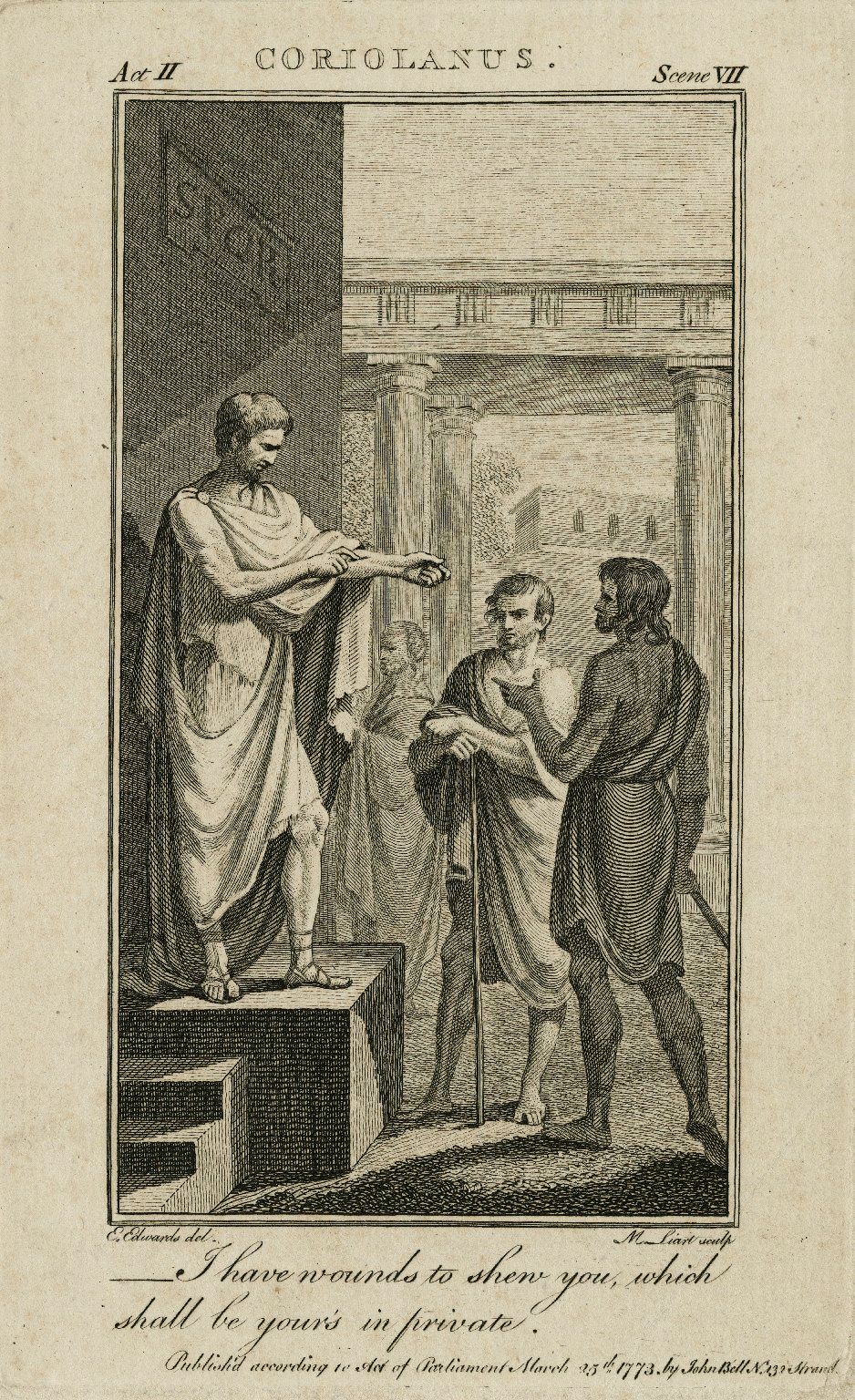
This scene of a penitent standing on a stool, clad in a sheet in a public place, is reproduced in Shakespeare’s play Coriolanus where in order to reach the rank of consul Coriolanus has to appeal to the citizens of Rome. It’s a ritual which he finds demeaning:

A 1773 image of Coriolanus in the market place

Let me o’erleap that custom; for I cannot
Put on the gown, stand naked, and entreat them,
For my wounds’ sake, to give their sufferage:

Sadly, Coriolanus wasn’t excused, and his arrogance when he was supposed to be humble caused his exile from Rome and ultimately his death. In Stratford, Quiney was sentenced to the full white sheet penance, to be performed on three successive Sundays, but the local priest, the judge of the bawdy court, allowed him to commute the worst of the punishment by paying a fine to help maintain the poor of the parish.

The image of Coriolanus is from the Folger Shakespeare Library’s collections.

Share
Posted in Shakespeare's World, Stratford-upon-Avon | Tagged , , , , , , , , | Comments Off on Shakespeare’s Coriolanus and the bawdy court of Stratford

Shakespeare’s early reputation

Shakespeare is now so universally known, his reputation so unassailable, we naturally wonder how he was received during his own lifetime. Did his contemporaries realise that he would be remembered and celebrated centuries afterwards?

This was the question, subtitled “What did they make of him then?” that Roger Pringle strove to answer at last week’s meeting of the Stratford Shakespeare Club. He looked specifically at the period up to 1623 when Shakespeare’s collected plays were published posthumously in the First Folio.

It’s commonly assumed that his contemporaries, although they acknowledged his talent, didn’t recognise his true value, regarding him as one fine writer among many. This assessment may be an attempt to redress the balance which usually undervalues his fellow-writers such as Marlowe, Jonson, Webster, Fletcher and many others. It has been said that even without Shakespeare the period of the late sixteenth and early seventeenth centuries would still be known as the greatest flowering of English writing in history.

Roger Pringle looked at the wide range of evidence available to try to assess how Shakespeare was viewed in comparison with his contemporaries. Some of the assessments were unflattering, like the first reference we have, Robert Greene’s scathing attack on the “upstart crow”, an actor who thinks himself as good as the university writers. It’s obviously the result of professional jealousy, but also gives us some insight into how Shakespeare was being perceived right at the beginning of his writing career.

Later assessments of his personality were more flattering: by this time Shakespeare himself was successful and in a position of some power himself, but the adjectives that tend to be used are “honest”, “sweet” and “gentle”.

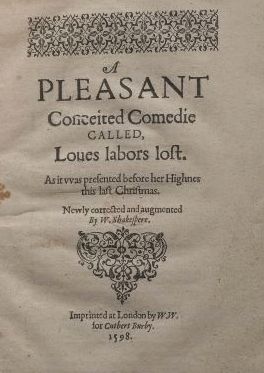
The title page of the quarto for Love’s Labour’s Lost, the first play to recognise Shakespeare as author

Pringle examined the record of publications to demonstrate the relative popularity of Shakespeare’s work. Half of Shakespeare’s plays were published in cheap quarto editions, several of them in more than one edition. It was the printer, not the author, that published the plays so they would only have been printed if they were expected to make a profit. By 1616 forty-five editions of Shakespeare’s plays had been published, no other writer getting near this number. His growing reputation can be judged by the fact that his name began appearing on the title page of his plays in 1598, and of the 29 subsequent publications 21 were under his name. And publishers began falsely attributing work to Shakespeare because his name sold, as can be seen in The Passionate Pilgrim in 1599.

His most popular publication was the love poem Venus and Adonis, published eight times in his lifetime, while The Rape of Lucrece was published six times. In the Cambridge University Parnassus Plays one character says he will sleep with Shakespeare’s Venus and Adonis under his pillow.

In terms of performance, Shakespeare’s plays were popular with the crowds who visited the open-air playhouses, law students at the Inns of Court, both the Universities (Oxford and Cambridge) and at court. This popularity went right to the top. In 1605 The Merchant of Venice was performed before the King who enjoyed it so much he commanded a repeat performance. And Shakespeare’s popularity lasted over twenty years, an extraordinary record.

Pringle also examined how influential Shakespeare had been on his peers. Was he, like Falstaff, not only witty in himself but the cause of wit in other men? He referred to conscious borrowings such as Marston’s quoting of Richard III’s line “A horse, a horse”, and to the number of quotations used in anthologies. In these Shakespeare is quoted more times than other writers. Some, like Marston above, were paying intentional compliments to Shakespeare, others were probably unconscious, showing how quickly his phrases became absorbed into everyday speech.

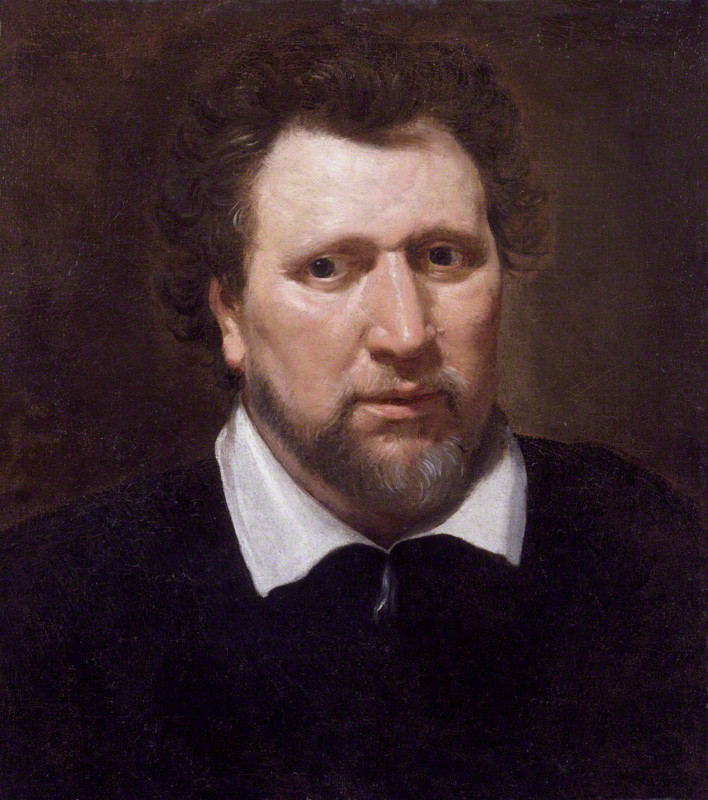
Ben Jonson

He reserved the clearest indications of Shakespeare’s value till last. Ben Jonson’s 80-line tribute in the First Folio illustrates how highly Shakespeare was regarded. Pringle describes this as “one of the finest occasional poems in the language”, and it’s full of memorable phrases such as “Soul of the age”, “Shine forth, thou star of poets”, “He was not of an age, but for all time!”, “Sweet Swan of Avon”. But more than just praising, Jonson confirms that Shakespeare was a good actor, that he was a likeable man, that he was a better writer than his contemporaries, and admired by both Queen Elizabeth and King James. He can’t resist a back-handed compliment with the line about Shakespeare having “small Latin, and less Greek”, but Jonson’s sincerity can’t be doubted. It may be that Jonson was unusually perceptive, but Roger Pringle’s conclusion was that even during his lifetime Shakespeare’s contemporaries were aware that he was something special.

Share
Posted in Legacy, Shakespeare's World | Tagged , , , , | 2 Comments

Shakespeare and the Russians

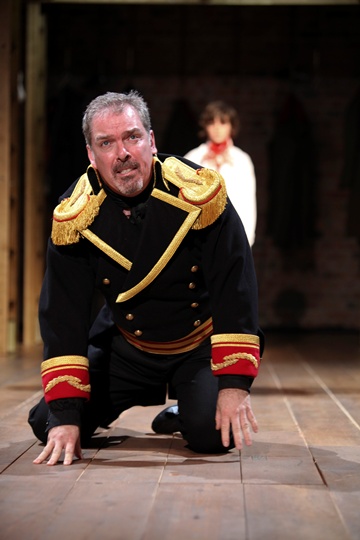
Lloyd Hutchinson as Boris Godunov in the RSC’s current production

17 February is the anniversary of the 1598 election of Boris Godunov to be Tsar of Russia.

Currently playing at Stratford’s Swan Theatre, Michael Boyd’s production of Adrian Mitchell’s version of Pushkin’s play Boris Godunov marks the end of Boyd’s leadership and the beginning of Gregory Doran’s. Boyd has talked many times about how much the year he spent working in Russian theatre in the late 1970s has influenced his directing and leadership style, and it’s fitting that at last he’s directed this version of one of the classics of the Russian stage, even if it is one that has treachery and greed at its heart.

Pushkin’s play was written in 1825, nominally set in Russia between 1598 and 1605. It’s a complex play about power, ambition and murder. Pushkin is as much Russia’s national poet as Shakespeare is England’s, and Pushkin greatly admired the way Shakespeare succeeded in writing about the grand scale of major events without losing sight of the effect of them on individual lives. And like Shakespeare Pushkin dramatised the power struggles of an earlier period while reflecting on the politics of his own age.

Pushkin

He claimed to have written Boris Godunov “according to the system of our Father Shakespeare” and indeed it owes much to his work. Following the death of Ivan the Terrible, Boris Godunov, seemingly reluctantly, takes the throne, but rumours arise that he has been responsible for the poisoning of the rightful heir, the child Dmitry. Some years later a pretender, Grigory, poses as the lost prince and leads an uprising to overthrow Boris. There is even an ambitious woman in the play. Pushkin makes Godunov a complex figure with both ambition and remorse, similar to Shakespeare’s Macbeth. And from the description of the plot above you can detect elements of Hamlet, Richard III and Henry VI part 2.

Boyd’s production, inevitably, draws modern parallels, at one stage the actor playing Boris donning a Vladimir Putin-style suit.

Pushkin’s play may have Shakespearean echoes, but one of Shakespeare’s own plays has recently struck a chord with Russians. Last year Gregory Doran’s “African” production of Julius Caesar toured to Moscow, and its warnings about how an established ruler might seek to enlarge his own powers was not lost to Russians uneasy about Putin’s return to the presidency.

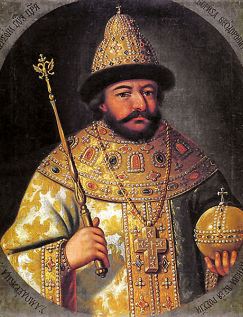
Boris Godunov

In an extraordinary document written by Sir Thomas Smythe in 1605, entitled Voyage and Entertainments in Russia, there is a comparison of contemporary events in Russia with Shakespeare’s play Hamlet, which Smythe must have encountered as part of the repertoire of the King’s Men in London. It follows Godunov’s sudden death, and the subject of the piece is the new Tsar, Godunov’s son Theodor.

His father’s (Boris Godunov) empire and government was but as the poetical fury in a stage action, complete yet with horrid and woeful tragedie; a first, but no second to any Hamlet; and that now Revenge, just Revenge was coming with his sword drawn against his royal mother, and dearest sister, to fill up those murdering scenes, the embryon whereof was long since modeled, yea digested, (but unlawfully and too, too vively) by his dead self murdering father: such and so many being their fears and demons.

This description is also interesting for what it tells us about how those first audiences reacted to Shakespeare’s plays. Not only did they expected the fictional events performed on stage to be relevant to those in the real world, but both the words and scenes in the plays were vividly remembered long afterwards.

Share
Posted in Legacy, Shakespeare's World | Tagged , , , , , | Comments Off on Shakespeare and the Russians

Lunching with Shakespeare: Stratford’s Birthday Celebrations

It’s recently been announced that Stratford’s traditional Birthday Luncheon for 500 people will not be held this year. It’s an event that has been part of the annual festivities for as long as I can remember.

In fact celebrating Shakespeare’s birthday in Stratford has always involved eating and drinking: The Garrick Jubilee in 1769 didn’t actually take place on Shakespeare’s Birthday, but with a specially-built rotunda and festival that spread over three days it was the first major event to mark Shakespeare’s association with Stratford. And banquets were a big feature.

The next commemoration took place on 23 April 1824, when Mr Thomas Hynde of the Falcon Inn held a dinner with “a dozen or more worthy citizens of Stratford” to mark the day. This proved so successful that the Shakespeare Club was founded, within a short time achieving a membership of 400 and in 1830 receiving Royal patronage. Four hundred people could not all dine in the Falcon Inn, or indeed anywhere in the town, and it became the ambition to hold a celebration every three years. In 1827 they hadn’t solved the problem of where to hold a large gathering, and the birthday celebrations took the form of a grand procession fromHoly Trinity Church to the garden of New Place, where the cornerstone of Stratford’s first permanent theatre was laid. In 1830 for the first time a specially-constructed Pavilion was erected in Rother  Street, and another pageant was held featuring the actor Charles Kean while the 1827 theatre was used for performances.

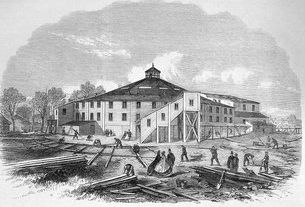
The 1864 Pavilion under construction

For the next few decades the birthday celebrations seem to have been a local affair, the Shakespeare Club organising annual dinners. But it was 1864, the Tercentenary of Shakespeare’s birth, that galvanised Stratfordians. It has always been overshadowed in the history of Shakespeare festivals by David Garrick’s Jubilee but the Tercentenary was actually a much more successful affair, and one which had far-reaching consequences.

A magnificent wooden Pavilion was built on a paddock in Southern Lane. It was a twelve-sided building, containing a pit area, two tiers of boxes, and a stage to one end while an orchestra area was at the other. The stage was 74 feet wide by 56 feet deep, large enough to receive scenery brought from London for the planned performances of Shakespeare’s plays. The orchestra was similarly generous, holding 530 performers. Apparently the acoustics were excellent and the whole building was designed to be flexible with a maximum audience capacity of 5000.

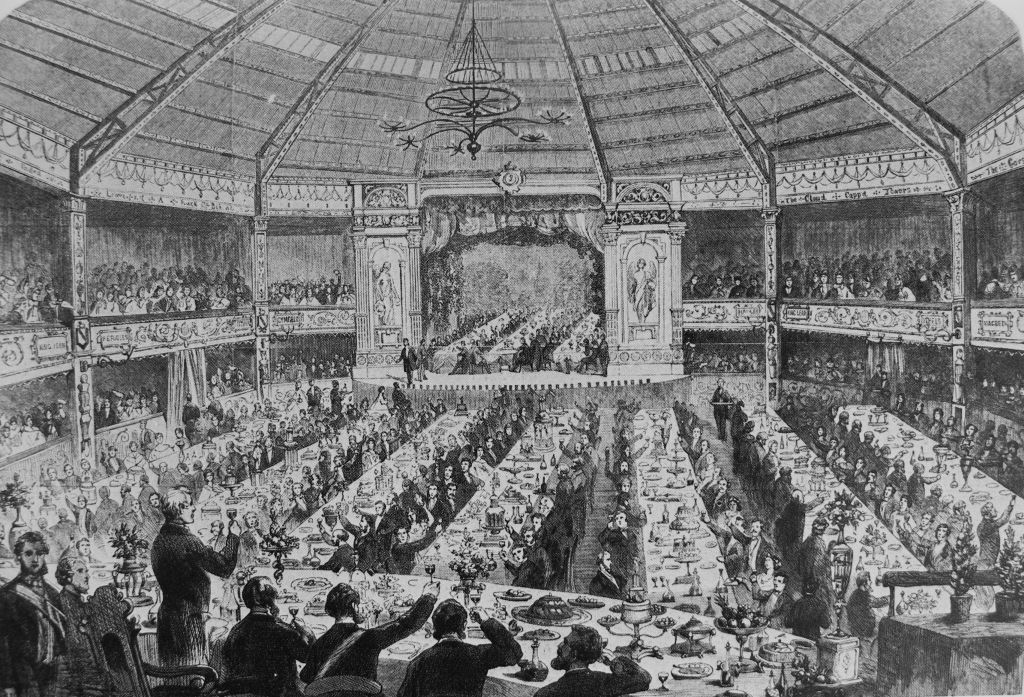
The banquet

On the very first day at 3pm there was a banquet: the high table stood on the orchestra area and the pit and stage held 700 diners in all. Sitting in the boxes were “spectators, who looked on with all the gratification that is to be derived from witnessing enjoyments which one is not permitted to share”. They paid 5s to watch, 21s to eat. The celebrations continued for a week, and performances in the Pavilion included a musical concert of The Messiah with 500 participants, performances of Twelfth Night, Romeo and Juliet and As You Like It, and a grand fancy dress ball. Many events attracted capacity audiences and the popularity of the Shakespeare plays undoubtedly planted the idea in the mind of chief organiser, the local brewer Edward Flower, that a permanent theatre to stage regular performances of Shakespeare might be a success.

Richard Foulkes, in his definitive book The Shakespeare Tercentenary of 1864, suggests that the celebration was a success because it “was the creation of Stratfordians themselves”. The adaptable large Pavilion was the key. Yet the irony is that by the end of May it was no more. Everything was sold off in an auction that made back only a fraction of the cost of building it.

The town was again without a venue which could be used to seat hundreds of diners or stage big events. Until a few years ago the Birthday Luncheon was sited in a large marquee put up in the theatre-owned gardens just across the road from the site of the 1864 Pavilion. The expense of this structure caused the Luncheon to be moved, a few years ago, to the Levi Fox Hall at King Edward’s School. But it’s still a costly event which requires sponsorship.

The Birthday procession

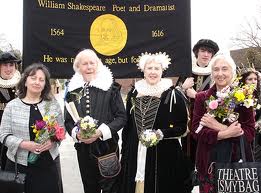
The Luncheon is only one element of the Birthday Celebrations, the most important part of which is the delightful procession which anyone may join, carrying a floral tribute to be placed on Shakespeare’s grave.  Local businessman Tony Bird has been one of the sponsors of the Luncheon for many years and in the Stratford-upon-Avon Herald of 7 February he identified the need, which has been felt in the Birthday Celebrations from 1769 onwards, for “a facility to seat up to 500 people … to produce an event with the style and panache fitting for the celebration of Shakespeare’s birthday”.

This year there will be a smaller reception for 180 invited guests at which speeches will be made and the annual Pragnell prize to an outstanding Shakespearian will be awarded. Large-scale celebrations are planned for 2014, the 450th anniversary of Shakespeare’s birth and 2016, the 400th anniversary of his death. It’s to be hoped that a way will be found to allow even more people to enjoy this traditional part of these most English of celebrations.

Share
Posted in Legacy, Stratford-upon-Avon | Tagged , , , , , , , , | Comments Off on Lunching with Shakespeare: Stratford’s Birthday Celebrations

The Shakespeare Head Press: a link to Stratford’s past

The Chaucer Head Bookshop

As visitors to Stratford walk between the Shakespeare Hotel and Nash’s House, they pass a handsome building housing a second-hand bookshop. The sign hanging up outside bears a picture of Chaucer, and the shop is known as the Chaucer Head Bookshop. But why does it have this name?

This building was for a number of years in the twentieth century the home of the Shakespeare Head Press, a printing business set up by A H Bullen. Bullen is almost forgotten now, but in his lifetime his knowledge of the 16th and 17th century writers whose works he edited was said to be unsurpassed. The story of how the press came to be here is curious, and is recounted in Dixon Scott’s 1911 book Stratford-on-Avon, published in the Beautiful Britain series. The author recounts a conversation he had with Bullen:

“The idea of establishing a printing-press in Stratford came to me in a dream. I had not visited Stratford for many years, when one night I dreamt that I had been looking over Shakespeare’s Birthplace, and the Church where he lies buried, and was preparing to leave the town when someone said to me: “You’re not going away, surely, without seeing the Book?” “What book?” said I.”Why, haven’t you heard of the whole edition of Shakespeare that is being printed here – the first complete edition ever printed and published in Shakespeare’s own town?” I knew all the time I was dreaming, and I thought to myself, “I must remember this dream when I wake up”. I did remember it, and couldn’t get away from it. I soon saw clearly that there would be no peace of mind for me until my dream came true”.

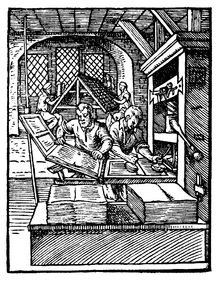
Early modern printing in progress

Bullen set about equipping and organising 21 Chapel Street as a printing shop. The Shakespeare Head Press was to be “an honour to Shakespeare’s native town”, the books produced there finely printed from hand-set type. Bullen followed the example of William Morris’s Kelmscott Press. Indeed some of the compositors frames and typecases came from the Kelmscott Press, and the older of the two presses on which the finest books were printed belonged to William Morris and was used by him when he printed his edition of Chaucer. The Kelmscott Chaucer is one of the finest books ever printed in England, and is the  link that gives the bookshop its name.

Sadly Bullen, for all his brilliance as an editor, never received the popular acknowledgement which he deserved and his business never prospered. “It is the avowed aim of the Press to produce worthily books worthy to be so produced”, he claimed, and other work carried out by the Press centred around editions of great English writers and English translations of European and classical literature as well as some works by local authors. The ten-volume Shakespeare was printed in 1904 on hand-made paper in a limited edition of 1000, and is still a sought-after set of books.

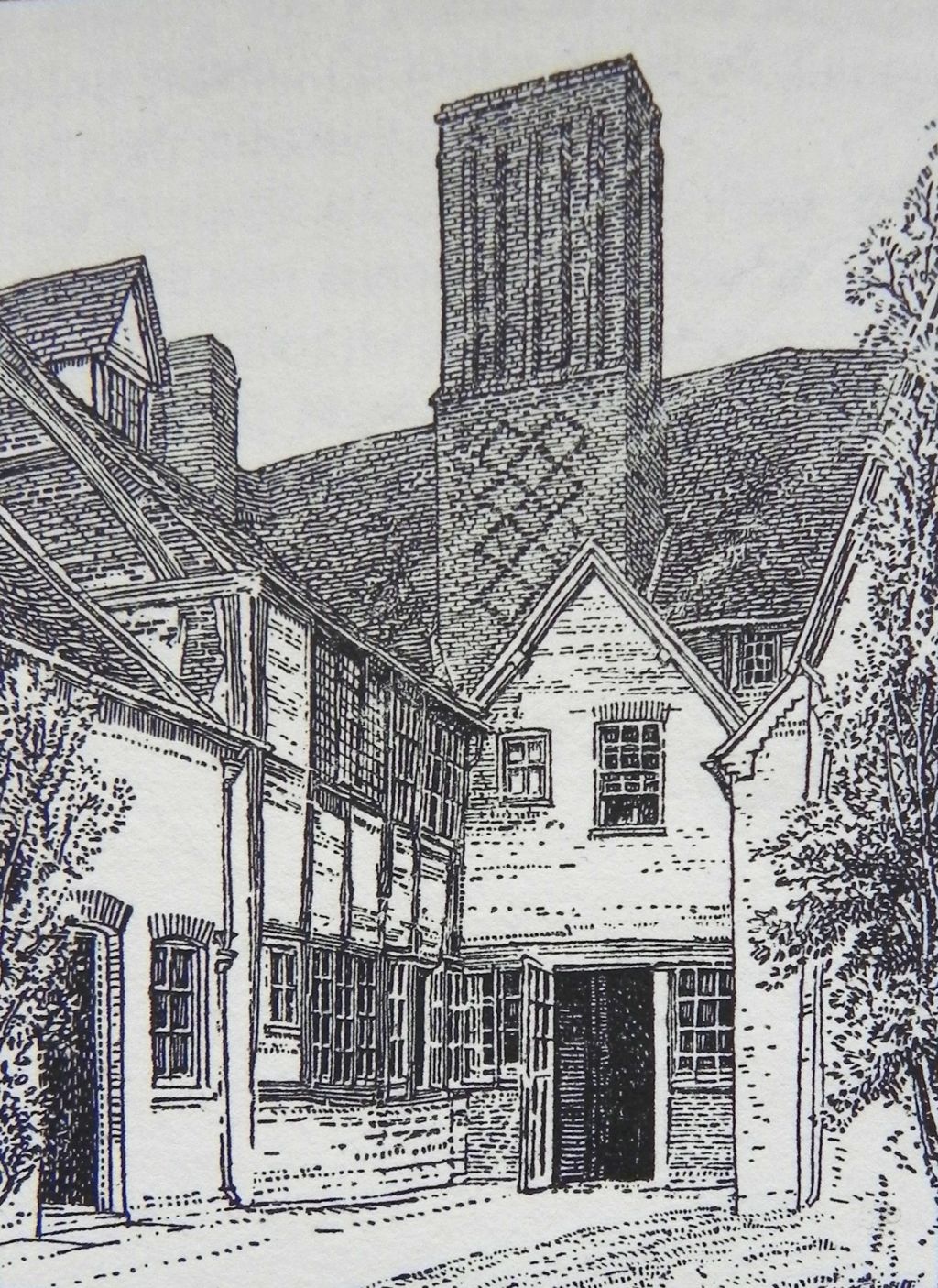
The building from the back, drawn in 1921

Bullen died in 1920 and the business was carried on by B H Newdigate. One of the charming items produced at that time was a little guide to the building. Although refronted in the eighteenth century, it dates back to Shakespeare’s time and was lived in by a man well known to Shakespeare, Julius Shaw. Within the guide is a drawing of the back of the house showing it to be a half-timbered building with impressive brick chimneys, and as well as describing the rooms used for various purposes in the process of printing and binding books the author identifies the original functions of some of the rooms such as the kitchen and brewhouse.

Julius or Juline Shaw was known to Shakespeare for many years. Shakespeare’s father attested the inventory of Shaw’s father’s property and as well as being a close neighbour Shaw was one of the witnesses to Shakespeare’s will. He was a local councillor, twice being the town’s bailiff. The Chaucer Head Bookshop is still a connection to the business of printing on which Shakespeare’s reputation entirely depends and an unexpected link to the past.

Share
Posted in Legacy, Shakespeare's World, Stratford-upon-Avon | Tagged , , , , , | Comments Off on The Shakespeare Head Press: a link to Stratford’s past