Peter Brook: from enfant terrible to grand old man of the theatre

peter brookNobody has been more influential in the world of the theatre in the last 70 years than Peter Brook. And at the age of 88, he’s still involved, setting out his ideas about why theatre is so important. Shakespeare has always been central to these concerns, and earlier this year he published a series of new essays: The Quality of Mercy: Reflections on Shakespeare.

In the book he considers Shakespeare from a number of angles, looking at plays he’s directed such as Measure for Measure, Titus Andronicus,  and, most famously, A Midsummer Night’s Dream, and at the idea that Shakespeare didn’t write his own plays.
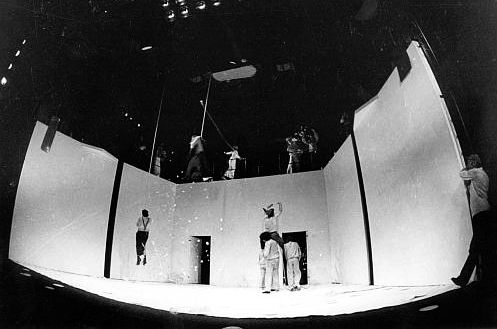
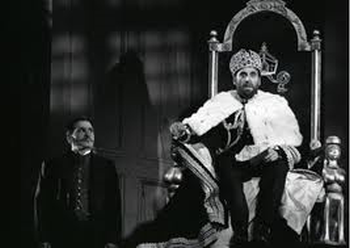
The white box set for Peter Brook's most famous production: A Midsummer Night's Dream

The white box set for Peter Brook’s most famous production: A Midsummer Night’s Dream

Last week Radio 3’s Nightwaves broadcast an extended interview between Brook and Matthew Sweet in which they talked about Brook’s long and distinguished career. As Sweet points out, one of the things that distinguishes Brook is his “streak of mysticism”, and when asked about his journey with Shakespeare he immediately started to talk about our planet and our shared humanity. “Everything is energy shooting across the globe”, and we continually respond to countless influences without even realising we are doing do. Using the Shakespearian metaphor of theatre as a mirror is which actors “hold, as ’twere, the mirror up to nature”, he pointed out that the reflections in a mirror are never static, but are immediate”. The podcast is available here.

I’m going to be returning in another post to his production of Titus Andronicus, but he explains in the interview how it was his intuition that in the 1950s this most neglected of Shakespeare’s plays at last had found its time. Titus Andronicus was the last of Shakespeare’s plays to be performed in Stratford-upon-Avon, and it caused a sensation. Interestingly Brook comments that the comfy, tasteful world of the West End was already being challenged by John Osborne’s play Look Back in Anger, but in fact his production of Titus Andronicus was staged in Stratford-upon-Avon in August 1955, a full nine months before Osborne’s play was premiered at London’s Royal Court in May 1956.
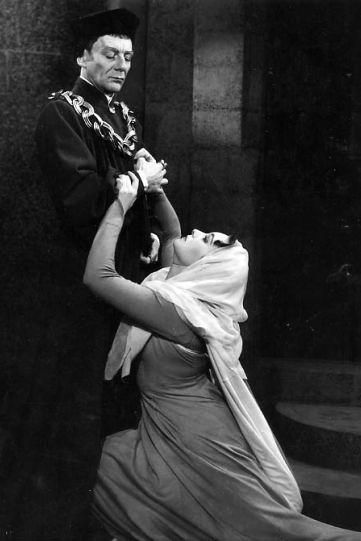
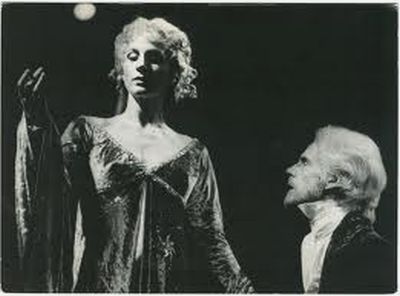
John Gielgud and Barabara Jefford in Measure for Measure

John Gielgud and Barabara Jefford in Measure for Measure

Brook’s work at Stratford-upon-Avon dated back to 1946, when as a precocious 20-year old he had directed a playful and enormously successful Love’s Labour’s Lost. The following year his Romeo and Juliet met with less approval, but in 1950 he undertook Measure for Measure, with John Gielgud, a production which has gone down in history. In the interview with Sweet, he talks about how this play is full of meaning today: Shakespeare’s preoccupations in the play are with the balance between the need for order, the desire for freedom and the fear of tipping into chaos.

Brook’s next Stratford production was Titus Andronicus, followed in 1957 by The Tempest, again with John Gielgud. In 1962 he directed King Lear, another triumph, followed by a more low-key Tempest in 1963. From 1963-1966 Brook worked on a number of experimental productions in London for the RSC including the Theatre of Cruelty season and the Marat-Sade, showing the influence of Artaud, Brecht and Grotowski. Shortly afterwards he wrote his book The Empty Space in which he articulated his theories about theatre and staging, and it was just after this that his most definitive work, his 1970 production of A Midsummer Night’s Dream, was produced.  The Guardian have recently published a piece by Brook about this production, and John Wyver, of Illuminations, has written a blog post about the effect this production had on him as a sixteen-year old. This also includes a link to a clip from the play which was made for a BBC documentary.

Since the early 1970s Brook has worked largely outside the UK, especially at his theatre in Paris, the Bouffes du Nord, but he’s also worked in Africa and Asia where he’s explored traditional performance forms. His production of The Mahabharata in the late 1980s resulted from this exploration. He came back to Stratford to direct Antony and Cleopatra in 1978, the only one of his Shakespeare productions that I saw, and sadly the one that was probably the least successful.
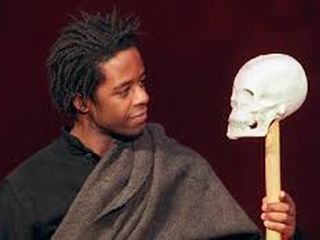
adrian lester hamletIn 2000 his production of Hamlet at the Bouffes du Nord, repeated at the Young Vic in 2001, featured Adrian Lester (the National Theatre’s current Othello) in a production “presented with rigorous simplicity”.

Although Brook doesn’t feel the desire to direct another major production of Shakespeare it’s clear his enthusiasm is undiminished. In his new book he explains “The uniqueness of Shakespeare is that while each production is obliged to find its own shapes and forms, the written words do not belong to the past. They are sources that can create and inhabit ever new forms… There is no limit to what we can find in Shakespeare”.



Share
Posted in Plays and Poems, Shakespeare on Stage | Tagged , , , , , , , , , , | Comments Off on Peter Brook: from enfant terrible to grand old man of the theatre

Encouraging the sense of wonder: Educating with Shakespeare

arts and cultureFunding and the arts is a subject that never drops off the agenda completely, but since Arts Minister Maria Miller’s speech about funding, indicating that the arts needed to think more about profit, arts organisations and their supporters have been making their voices heard more loudly.

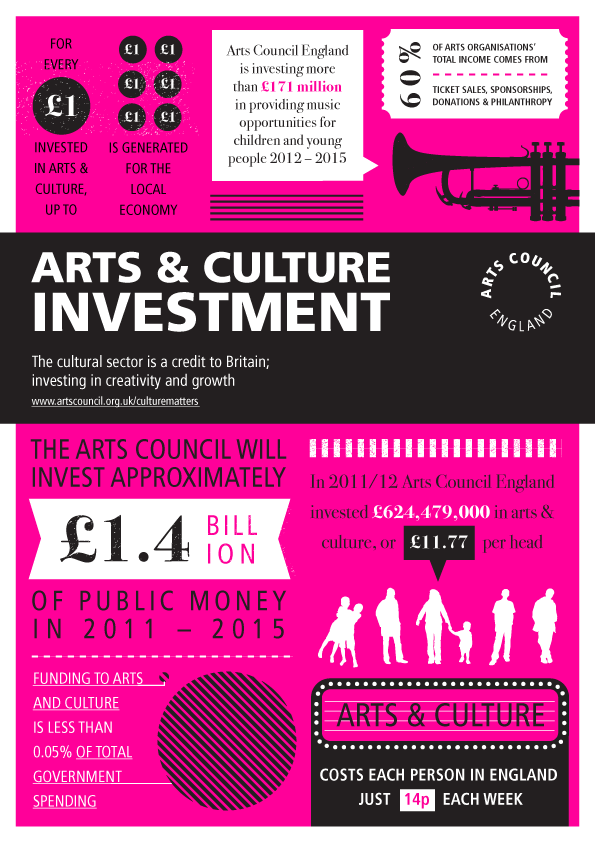
Arts Council England have produced a couple of infographics summarising the economic benefits of the arts sector illustrating how much the arts contribute to the economy for a relatively small investment. The cost of the arts to the British citizen comes out at 14p a week each.

This week I’ve heard that the French are considering putting a 4% tax on smartphones, tablets and downloads to defend French art against the losses caused to artists by the internet. And in Germany, where the arts are already significantly better funded than in the UK, it’s been reported that a full education in arts and cultural subjects is seen as essential for children at school.

The idea that formal education is about more than measuring standard achievements in a limited range of subjects is one that Ken Robinson has tackled in one of his outstanding talks. He’s an Englishman based in California, and entitles it “How to escape education’s Death Valley”. He sees it as essential that the differing capabilities of children are recognised and their innate curiosity and creativity is encouraged.

arts and culture2The Guardian’s Lyn Gardner recently wrote a piece to encourage more people fight for the arts. It mentioned the What’s Next movement in which leaders of arts organisations such as theatres and museums have been meeting, attempting to link up with politicians, local arts organisations, schools and colleges with the aim of helping to define and understand the value of culture. It’s “founded on the idea that everything is connected”.

There is evidence that schools putting the arts at the centre of their curriculum have raised grades, but more importantly have increased the confidence and happiness of the pupils. Lyn Gardner argues that theatre companies should be engaging with their local communities in order to increase the number of people for whom the arts are worth fighting. The My Theatre Matters campaign aims to ensure that those in power know how much voters care about the survival of their local theatres. You can join on the website.

Kelly Hunter

Kelly Hunter

Kelly Hunter, a British actress who has spent much of her professional life in the subsidised theatre, has written a fascinating essay in the latest edition of the British Shakespeare Association’s magazine Teaching Shakespeare in which she explains how Shakespeare is being used to help autistic children in a project being undertaken at Ohio State University. It’s a great example of how the arts are being used to make a difference to people’s lives.

In another article in the same magazine Laura Nicklin, a postgraduate student, looking at why people study Shakespeare at this level, suggests that “the study of Shakespeare illuminates the human experience, human nature and human values, [and] … stimulate our empathetic abilities”.  You’ll find a link to the magazine on the Shakespeare in Education home page.

It’s always been difficult to quantify the importance of culture and the arts, but the often-repeated comment that if the arts were really valuable they would be profitable doesn’t hold water. You might say the same about sport, but few of our Olympic medal-winning athletes would have been so successful without substantial financial support. The success of The Hollow Crown, the BBC’s main contribution to the 2012 Year of Shakespeare, a series which is now being shown in the US, can be at least partly attributed to the subsidised theatre sector where many of the actors, designer and directors gained their mastery of Shakespeare. Among the older actors to whom this applies are David Suchet, Jeremy Irons and Patrick Stewart, and for the younger ones, Rory Kinnear, currently playing Iago in the National Theatre’s Othello, and Bolingbroke in The Hollow Crown’s Richard II, made his mark in the 2003 RSC season playing smallish roles in plays such as Cymbeline and The Taming of the Shrew.

Lyn Gardner’s piece quotes philanthropist Aileen Getty, who has recently made a substantial donation to London’s Circus Space. She explained her reason:” I have thought deeply about this over the years, and believe you cannot underestimate the value of keeping wonder alive. Wonder keeps our spirits joyous and resilient.” Wonder is  often invoked by Shakespeare as a reaction to events, whether it’s the miracle of the curing of the French king by Helena in All’s Well That Ends Well, the appearance of the Ghost in Hamlet or the fulfilment of the oracle in The Winter’s Tale, where  “Such a deal of wonder is broken out within this hour that ballad-makers cannot be able to express it”.

Share
Posted in Legacy | Tagged , , , , , | Comments Off on Encouraging the sense of wonder: Educating with Shakespeare

Looking at Leontes: The Winter’s Tale in stitches at the RSC

Antony Sher, the trial scene, 1999

Antony Sher, the trial scene, 1999

Last week I wrote about the three costumes for Prospero in The Tempest which form part of the RSC’s exhibition of historic costumes, Into the Wild. Just opposite them stand three quite different costumes, for the character Leontes in The Winter’s Tale.

It’s a play that offers many opportunities for a costume designer. Unlike The Tempest, set on a mythical island, The Winter’s Tale has two completely different locations. The play begins in Sicilia, where Leontes rules, and ends there sixteen years later. The formality of his court is always a contrast with the Bohemian scenes of bumptious country life that make up the central scenes.

Greg Hicks, 2009

Greg Hicks, 2009

But the challenge for the costume designer isn’t just in differentiating between two very different locations. Leontes’ all-consuming jealousy and his belief in his wife’s adultery begins so suddenly and continues so unshakeably that it can be difficult for an audience to take seriously. Later on the play includes improbable coincidences and, apparently, a miracle. Costumes can help to locate Leontes’ court in time and place and to signal the progression of his state of mind on which much of the play depends. “Your actions are my dreams” he says to his accused wife.

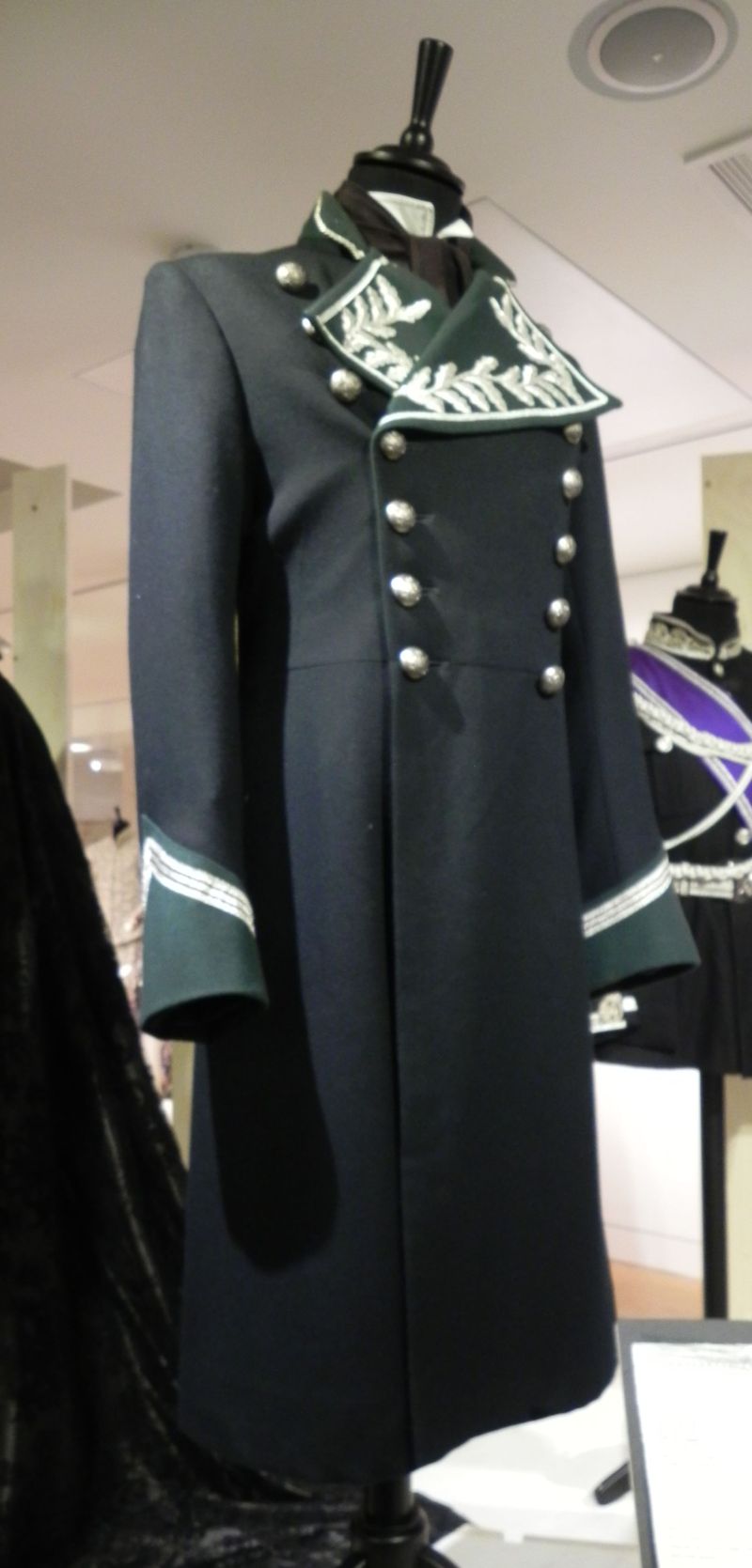
The costume worn by Greg Hicks for the trial scene, 2009

The costume worn by Greg Hicks for the trial scene, 2009

The three costumes on display are for the 1986 Terry Hands production with Jeremy Irons, costumes designed by Alexander Reid,  the 1999 production directed by Greg Doran with Tony Sher, designed by Robert Jones, and David Farr’s 2009 production designed by Jon Bausor, with Greg Hicks in the lead. The last two are directly comparable, being the costumes, or part of them, worn by Leontes for the scene in which his wife, Hermione, is tried for adultery. This great central scene includes the trial itself, the reading of the oracle, Leontes’ refusal to accept it, the offstage deaths of Hermione and their son Mamillius, and Leontes’ repentance. Beginning with the formality of the courtroom it ends with the disintegration of Leontes’ world.


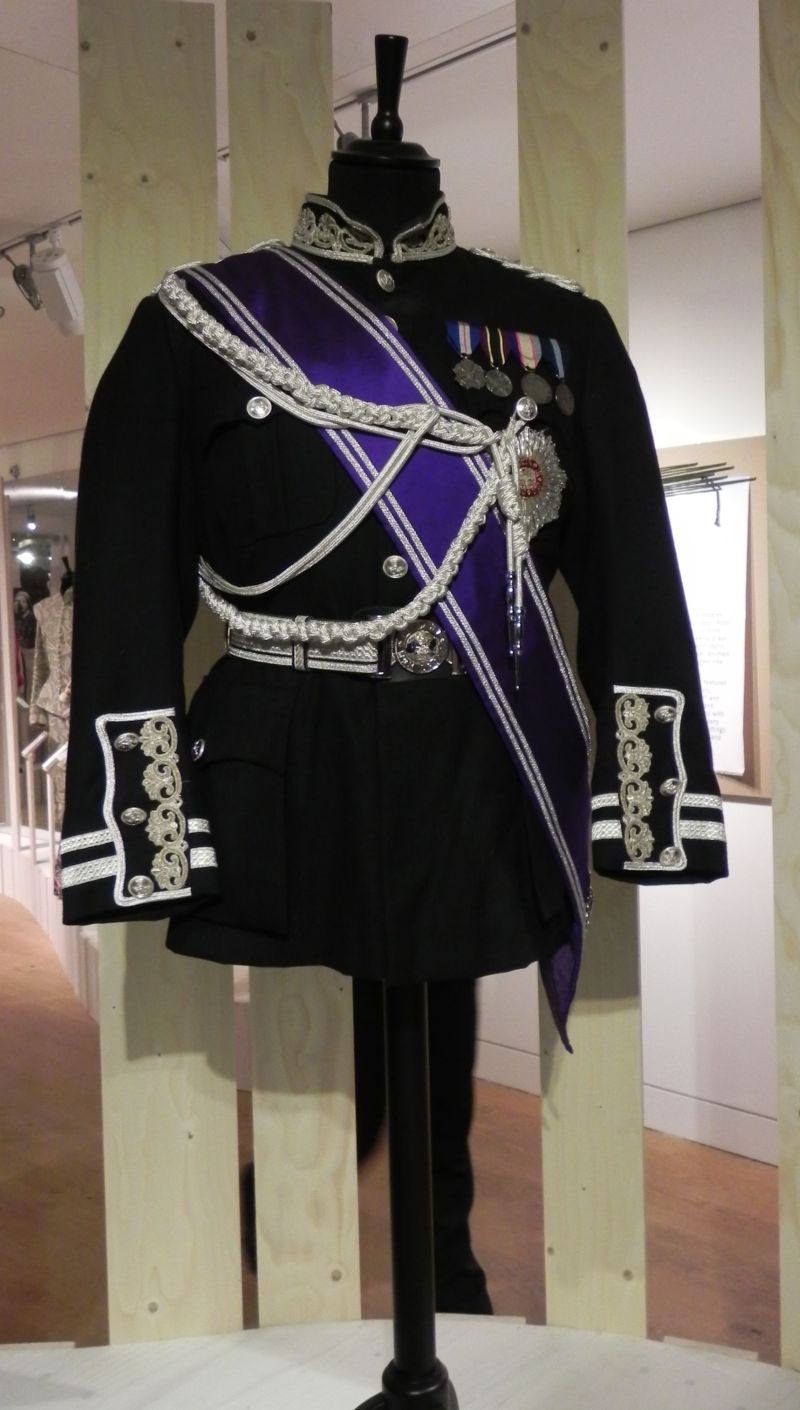
Uniform worn by Tony Sher, 1999

Uniform worn by Tony Sher, 1999

For this scene Tony Sher’s costume consisted of a military uniform, highly decorated with medals, on top of which he wore a sumptuous fur cloak and crown. The costume suggested a nineteenth-century, perhaps Eastern European setting, literally a buttoned-up society. His earlier costumes had suggested he was losing control, but this one showed his determination to retain fully in power.

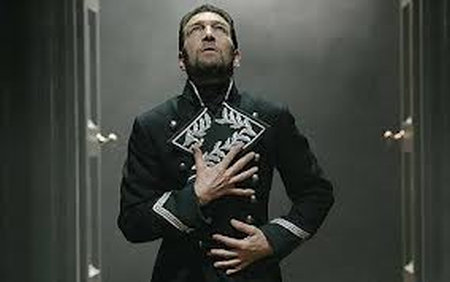
In the same scene Greg Hicks’ spare, troubled Leontes, wore a simple dark overcoat, the only decoration being the gold oak sprigs on the lapels and gold taping on the sleeves. His court had always been sober, but when he defied the oracle the results were spectacular. The massive bookcases set at the back of the stage collapsed, showering the stage with their contents. Sicilia’s court and its culture suffered destruction.

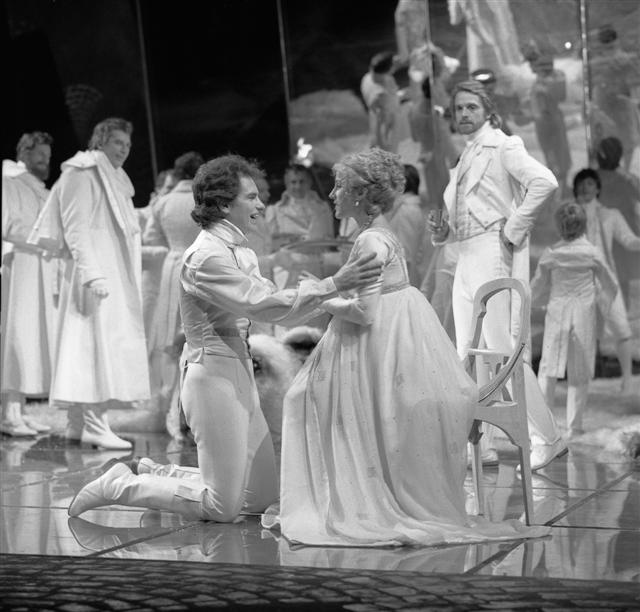
The opening scene, 1986. Paul Greenwood ,Polixenes, Penny Downie, Hermione, Jeremy Irons, Leontes

The opening scene, 1986. Paul Greenwood ,Polixenes, Penny Downie, Hermione, Jeremy Irons, Leontes

There is no corresponding costume in the exhibition showing how Jeremy Irons was dressed for this scene in 1986. It was a production heavy with symbolism from the beginning. The stage featured a mirrored set, a chilly background  in which onstage action was reflected: ice and snow. Leontes court was Regency, elegant and romantic, all in white. Costumes were both formal and softly beautiful with scarves, full sleeves and jewels. The mirrors, indicating a society in which people observed both themselves and others, subtly suggested the key to Irons’ suspicions. By the time the trial scene was reached his costume had grown into a massive cloak and head-dress that enveloped him, making him, like Tony Sher, impregnable.

Coat worn by Jeremy Irons, 1986

Coat worn by Jeremy Irons, 1986

The costume that we do have worn by Irons is a crushed velvet, deep blue tailed coat, of the same style worn earlier in the play. When we first saw Irons after the sixteen-year gap he was dressed in a hospital gown, confined to a wheelchair. Revived by the discovery of his lost daughter, he wore this blue coat to visit the statue of his dead wife. What were we to make of it? In style it was an echo of the earlier costume,  but the softness of the coat, the deepness of the colour of the velvet, were in contrast to the hard brightness of the white version.

winters tale irons2It signalled a change in Leontes, and kept eyes on him while creating a link to the costume worn by Hermione’s statue. Sher and Hicks’ costumes for this scene were less eye-catching, duller in colour, and allowed the focus of the scene to be the reawakening Hermione.

Into the Wild enables us not just to admire the skills of the costume-makers but to observe the way in which designers and directors have used costume to help the audience interpret The Winter’s Tale and its complex background, characters and relationships.

For more information, see the excellent full stage history of RSC productions of The Winter’s Tale 1948-1999 by Patricia E Tatspaugh in the Shakespeare at Stratford series published by The Arden Shakespeare in 2001.

Share
Posted in Plays and Poems, Shakespeare on Stage, Stratford-upon-Avon | Tagged , , , , , | Comments Off on Looking at Leontes: The Winter’s Tale in stitches at the RSC

Sir William Davenant and adapting Shakespeare, Restoration-style

The Painted room

The Painted room

In April the Painted Room in what used to be the Crown Tavern, at 3, Cornmarket, Oxford was temporarily re-opened. It’s remarkable that this room has survived, but even more astonishing is the coincidence that it is thought that Shakespeare may have stayed in it. The story that Shakespeare stayed with the family of John Davenant is a very early one. The Elizabethan wallpaper was preserved behind later oak panelling, and only found in the 1920s. Because the room was so magnificently decorated, is has been assumed that it was the one used by this distinguished guest. The painting itself dates back to the 1580s when the building was occupied by John Tattleton, a tailor.

The Crown Tavern was run by John Davenant and his wife Jane. Their son William, born in 1606, was probably Shakespeare’s godson, and Davenant was happy to be “thought his son”, though this is unlikely to be true.

John and Jane Davenant were both Londoners whose own parents came from elsewhere in the country, taking advantage of the opportunities afforded by life in the capital. They married about 1593 and lived close to the playhouses on the South Bank. John and his father were both merchant vintners, importing wine from the continent, and had links with the Muscovy Company, trading with Russia and Persia. None of their first six children survived and perhaps this is why, during 1600 or 1601, they left London for Oxford where they had seven children, including William. Their connection with the South Bank of the Thames where many of Shakespeare’s plays were performed may explain why, on his journeys between London and Stratford, Shakespeare chose to stay with the family.

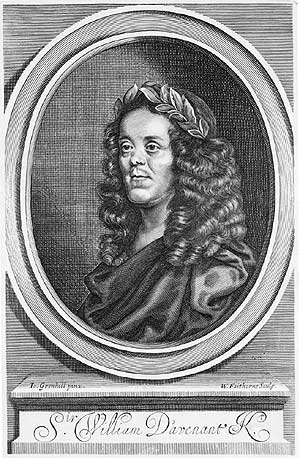
DavenantWilliam Davenant’s parents died in 1622, when he (one of seven surviving children) was 16. William was provided for in his father’s will, being apprenticed to a London merchant. Davenant, however, had other ideas, joining the households of a series of nobles and taking up writing. He was talented: his plays gained the attention of Queen Henrietta Maria and in 1635 he collaborated with Inigo Jones on the first of a series of royal masques, including Britannia Triumphans, in which the King appeared as “the glory of the western world”. The final court masque of Charles I’s reign, staged in 1640, was written by Davenant. During the civil war he continued to serve the King and Queen, being knighted in 1643. In the Commonwealth years he was briefly imprisoned in the Tower of London, but was released and made attempts to reintroduce public dramatic entertainments, including the first English Opera, The Siege of Rhodes. With organised entertainments frowned on it must have been his charm that kept him out of trouble.

On the restoration of the monarchy in 1660 Davenant was in an ideal position to be allowed to run a theatre. He and Thomas Killigrew were granted the right to open rival playhouses in London. Davenant’s new theatre, the Duke’s, gave him complete control and his leading actor was to follow Richard Burbage as the greatest tragic actor of his day, Thomas Betterton.

As well as his own plays, Davenant commissioned new work by writers such as George Etherege, but his first major adaptation was of Shakespeare’s Hamlet, in 1661. Even though heavily cut, it retained the play’s power. But Shakespeare’s plays were out of fashion. John Evelyn saw Hamlet, and commented that “the old plays begin to disgust this refined age”.

Refining and elevating Shakespeare’s plays meant, as F E Halliday says in The Cult of Shakespeare, “the essential thing was to get rid of the low comedy to which Shakespeare so often descended; obscenity was permissable, desirable even, but not vulgarity”. In 1662 he conflated two plays: The Law Against Lovers took the basic plot of Measure for Measure (without Mistress Overdone, Pompey Bum, and Froth) and added genteel elements from Much Ado About Nothing.
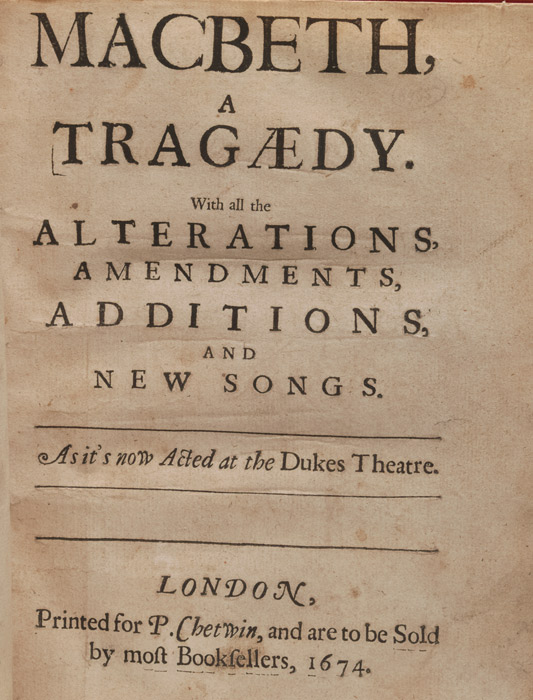
Two years later he adapted Macbeth, a play that we can see offered many opportunities for singing, dancing and special effects, but it’s less obvious why he made some of the changes. Instead of “the crow makes wing to the rooky wood”, in  Davenant, “the crow makes wing to the thick shady grove”.

Lady Macbeth’s “unsex me here” speech needed some work.  Shakespeare wrote:
Come to my woman’s breasts,
And take my milk for gall, you murth’ring ministers,
Wherever in your sightless substances
You wait on Nature’s mischief! Come, thick Night,
And pall thee in the dunnest smoke of Hell,
That my keen knife see not the wound it makes,
Nor Heaven peep through the blanket of the dark,
To cry, “Hold, hold”. 

Davenant's version of Macbeth

Davenant’s version of Macbeth

In Davenant, it becomes:
Come, and fill my Breasts
With Gall instead of Milk: make haste dark Night
And hide me in a smoke as black as Hell,
That my keen steel see not the wound it makes,
Nor heave’n peep through the curtains of the dark
To cry “Hold, hold!”

The words “dun”, “knife” and “blanket” seem to have offended the sensibilities of the Restoration audience.

In his book The Making of the National Poet Michael Dobson suggests that being regarded at this time as both as “an ignorant and archaic rustic”  and a “Divine Right monarch” was the first step in Shakespeare being adopted as the National Poet. Shakespeare’s flexibility has allowed his works to be endlessly adapted and rewritten while letting him develop into the country’s enduring cultural hero. This early, though, “Shakespeare’s plays belonged to the theatre more significantly than they belonged to Shakespeare”, and Davenant’s adaptations were driven solely by what was acceptable.

Davenant died suddenly in 1668, in his own theatre, and was buried in Poet’s Corner in Westminster Abbey. The slab above his grave contained the inscription “O rare Sr Will: Davenant”, a reference to the inscription nearby to Ben Jonson, who Davenant had succeeded as unofficial laureate.

Share
Posted in Legacy, Shakespeare on Stage | Tagged , , , , , | 2 Comments

Shakespeare, the BAFTAs, and screening theatre

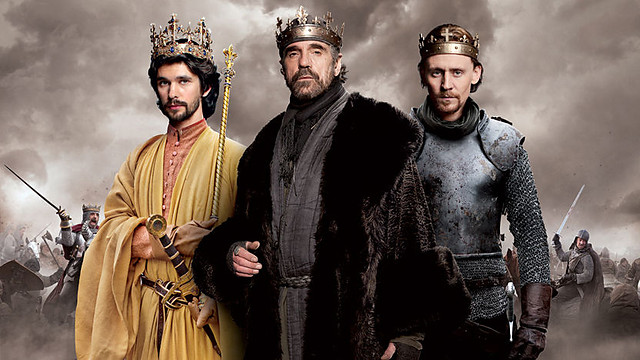
hollow crownOn Sunday May 12 the award ceremony for the UK’s TV industry, the BAFTAs, is being held. Shakespeare interest is focused on The Hollow Crown, the four-part mini-series which screened during the summer of 2012. The series isn’t badly represented: Ben Whishaw is nominated for best leading actor, Simon Russell Beale for best supporting actor, and Richard II as best single drama. There’s no nomination though for the series as a whole, and the Hollow Crown Fans @HollowCrownFans on Twitter, are so disappointed by this that they’ve decided in their admirably enthusiastic way to have their own, The Hollow Crown Fans awards. If you’re quick you’ll be able to vote.

Filming The Hollow Crown in St David's Cathedral

Filming The Hollow Crown in St David’s Cathedral

In case you’re not familiar with the series,  it consisted of four of Shakespeare’s history plays, Richard II, Henry IV parts 1 and 2, and Henry V. The adaptations featured many leading British actors well known for both their TV and stage work including Jeremy Irons, Tom Hiddleston, Ben Whishaw, Rory Kinnear, Patrick Stewart, Julie Walters, David Morrissey, David Suchet and Michelle Dockery. Here’s the link to one of my posts about the series.

It’s available to purchase on DVD for Region 1, and the screening dates for the series on PBS in the USA have just been announced.  The screening dates are from 20 September to 11 October.

So US Shakespeare fans don’t have long to wait now, and can look forward to the series in the fall. So hotly anticipated have these been that some @HollowCrownFans have purchased the European DVDs and a DVD player that will play them specifically to take a look at the series. 

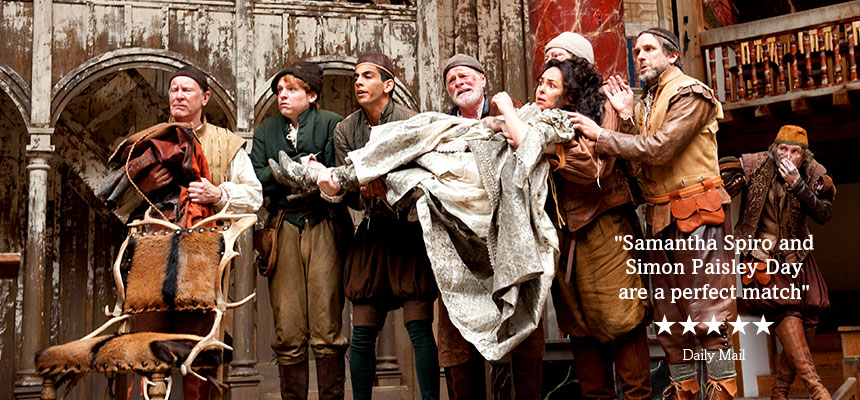
From the Globe's production of The Taming of the Shrew

From the Globe’s production of The Taming of the Shrew

There is of course a good deal of Shakespeare on stage this year, but don’t forget that there are also several stage productions to be seen in cinemas. Three plays from the Globe’s 2012 series are being screened: Henry V, Twelfth Night (with Mark Rylance and Stephen Fry, which was a huge West-End box-office hit last winter), and The Taming of the Shrew. Screenings start in June, but some of the dates and venues (especially those in the US) haven’t been confirmed yet. Full details can be found here.

The most exciting event of this kind is to be screening of the National Theatre’s current, highly-praised production of Othello which is to take place in September.  Booking is already open, and check here for dates and venues.

Share
Posted in Legacy, Plays and Poems, Shakespeare on Stage | Tagged , , , , , , , | 3 Comments

Prospero’s Costumes on Display: In Stitches with the RSC

Patrick Stewart in The Tempest, RSC 2006

Patrick Stewart in The Tempest, RSC 2006

The RSC’s Costume Exhibition Into the Wild features three costumes for different Prosperos in The Tempest. It’s the play in which the designer can let his imagination run riot as he or she attempts to create a suitable setting for the mysterious, magical island and its inhabitants. Shakespeare seems to be deliberately hazy about the location of the island: he doesn’t want to make it too obvious what sort of world we are in. The costuming of the characters, too, is a challenge, particularly Prospero. Is he a tyrannical usurper, an affectionate father, a magician or a victim seeking revenge? The way in which he’s clothed can help answer this question.

Patrick Stewart's Prospero costume

Patrick Stewart’s Prospero costume

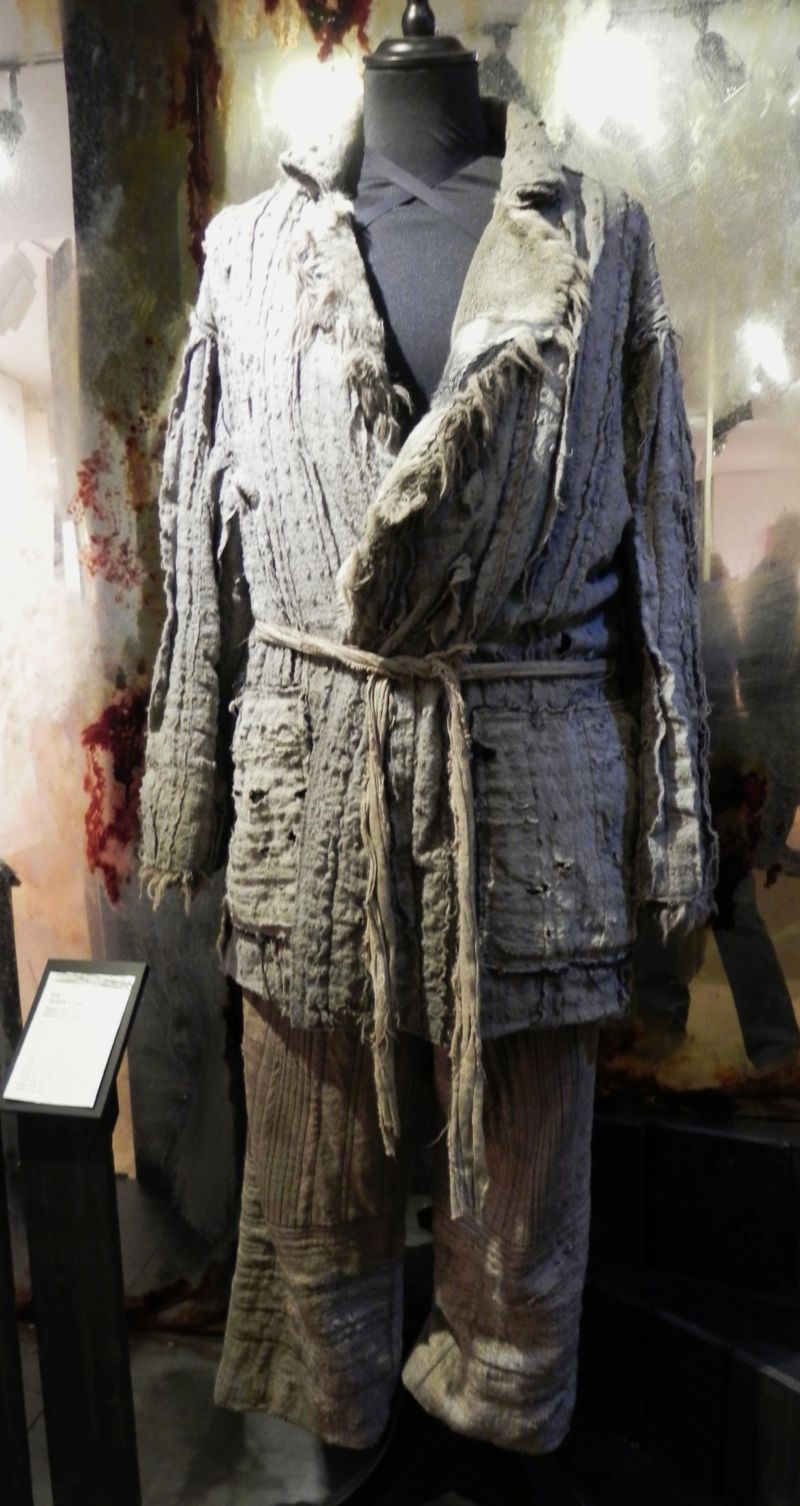
Each of the costumes in the exhibition tells a different story. Two of them are Prospero’s cloaks, the symbols of his magic powers and his most impressive costume. In the exhibition, though, the costume worn by Patrick Stewart in 2006, set in the Arctic, stands out for its plainness. This Prospero seems still to be wearing the clothes he arrived in. His magic cloak, which you can see in the photograph above, enveloped Stewart as he took part in strange, unsettling rituals. The costume designer was Nicky Gillibrand.

The other two costumes are from the 1952 revival of a production originally staged in 1951, completely recast, and from the 1982 production. The first was designed by the Australian Loudon Sainthill, the second by Maria Bjornson.

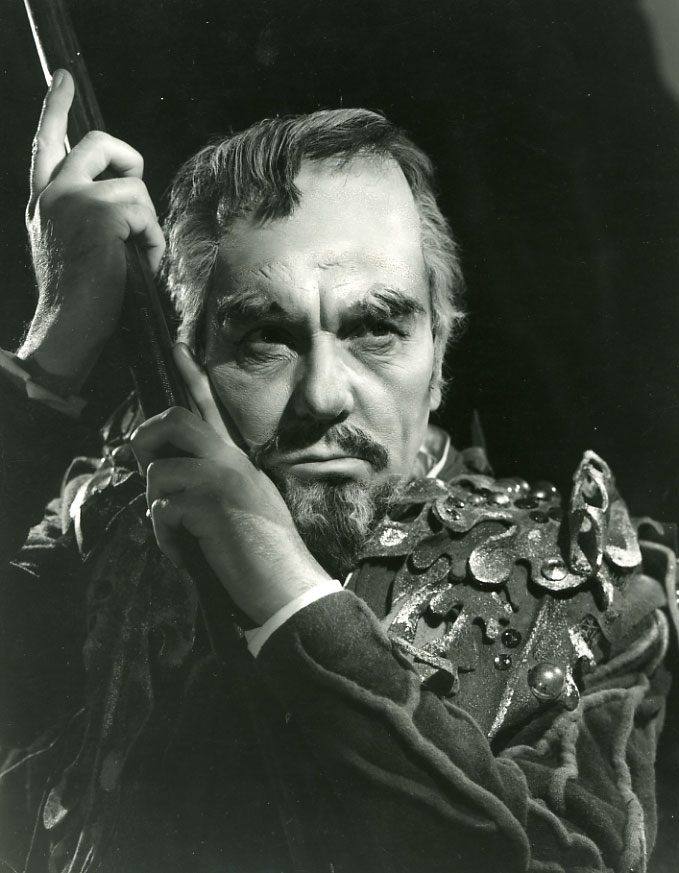
Sainthill originally had in mind Michael Redgrave as Prospero, a tall and imposing man. Reviews suggested his Prospero was dressed as a cross between a Druid and an old-testament Prophet, and photographs suggest his costume, like much of the rest of the production, was highly-decorated.

Ralph Richardson as Prospero

Ralph Richardson as Prospero

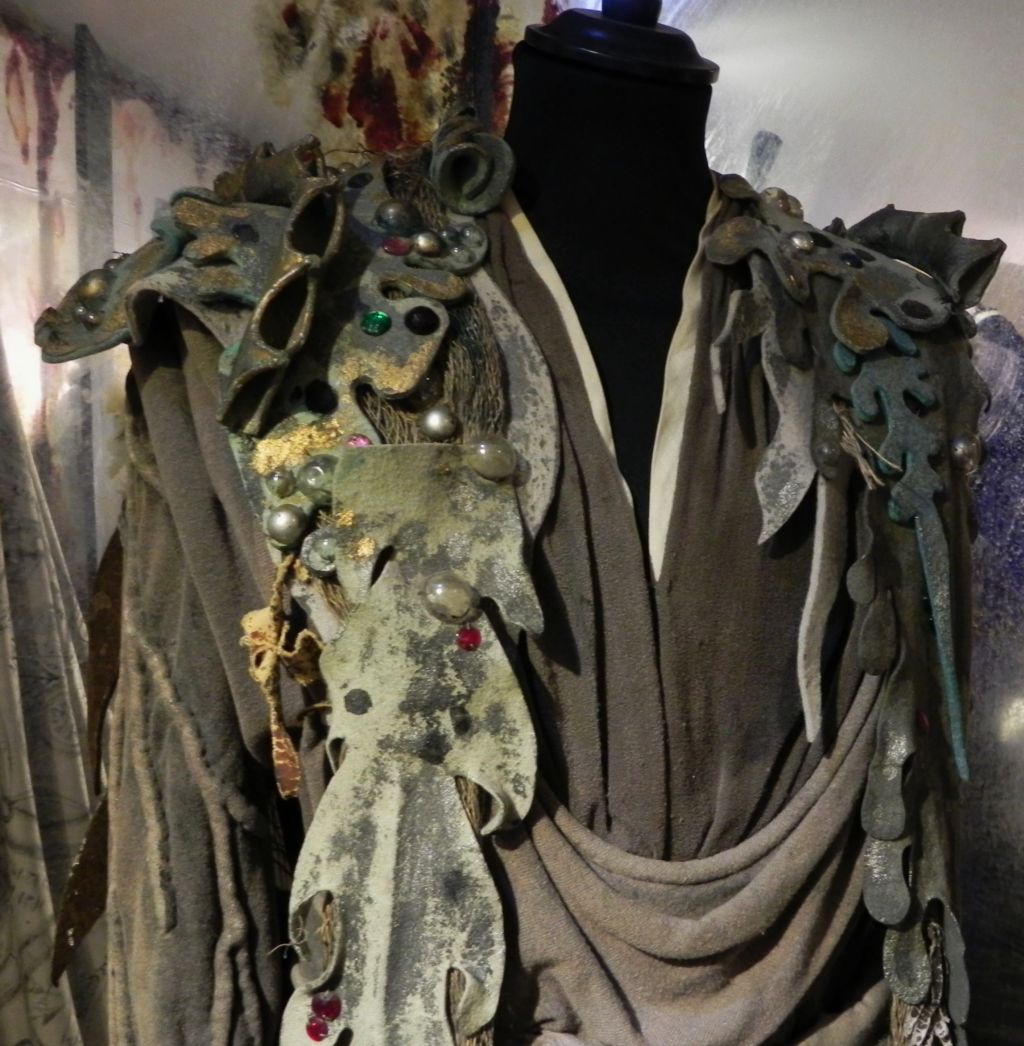
In 1952 Prospero was played by Ralph Richardson, a smaller man, and the costume was accordingly simplified. The original design still exists in the Shakespeare Centre Library and Archive, and shows a very plain garment. But photographs of Richardson confirm that the upper part of the costume as worn on stage was decorated with coloured stones, and with what appear to be seaweed fronds.

Looking closely at the costume itself you can see how crudely-made these are. Whereas the original costume emphasised the magical qualities of Redgrave’s Prospero, Richardson’s more down to earth Prospero was, according to the Spectator, “though human and likeable…dangerously deficient both in power and in the quality of wonder”.

Detail of Richardson's costume

Detail of Richardson’s costume

This was a pity: Sainthill’s designs were extraordinarily imaginative, conjuring up an exotic, eerie, underwater world. Roger Howells saw the play in 1951 and the design made a great impact on him. You can hear  about it below, just click on the orange arrow. (Anyone receiving this by email will need to go to the blog itself – the link is at the end of the mail)

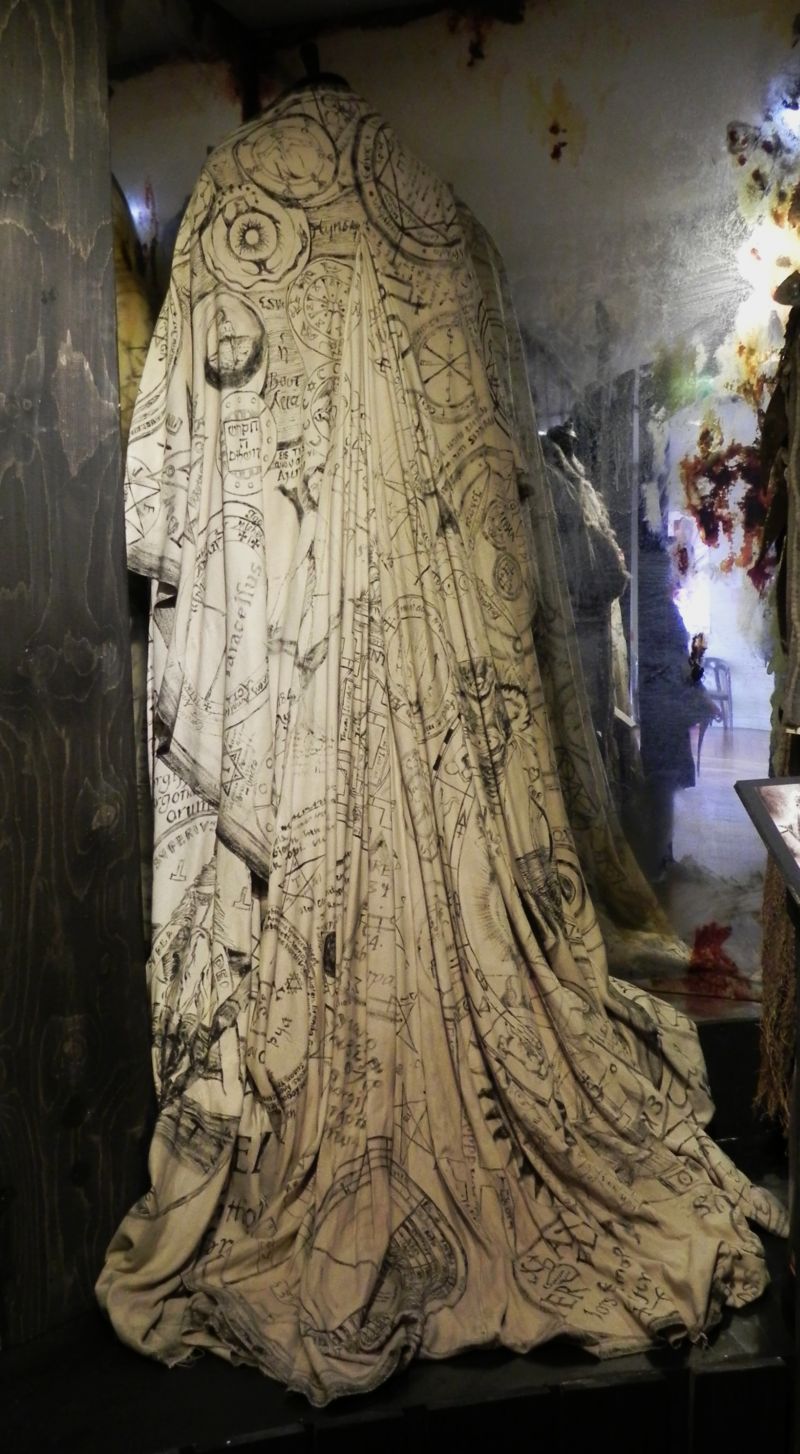
Next to the costume worn by Richardson in 1952 is that made for Derek Jacobi in 1982.

Derek Jacobi's cloak

Derek Jacobi’s cloak

The cloak, decorated with magical symbols, left the audience in no doubt that his magic was of vital importance to this angry Prospero. The Daily Mail review commented “This is no grizzled wizard whiling away his twilight years on an enchanted island. He is a man who has clearly been deposed in his prime and is willing every demon in nature to extract his revenge”.

The Tempest 1982. Photograph by Donald Cooper

The Tempest 1982. Photograph by Donald Cooper

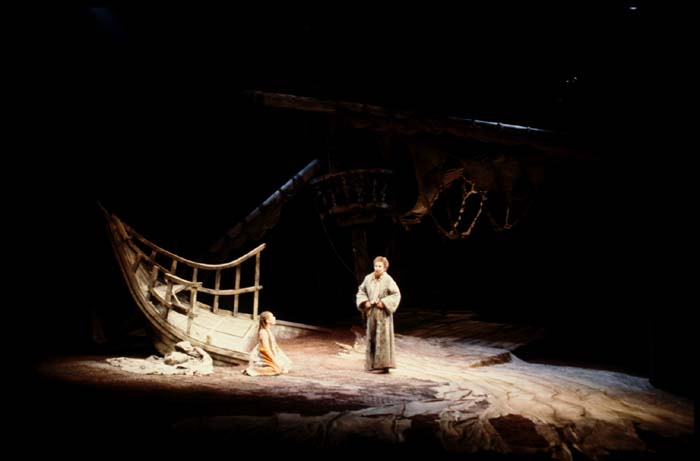
Bjornson’s set consisted of the skeleton of the boat in which they had arrived on the island, a constant reminder of the cruelty with which Prospero and Miranda were exiled from Milan twelve years before and which he was determined to revenge. It was a spectacular production, and Roger Howells, who was the Production Manager at the time, recalls some of the details of the design here.

I’m indebted for the quotations from reviews to David Lindley’s excellent book on The Tempest in the Shakespeare at Stratford series, published by The Arden Shakespeare in 2003.

Share
Posted in Shakespeare on Stage | Tagged , , , , , , , | Comments Off on Prospero’s Costumes on Display: In Stitches with the RSC

The Royal Shakespeare Company in Stitches: celebrating costume

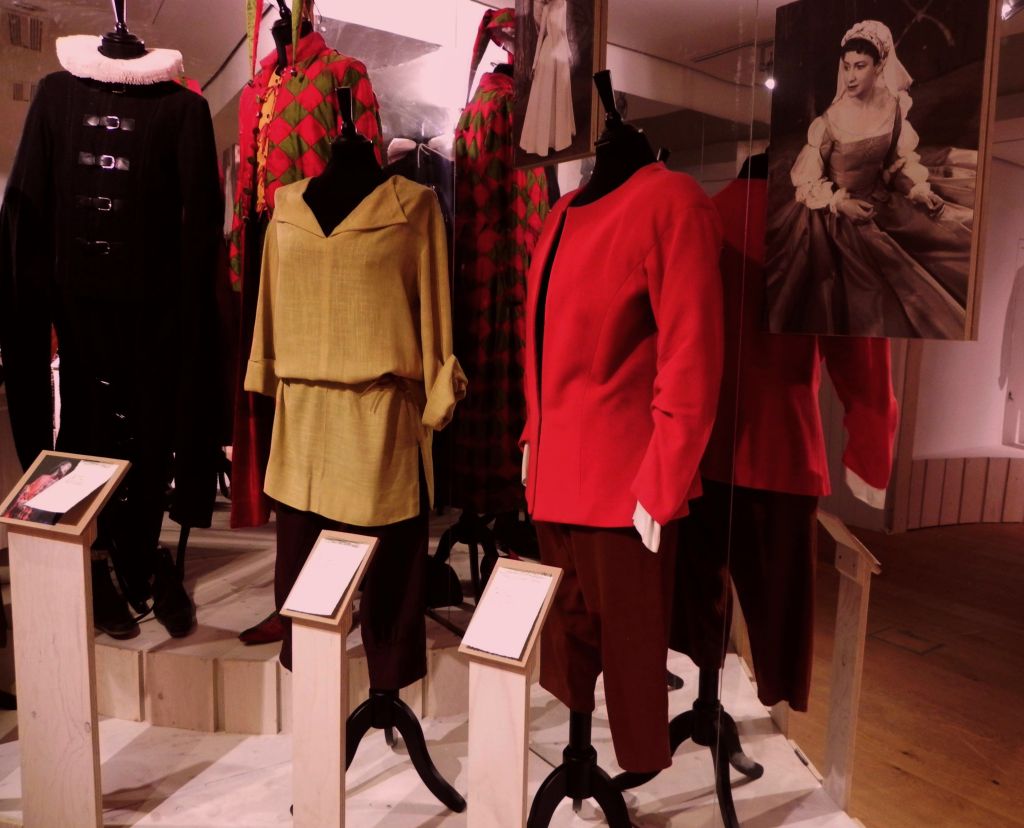
As You LIke It costumes in Into the Wild

As You LIke It costumes in Into the Wild

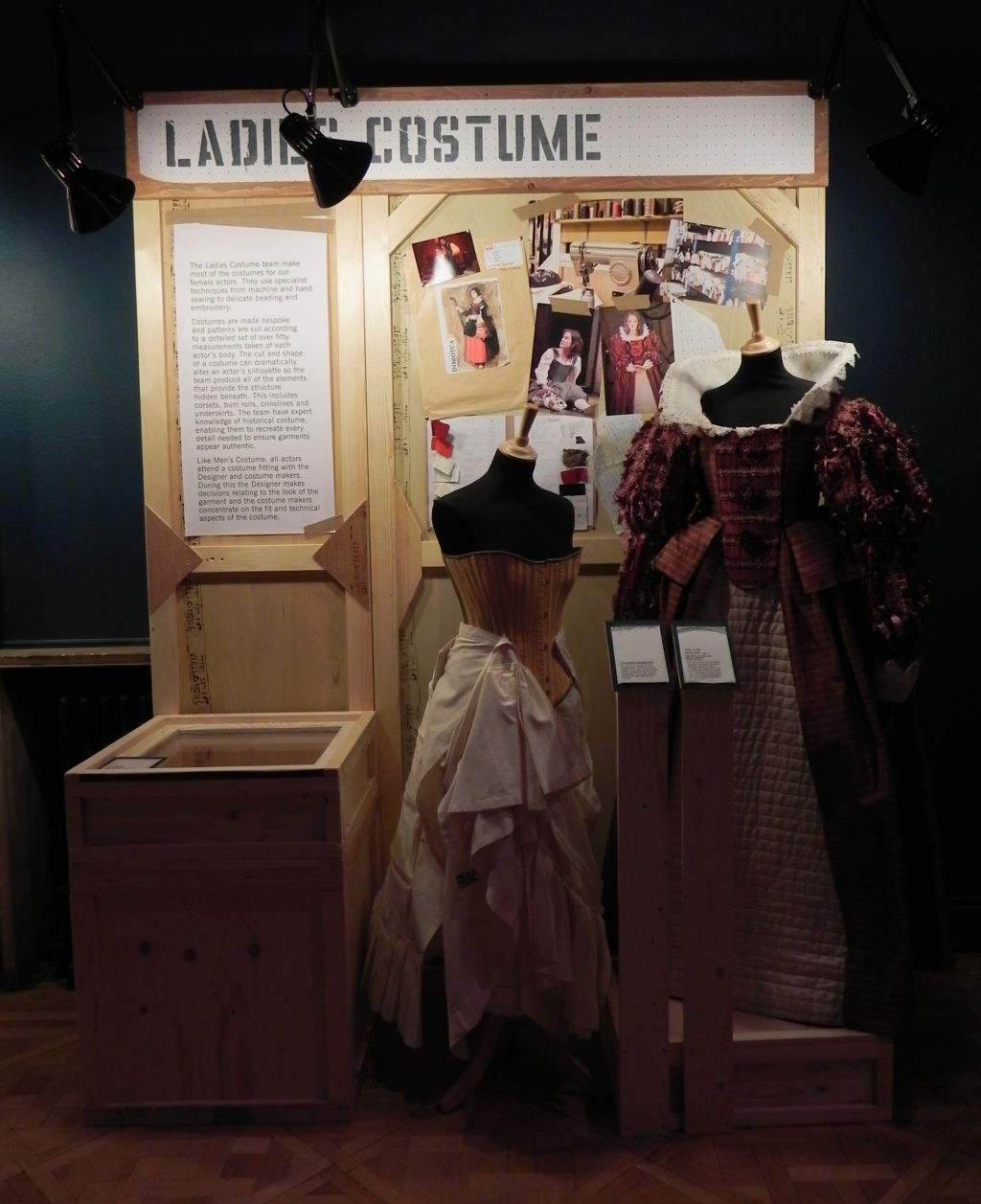
Three cheers for the RSC’s latest linked exhibitions, In Stitches, A celebration of RSC Costume. The first, Into the Wild, highlights the twentieth-century Shakespeare costume through thirty-five examples drawn from the RSC Collection, while Costume Craft  illustrates the processes by which modern RSC Costumes and associated items such as wigs are created and maintained.

Looking at the historic costumes, the earliest of which dates from 1952, it’s fascinating to see how much costume design and creation has changed over the years. Modern costumes, designed to be seen closer up, and with improved stage lighting, are much more detailed than those created up to sixty years ago. And the range of fabrics and the techniques that can be used today are extremely sophisticated.

I’ve long been interested in the way that really successful theatre costumes can do part of the work of the actor and director for them. Not only do costumes help the actor to create the character, they can help to suggest the emotion of a scene or explain part of the plot of the play. The role of the costume designer, translating the play into visual terms, is often overlooked, but extremely complex.

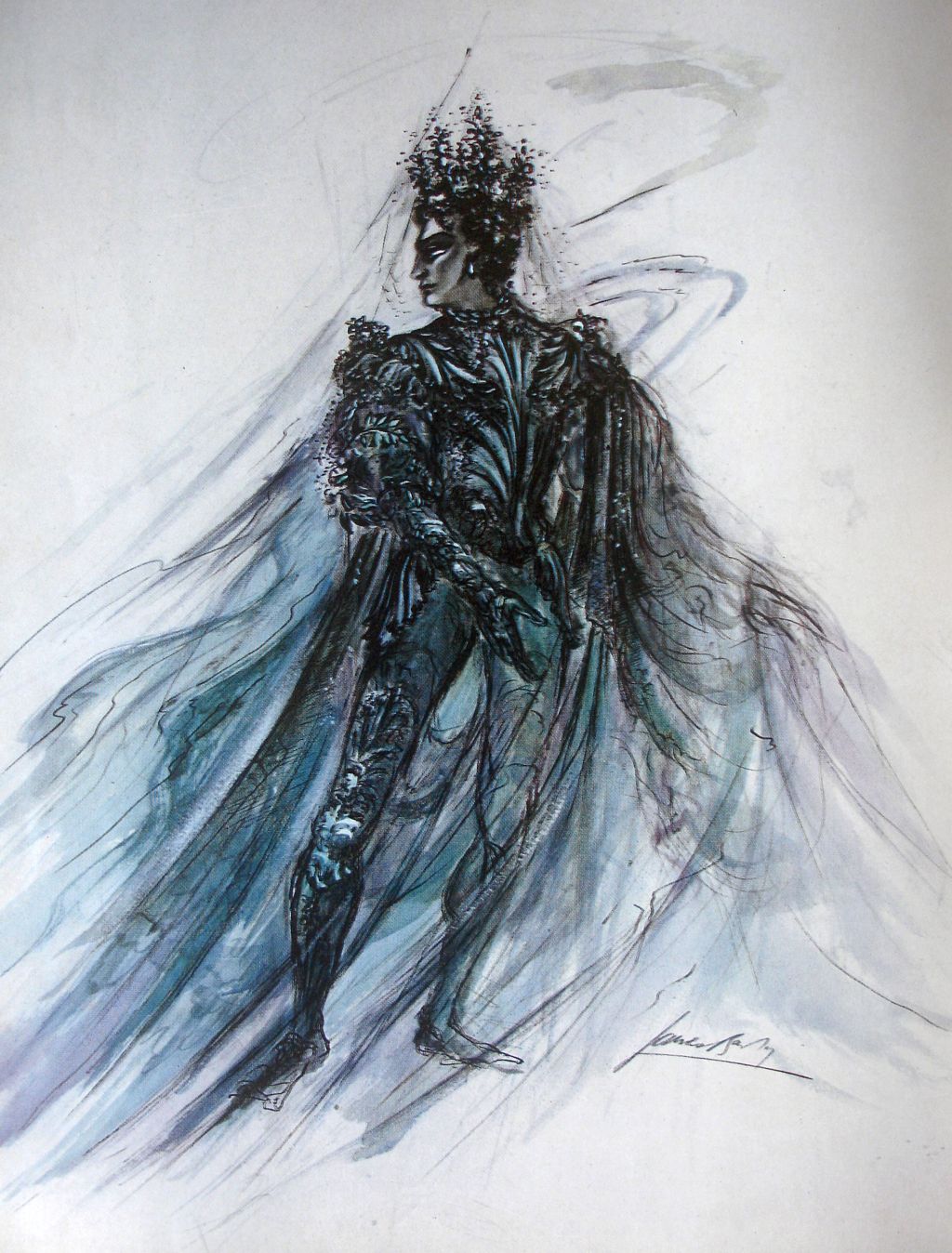
James Bailey's design for Oberon in A Midsummer Night's Dream, 1949

James Bailey’s design for Oberon in A Midsummer Night’s Dream, 1949

It’s easy to imagine how much a costume like James Bailey’s stunning design for the part of Oberon, the fairy king, in A Midsummer Night’s Dream, would have supported the actor who had to inhabit the role. Sadly this is one costume, dating from 1949, that hasn’t survived. Over the next few months I’m going to be writing a series of posts for this blog about some of the costumes featured in Into the Wild as well as looking at some of the designers whose work is represented.

The design process may begin months before the rehearsals start in discussion with the director. The director has the overall responsibility for the production, but the designer will bring their creativity to bear in working on the look of the production. The costume designer also has to collaborate with the costume department who create the costumes as well as the actors who have to wear them.

Costume created for Jonjo O'Neil as Richard III, 2012

Costume created for Jonjo O’Neil as Richard III, 2012

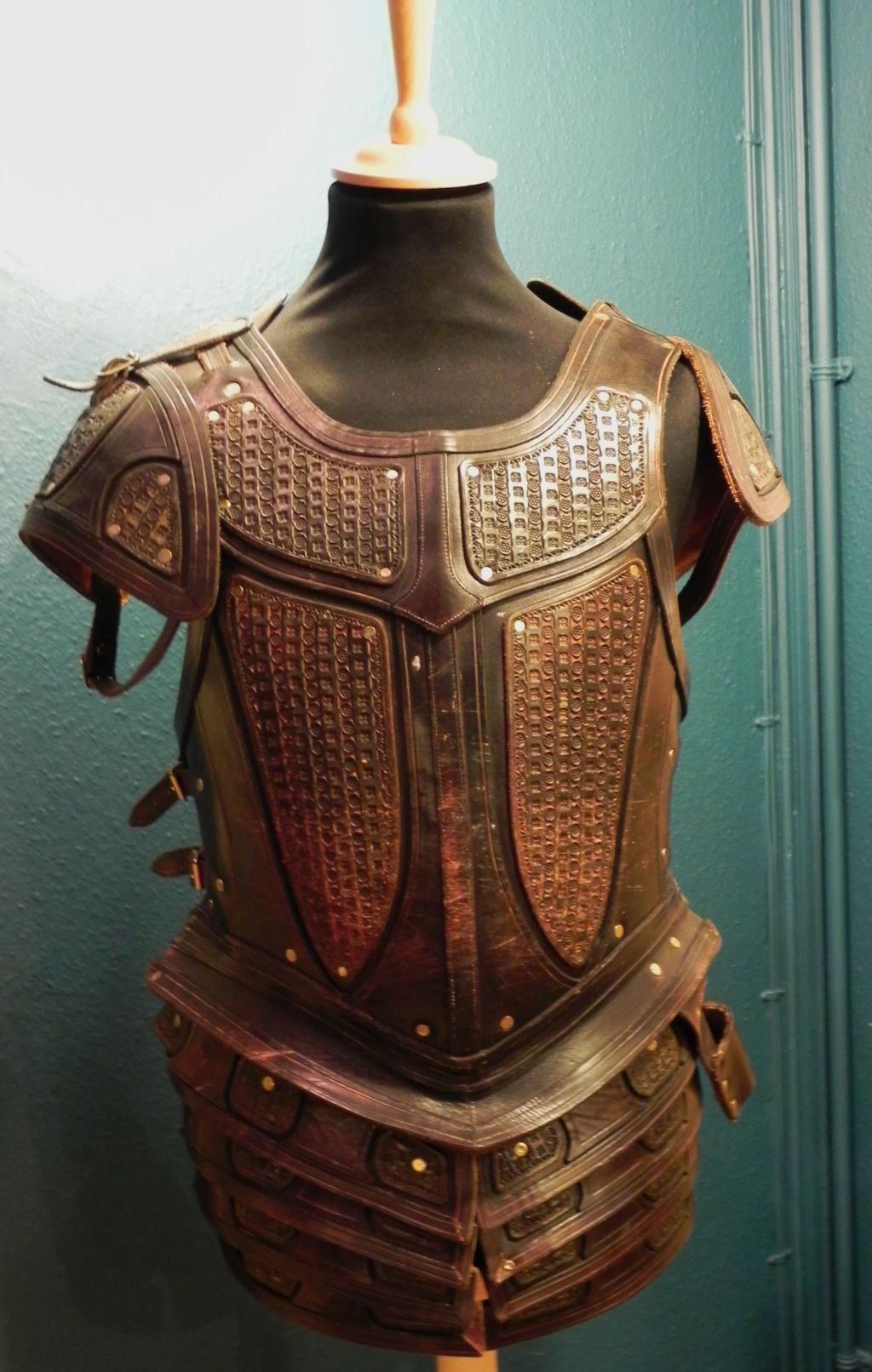
Costume Craft explains the many skills required for the creation of costumes. The RSC is one of the few theatres that makes its own armour, as well as making wigs and hairpieces, and uses a wide variety of techniques including dying and embroidery as well as distressing or breaking down costumes to make them look worn or damaged.

Creating a costume that can be worn onstage, and stand up to the kind of wear that Shakespeare’s plays demand, is a challenge quite different from the work of the maker of clothes for the high street. Shakespeare’s characters fight, climb, dance and sometimes have to change from one costume to another quickly. The costume designs have to be translated into a wearable costume by a team of costume makers. And costumes have to be worn onstage by individuals who are themselves artists, who need to feel happy with what they are wearing. Theatre costumes may also need to be frequently cleaned, and to allow for the concealment of padding, harnesses or blood bags.

Part of the Costume Craft Exhibition

Part of the Costume Craft Exhibition

Theatre costumes send out messages, sometimes direct, sometimes subliminal, which can provide non-verbal clues for members of the audience for Shakespeare’s plays. Both exhibitions are on until September, Into the Wild in the Paccar Room, Costume Craft in the Ferguson Room (above the Swan Bar). Both are free and are well worth a visit if you’re in Stratford-upon-Avon.

Share
Posted in Shakespeare on Stage, Stratford-upon-Avon | Tagged , , , , , , | Comments Off on The Royal Shakespeare Company in Stitches: celebrating costume

The first of May in Stratford-upon-Avon

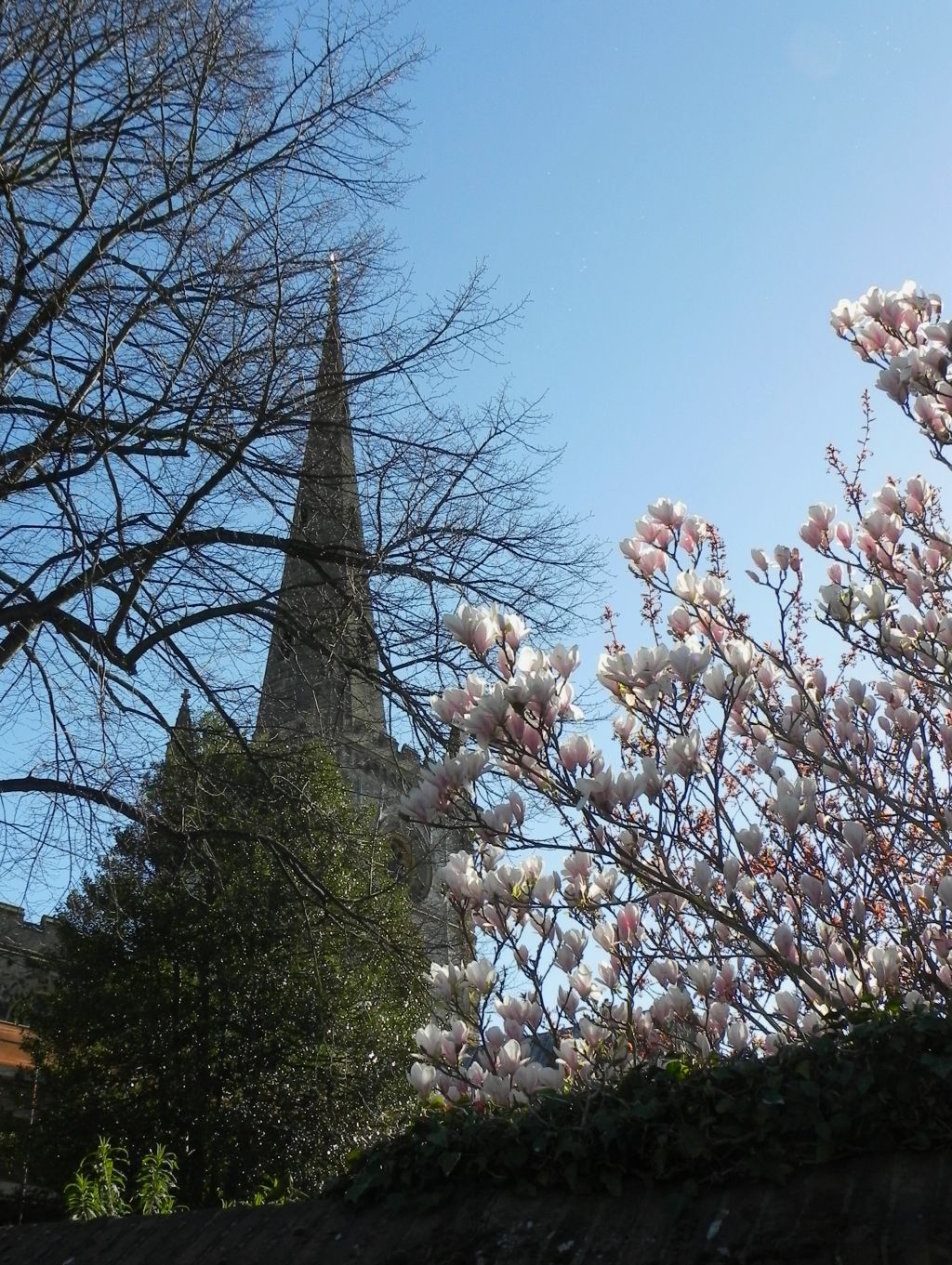
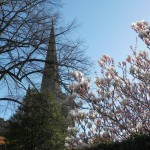
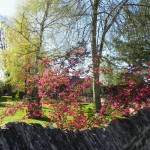
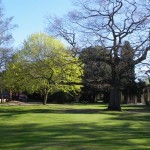
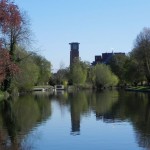
DSCN2061croppedAs today is both the first of May and a quite beautiful spring day I thought I’d share with you some photos I took on early this morning to Shakespeare’s church and the River Avon with views towards the Royal Shakespeare Theatre.

Shakespeare loved the months of April and May. In Much Ado About Nothing Benedick describes how Beatrice, compared with her cousin Hero, “exceeds her as much in beauty as the first of May doth the last of December”.  And in one of Shakespeare’s funniest and silliest scenes, in Love’s Labour’s Lost, one of the four young men in love composes a rhyme to the object of his affection:
On a day, alack the day!
Love, whose month is ever May,
Spied a blossom passing fair
Playing in the wanton air.

Stratford may not now look as it did in Shakespeare’s day, but there’s no better time than early May to visit this lovely spot.


Share
Posted in Legacy, Stratford-upon-Avon | Tagged , , , | 1 Comment

Shakespeare and the case for subsidy

Pippa Nixon and Alex Waldmann in the RSC's As You Like It. Photo by Keith Pattison

Pippa Nixon and Alex Waldmann in the RSC’s As You Like It. Photo by Keith Pattison

I’ve only been away for a few days, but on return have found many Shakespeare-related stories to catch up on. There have been two major press nights, Othello at the National Theatre, As You Like It at the RSC. These two plays seem to have little in common except for the theme of love. As You Like It is probably the sunniest of Shakespeare’s plays, where Orlando and Rosalind are “many fathom deep in love” and Celia and Oliver “are in the very wrath of love, … clubs cannot part them”. But every play has a darker side: Orlando’s own brother plots against him and threatens him with death. His reason is the green-eyed monster of jealousy: Orlando is “gentle, never schooled and yet learned, full of noble device, of all sorts enchantingly beloved; and indeed so much in the heart of the world … that I am altogether misprized”.

Duke Frederick has exiled his brother, and is so jealous on his daughter’s behalf that he plans to get rid of Rosalind too:
her smoothness,
Her very silence and her patience,
Speak to the people and they pity her.
Thou art a fool. She robs thee of thy name,
And thou wilt show more bright and seem more virtuous
When she is gone.

Desdemona and Othello in the National Theatre's production

Desdemona and Othello in the National Theatre’s production

Unlike Cyprus, Arden is not the place for serious jealousy, but Orlando’s statement “But O, how bitter a thing it is to look into happiness through another man’s eyes” contains a germ of Iago’s jealous observation of Othello and Desdemona’s happiness and his determination to wreck it. Their love makes all the other relationships in the play look stale. Both productions have been favourably received and I look forward to seeing them.

Also in the past week the Culture Secretary, Maria Miller, suggested that the arts, including theatre, had to make the case for subsidy by focussing on economic, not artistic value. I missed the detail of her speech, but have read some of the reactions to it. In particular, Sir Nicholas Hytner and Nick Starr, Director and Executive Director of the National Theatre, have written a terrific piece outlining the issues. Miller recognises the value of the cultural sector to Britain: if nothing else, millions of tourists are drawn to this country by our arts and culture. But as usual with politicians, she doesn’t seem to recognise the need for risk and experiment. They write:

War Horse started as an experiment in the National Theatre Studio – literally, actors with cardboard boxes on their heads…

The lesson is not to ask the question, how do we create the next War Horse? It is rather to continue funding the NT Studio, where much of the most commercially successful stuff starts life. This is why the West End has largely outsourced its need for the new to the subsidised sector. They don’t regard us as the competition, but as essential to their business model. They can’t see how you would otherwise develop a Matilda or a Curious Incident of the Dog In the Night Time.

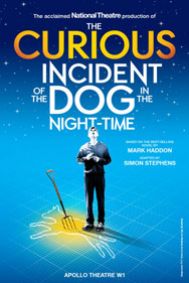
3703-curencore600x900Hytner and Starr wrote their piece before Sunday’s Olivier awards in which The Curious Incident of the Dog in the Night-Time, a play about autism, swept the board. Marianne Elliot, the play’s director, made the same point in a BBC interview: “It was an experimental journey, and … we could not have done it anywhere else other than a properly subsidised theatre… You have to be allowed to take risks and that means being allowed to fail and that means being allowed to try new things.”

The piece challenges to government to adopt an arts policy based on an “overall vision for growth”, and “systematic investment” rather than the piecemeal reduction in the amount of money handed out to fewer and fewer organisations. One of the problems for theatre is that it just looks like fun. The writer Simon Stephens, responsible for the theatrical version of Curious Incident, commented that theatre is ” at it’s best when it’s collaborative, made …with a spirit of fun.”

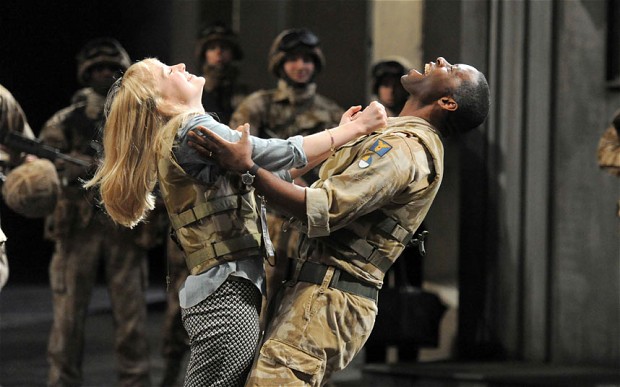
Shakespeare’s plays are usually recognised as being much more than just entertainment, and holds his place in the education system. They’ve also been used as therapy in mental institutions, to bring deprived communities together and, most recently, Henry V has been performed by traumatised members of the armed forces as a way of helping them recover. There are many other examples of theatre being used as therapy, and as an art form it requires teamwork, collaboration, imagination and a whole host of different skills.

Only a couple of weeks ago the RSC opened Matilda and Julius Caesar in New York. It’s not likely that either Othello or As You Like It will join them, but the blockbuster shows owe a great deal to the training and skills of actors, crew and craftspeople of the major subsidised theatres.  Les Miserables is the world’s longest-running musical, seen by 65 million people in 42 countries. Who now remembers that this was originally performed by the RSC at the Barbican in 1985, during another period when the arts were under fire?

Share
Posted in Legacy, Shakespeare on Stage | Tagged , , , , , , , , , , , , , | Comments Off on Shakespeare and the case for subsidy

John Gilbert Cooper and the Bard of Avon

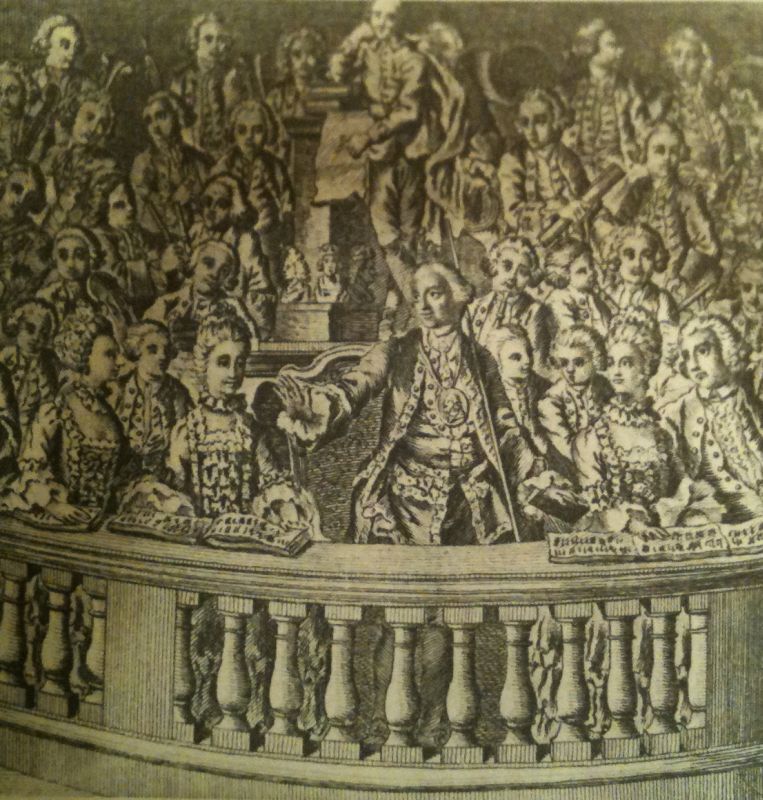
Garrrick at his Jubilee

Garrrick at his Jubilee

A couple of weeks ago David Frankel from the University of South Florida put an enquiry onto the Shakespeare noticeboard site SHAKSPER asking if anyone knew when the term “Bard of Avon” was first applied to Shakespeare. I replied with a couple of examples of similar though not identical phrases which were used as part of the Shakespeare Jubilee, and written by David Garrick. These were the earliest I was aware of, but had a sneaking feeling that there must be an earlier reference.

Sure enough, such is the magic of SHAKSPER, that someone found a reference to “Bard of Avon” in the article written by John Gilbert Cooper Cursory remarks on Mr. Warburton’s new edition of Mr. Pope’s works: Occasioned by that modern commentator’s injurious treatment, … of the author of the life of Socrates. …

The quote reads:”I suppose it was upon the same conscientious Principle, that, during this charitable Delay, he busied himself in making new and revising his old Notes upon the immortal Bard of Avon;” . This was published in 1751, 18 years before the Garrick Jubilee.

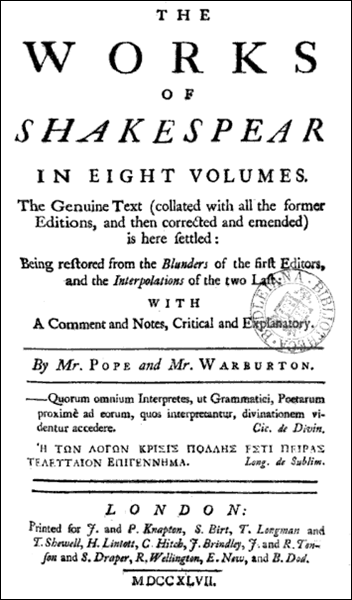
Pope and Warburton's 1747 edition of Shakespeare

Pope and Warburton’s 1747 edition of Shakespeare

There was obviously a story here: who was John Gilbert Cooper, and what did Mr Warburton have to do with it? I knew of the eighteenth century edition of Shakespeare edited by Pope and Warburton, but not a lot more.

Before the dramatist Nicholas Rowe’s 1709 edition there were only four large and unwieldy Folio editions, and individual plays in Quarto. Rowe’s edition included a biography of Shakespeare and an illustration for each play. His edition was also the first which could be comfortably held in the hand to read.

The occupation “textual editor” didn’t exist at the time, and following Rowe’s lead a number of others had a go themselves. First  was Alexander Pope, a celebrated poet who by changing words and rewriting phrases gave Shakespeare’s energetic lines polish, though with little regard to scholarship. His 1725 edition was full of errors and the following year the scholarly Lewis Theobald published corrections to it under the title Shakespeare Restored. Pope’s second edition silently incorporated Theobald’s corrections. Theobald published his own edition in 1733.  William Warburton, a young Lincolnshire clergyman, supported Theobald, later changing his allegiance to support Pope. Theobald, the first great Shakespeare editor, was thus denigrated even while his critics plundered his work.

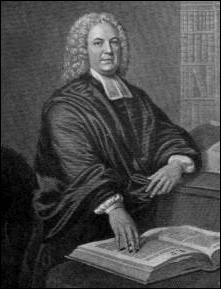
Warburton

Warburton

A further edition of the plays was produced in 1744, by Thomas Hanmer, made popular by its beautiful illustrations. Both Theobald and Pope died in this year, and Hanmer died in 1746, leaving Warburton clear to publish his own edition being as critical as he liked of his rivals. His edition, in which he acknowledged Pope on the title page, came out in 1747. Warburton was Pope’s literary executor and he also published a complete edition of Pope’s works.

The young John Gilbert Cooper stumbled into this bad-tempered controversy. He was born in Leicestershire in 1722 to a comfortable family as John Gilbert, but on inheriting the land and house of John Cooper of Thurgarton Priory in Nottinghamshire his father took the additional name of Cooper. Young John was educated in Sutton Coldfield, Westminster and Cambridge. His first poetry was published in 1742, and his criticisms of the established Warburton resulted in that author’s retaliation, which in turn provoked Cooper’s Cursory Remarks in 1751. Their argument was commented on by the famous writer who would later publish his own edition of Shakespeare, Samuel Johnson.

Cooper continued to write poetry, some of which has considerable charm. One of his last poems was The Tomb of Shakespeare: a vision. In this 1755 poem he describes the setting of Holy Trinity Church.
On Avon’s banks I lit, whose streams appear
To wind with eddies fond round Shakespeare’s tomb.
The year’s first feathery songsters warble near,
And violets breathe, and earliest roses bloom.

Shakespeare’s burial place is, he observes, Fancy’s “fav’rite offspring’s long and last abode”. He asks the figure of Fancy to show him Shakespeare’s most imaginative creations. She conjures visions of Ariel and Caliban from The Tempest, Titania and Oberon from A Midsummer Night’s Dream, and the Witches in Macbeth. Here is the description of Ariel:

The memorial to John Gilbert Cooper

The memorial to John Gilbert Cooper

He whirled the tempest thro’ the howling air,
Rattled the dreadful thunderclap on high,
And raised a roaring elemental war
Betwixt the sea-green waves and azure sky.

John Gilbert Cooper had no need to work, but his life was not untouched by tragedy. He married in 1748. His first child died soon after birth, and his wife died seven weeks after giving birth to their third child in 1751, leaving him the father of two babies. He died himself in 1769, aged only 47, just months before the Garrick Jubilee, and is buried at Thurgarton.

Share
Posted in Legacy | Tagged , , , , , , , , , | Comments Off on John Gilbert Cooper and the Bard of Avon